CATEGORY
CATEGORY
News
News
News
EU ELV Regulation: Why Recycled Plastic Verification Will Reshape Global Auto Supply Chains
EU ELV Regulation: Why Recycled Plastic Verification Will Reshape Global Auto Supply Chains
EU ELV Regulation: Why Recycled Plastic Verification Will Reshape Global Auto Supply Chains
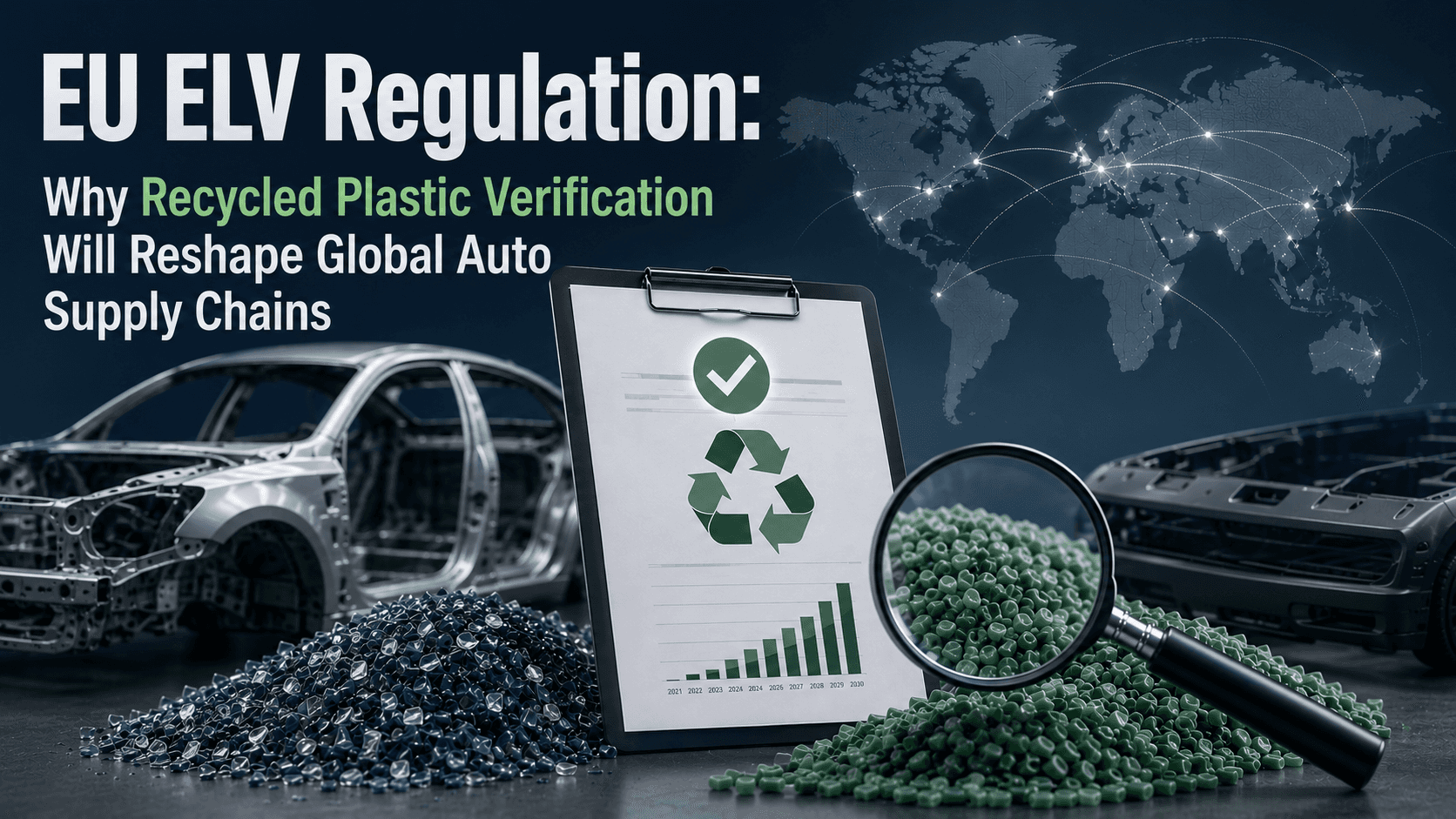
The EU’s ELV Regulation goes beyond recycled content targets by requiring verifiable proof by 2026. This shift is set to impact global automotive and materials supply chains, not just European manufacturers.
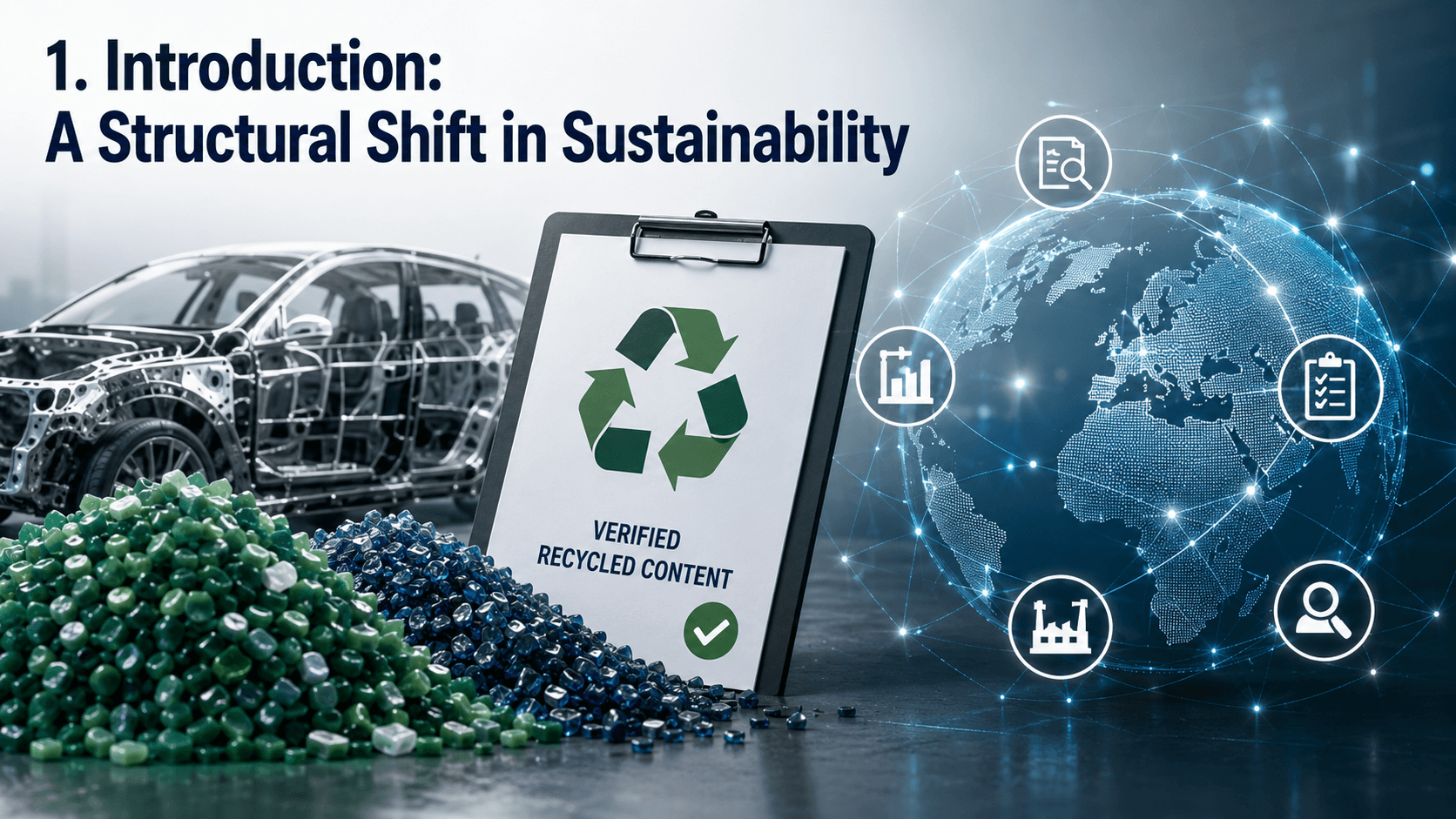
Most coverage of the EU’s End-of-Life Vehicles (ELV) Regulation focuses on recycled content targets. However, the more consequential change is the introduction of a binding, standardized methodology to verify recycled plastic content by the end of 2026.
This marks a structural shift: recycled materials are no longer just a sustainability metric—they become a regulated, auditable input across the supply chain.
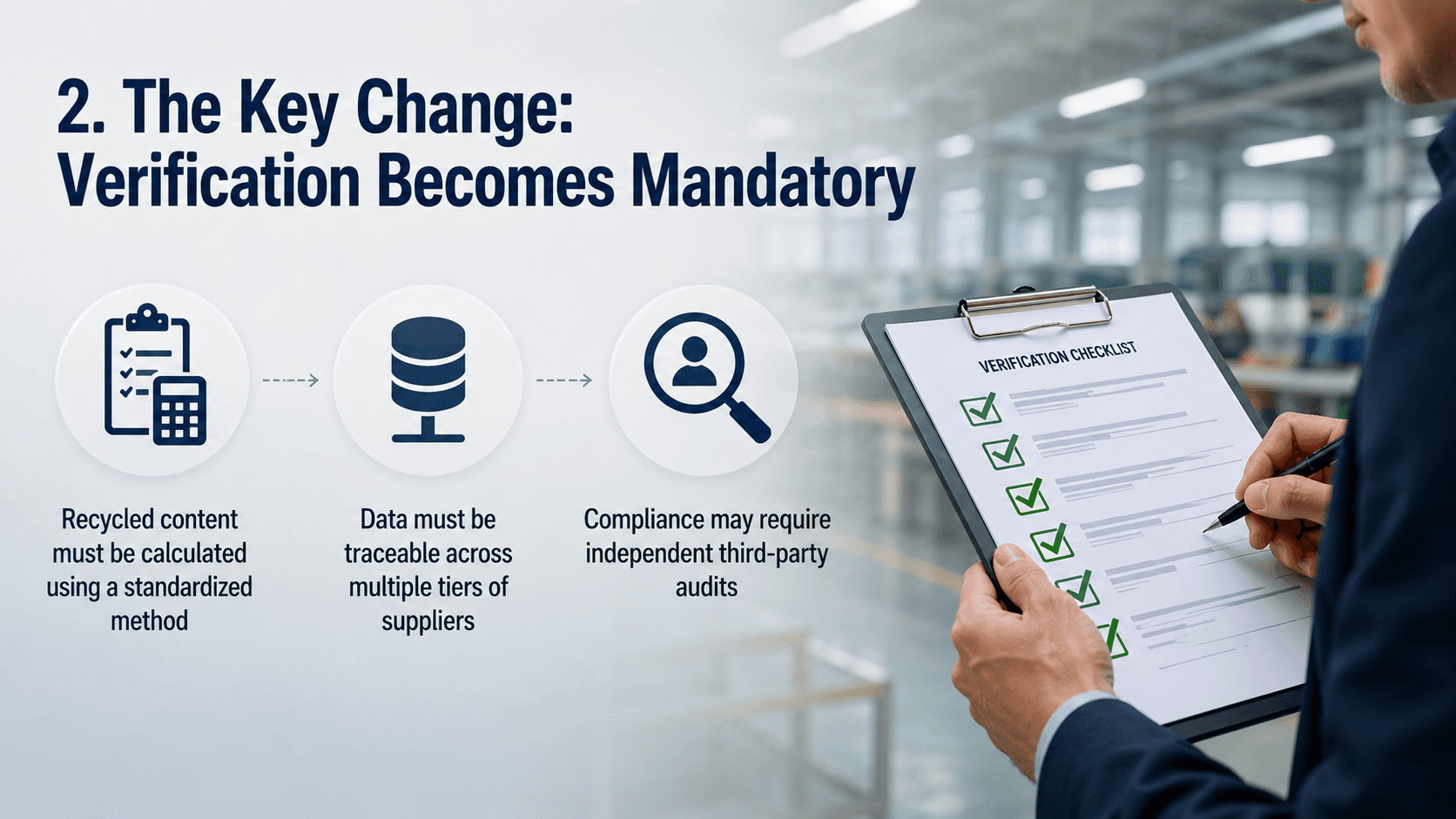
The Key Change: Verification Becomes Mandatory
The regulation introduces a fundamental shift from voluntary reporting to enforceable verification.
In practice, this means:
Recycled content must be calculated using a standardized method
Data must be traceable across multiple tiers of suppliers
Compliance may require independent third-party audits
The implication is clear: using recycled plastic is no longer sufficient unless it can be proven in a consistent and auditable way.
Why This Is a Global Issue
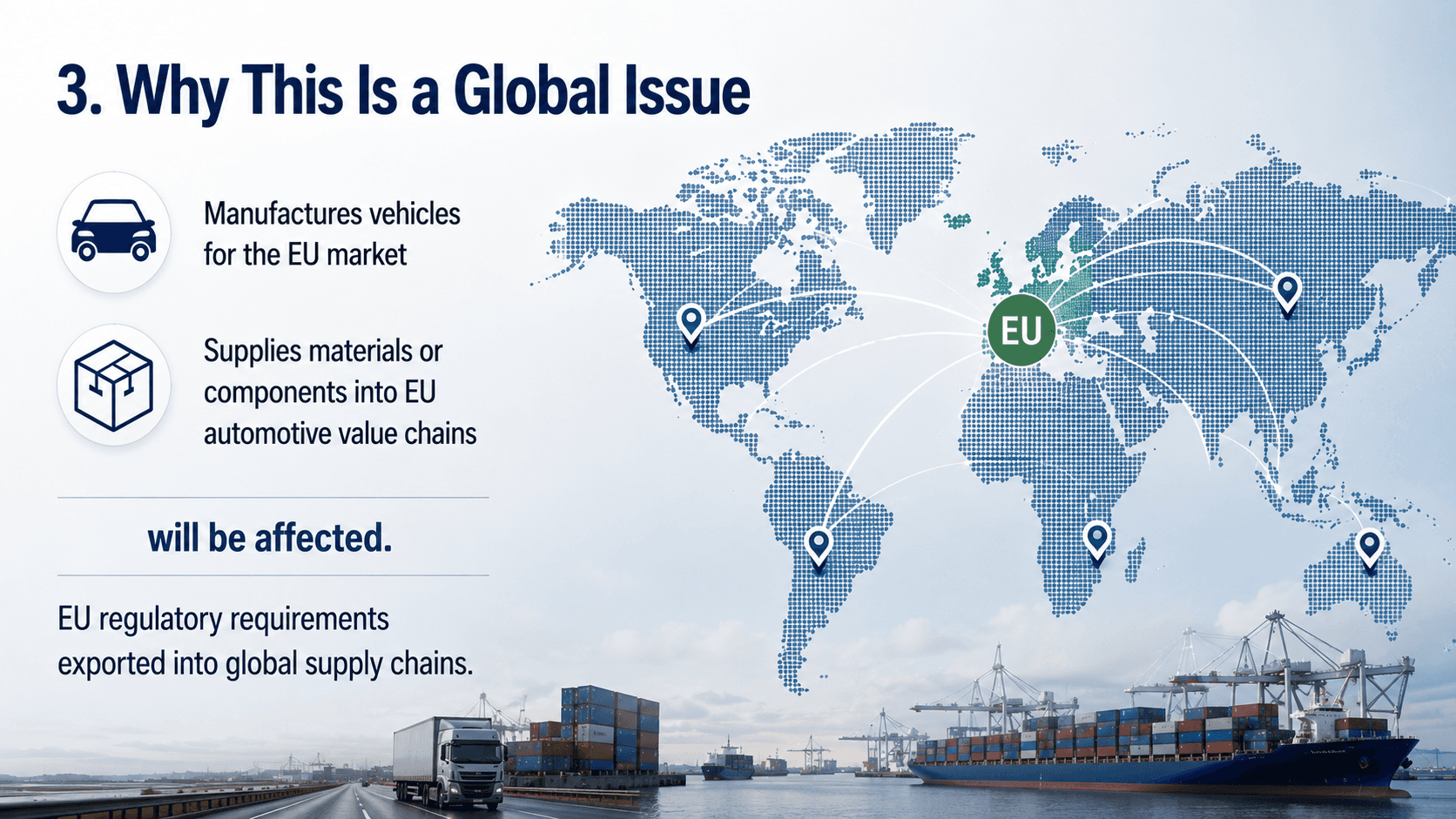
Although the regulation is European, its impact extends far beyond the EU.
Any company that:
Manufactures vehicles for the EU market
Supplies materials or components into EU automotive value chains
will be affected.
This effectively exports EU regulatory requirements into global supply chains, influencing material sourcing, documentation standards, and supplier selection worldwide.
A Shift in Competitive Advantage
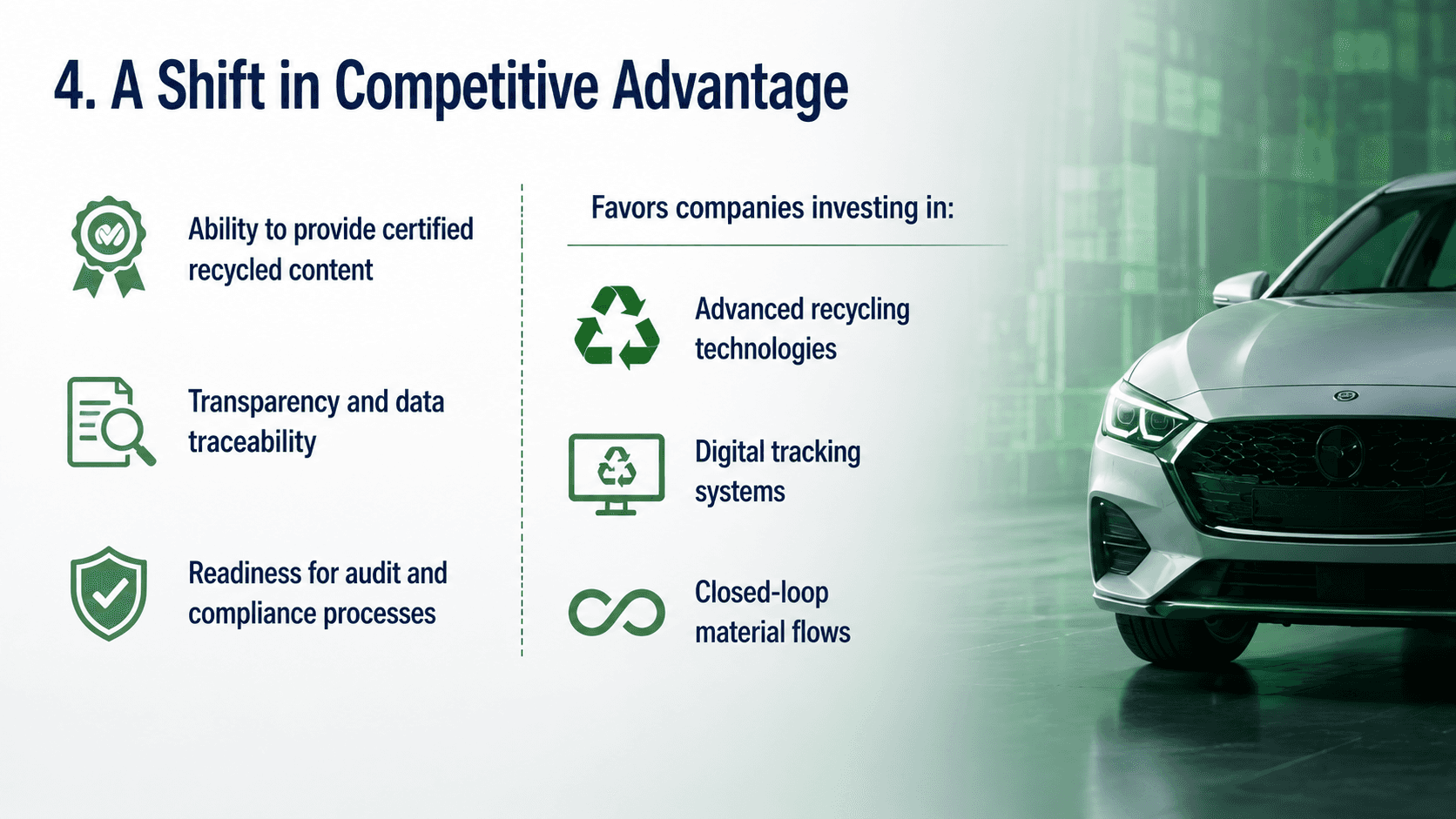
The regulation is likely to change how companies compete.
In addition to cost and performance, suppliers will increasingly be evaluated on:
Ability to provide certified recycled content
Transparency and data traceability
Readiness for audit and compliance processes
This could favor companies that are already investing in:
Advanced recycling technologies
Digital tracking systems
Closed-loop material flows
The Supply Constraint Problem
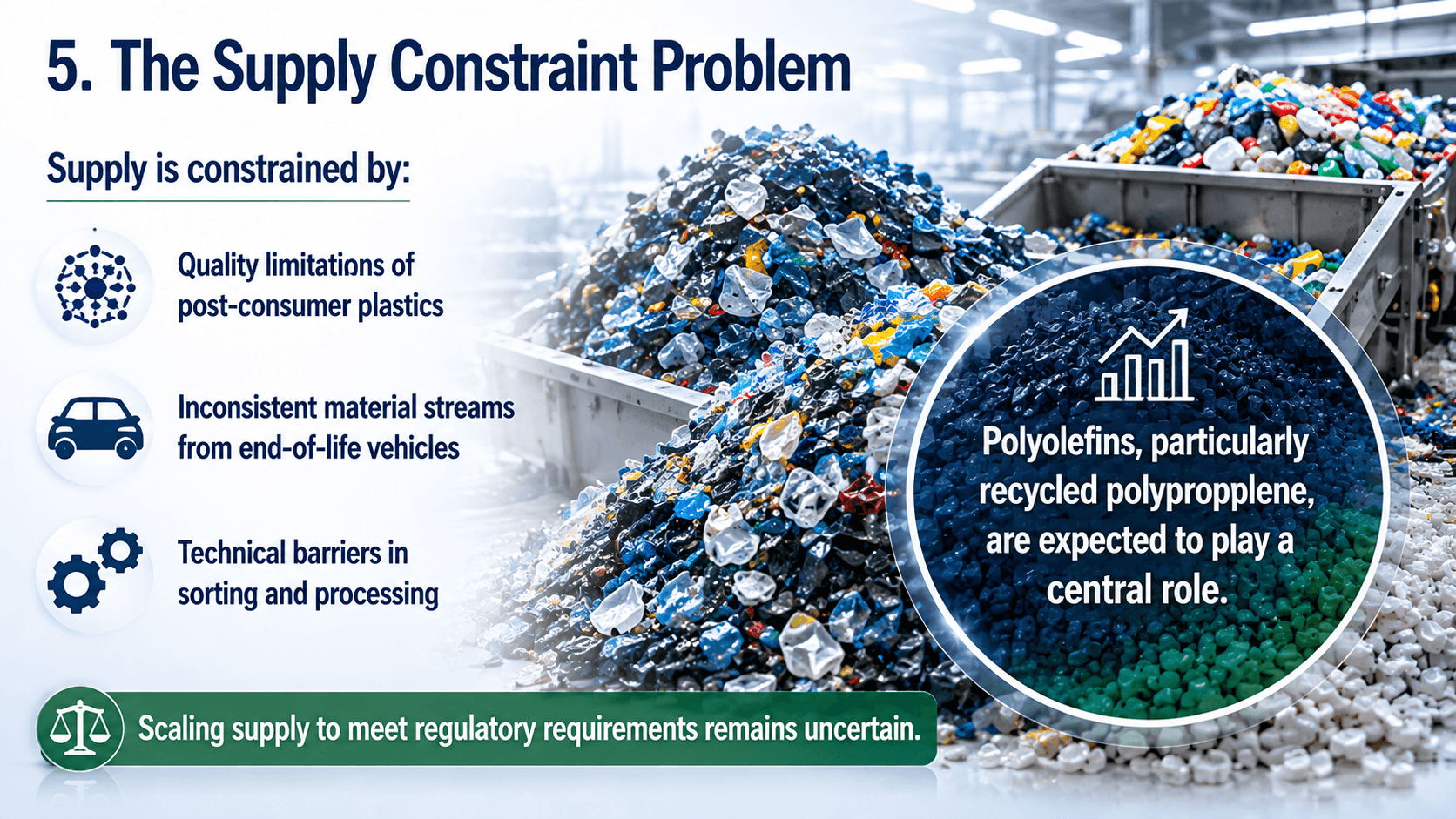
A major challenge remains: limited availability of high-quality recycled plastics suitable for automotive use.
While demand is expected to rise significantly, supply is constrained by:
Quality limitations of post-consumer plastics
Inconsistent material streams from end-of-life vehicles
Technical barriers in sorting and processing
Polyolefins, particularly recycled polypropylene, are expected to play a central role. However, scaling supply to meet regulatory requirements remains uncertain.
Early Industry Responses
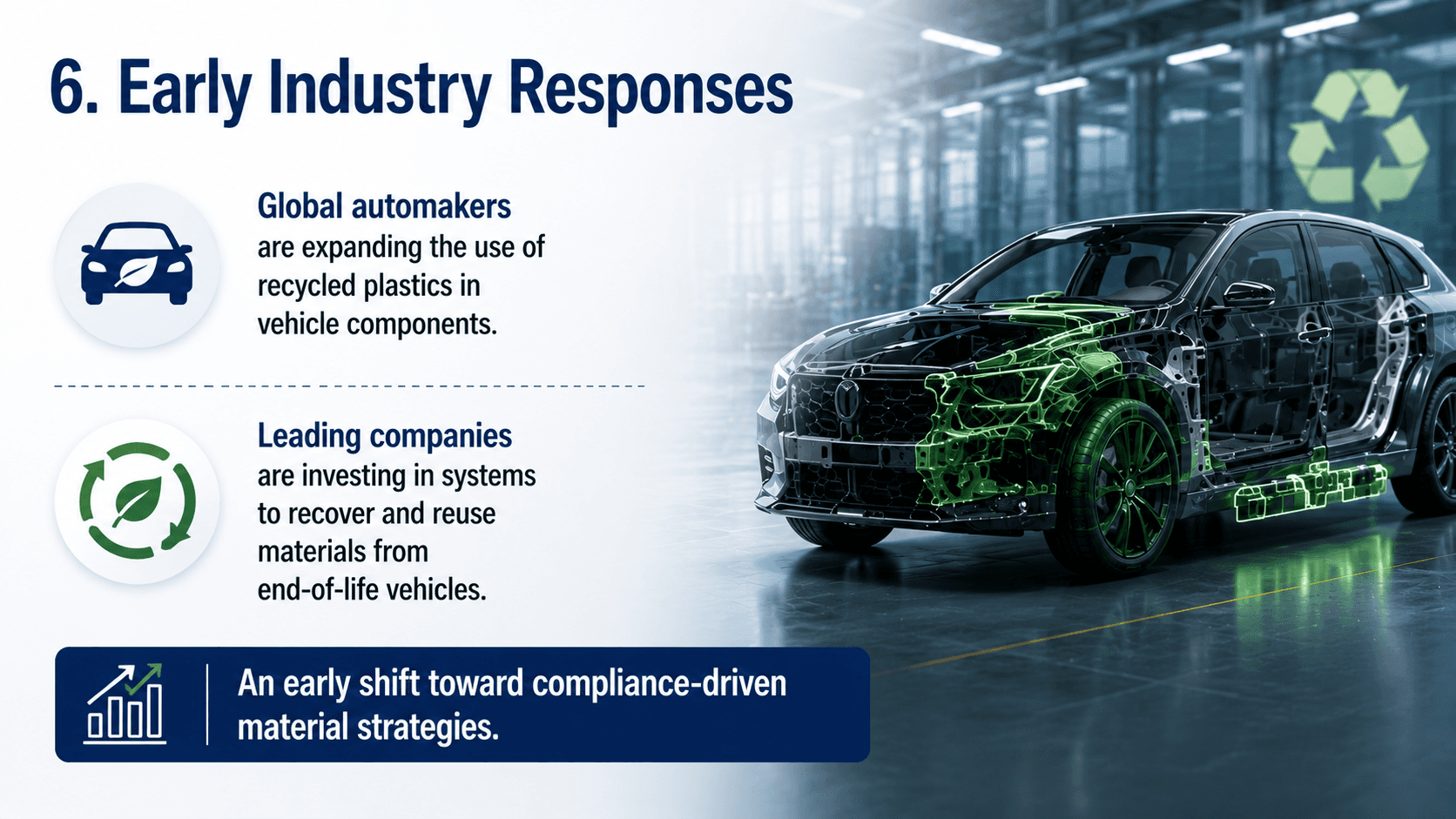
Some automakers have already begun adjusting their strategies:
BMW and Nissan are expanding the use of recycled plastics in vehicle components
Stellantis and Renault are investing in systems to recover and reuse materials from end-of-life vehicles
These efforts reflect an early shift toward compliance-driven material strategies, rather than purely sustainability-driven initiatives.
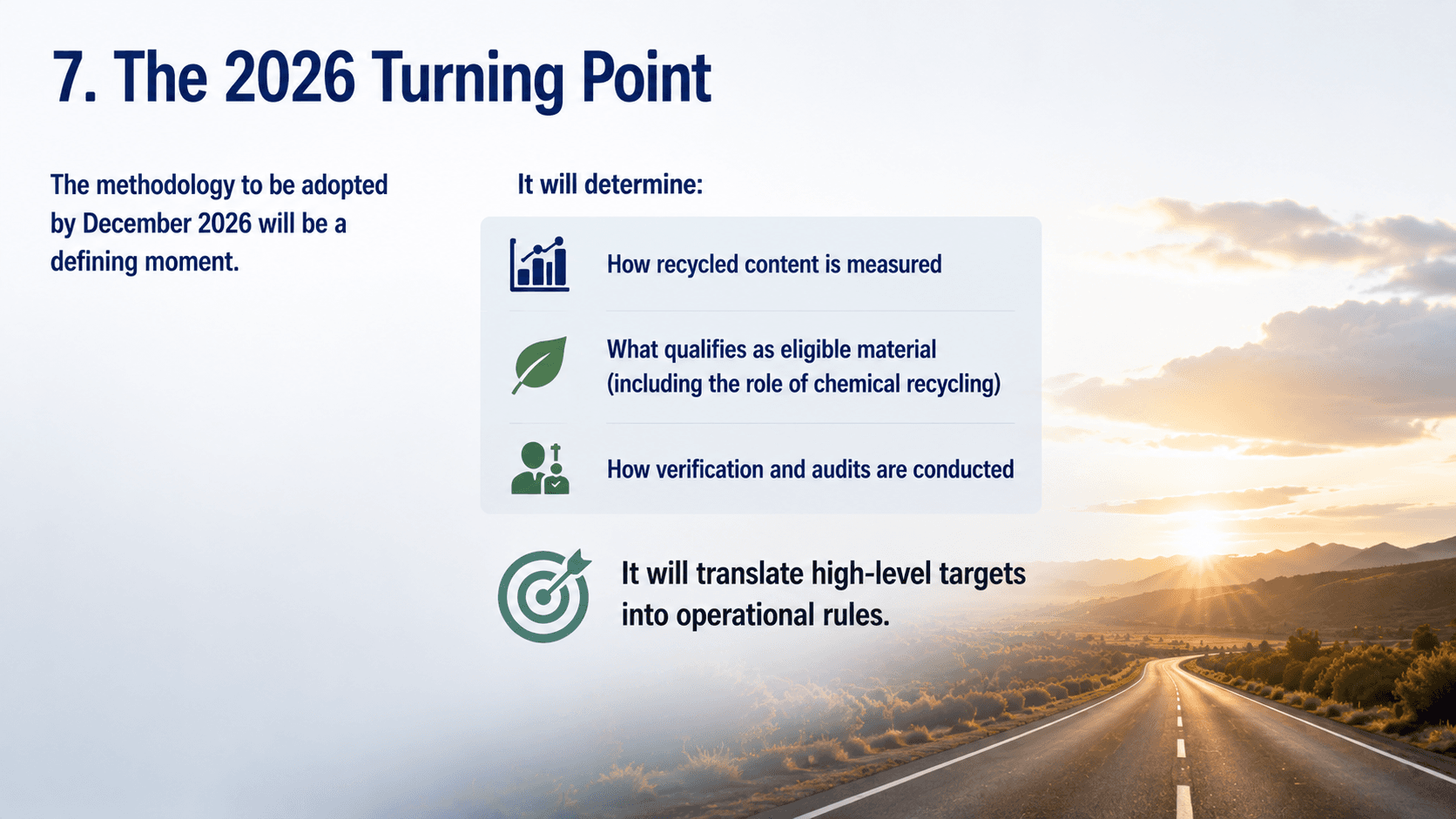
The 2026 Turning Point
The methodology to be adopted by December 2026 will be a defining moment.
It will determine:
How recycled content is measured
What qualifies as eligible material (including the role of chemical recycling)
How verification and audits are conducted
In effect, it will translate high-level targets into operational rules.
What to Watch Going Forward
Several factors will shape how the regulation plays out:
The strictness and clarity of the verification methodology
Investment in recycling infrastructure and technologies
Development of traceability tools such as digital product passports
Alignment across complex, multi-tier global supply chains
The framework developed here is also likely to influence recycled content regulations in other sectors, including packaging and textiles.
Image generated with ChatGPT
Source: Plastics Insider, "EU Sets 2026 Deadline to Certify Recycled Plastic in New Vehicles"
Most coverage of the EU’s End-of-Life Vehicles (ELV) Regulation focuses on recycled content targets. However, the more consequential change is the introduction of a binding, standardized methodology to verify recycled plastic content by the end of 2026.
This marks a structural shift: recycled materials are no longer just a sustainability metric—they become a regulated, auditable input across the supply chain.
The Key Change: Verification Becomes Mandatory
The regulation introduces a fundamental shift from voluntary reporting to enforceable verification.
In practice, this means:
Recycled content must be calculated using a standardized method
Data must be traceable across multiple tiers of suppliers
Compliance may require independent third-party audits
The implication is clear: using recycled plastic is no longer sufficient unless it can be proven in a consistent and auditable way.
Why This Is a Global Issue
Although the regulation is European, its impact extends far beyond the EU.
Any company that:
Manufactures vehicles for the EU market
Supplies materials or components into EU automotive value chains
will be affected.
This effectively exports EU regulatory requirements into global supply chains, influencing material sourcing, documentation standards, and supplier selection worldwide.
A Shift in Competitive Advantage
The regulation is likely to change how companies compete.
In addition to cost and performance, suppliers will increasingly be evaluated on:
Ability to provide certified recycled content
Transparency and data traceability
Readiness for audit and compliance processes
This could favor companies that are already investing in:
Advanced recycling technologies
Digital tracking systems
Closed-loop material flows
The Supply Constraint Problem
A major challenge remains: limited availability of high-quality recycled plastics suitable for automotive use.
While demand is expected to rise significantly, supply is constrained by:
Quality limitations of post-consumer plastics
Inconsistent material streams from end-of-life vehicles
Technical barriers in sorting and processing
Polyolefins, particularly recycled polypropylene, are expected to play a central role. However, scaling supply to meet regulatory requirements remains uncertain.
Early Industry Responses
Some automakers have already begun adjusting their strategies:
BMW and Nissan are expanding the use of recycled plastics in vehicle components
Stellantis and Renault are investing in systems to recover and reuse materials from end-of-life vehicles
These efforts reflect an early shift toward compliance-driven material strategies, rather than purely sustainability-driven initiatives.
The 2026 Turning Point
The methodology to be adopted by December 2026 will be a defining moment.
It will determine:
How recycled content is measured
What qualifies as eligible material (including the role of chemical recycling)
How verification and audits are conducted
In effect, it will translate high-level targets into operational rules.
What to Watch Going Forward
Several factors will shape how the regulation plays out:
The strictness and clarity of the verification methodology
Investment in recycling infrastructure and technologies
Development of traceability tools such as digital product passports
Alignment across complex, multi-tier global supply chains
The framework developed here is also likely to influence recycled content regulations in other sectors, including packaging and textiles.
Image generated with ChatGPT
Source: Plastics Insider, "EU Sets 2026 Deadline to Certify Recycled Plastic in New Vehicles"
Sourcing Automotive rPP
Grades • Specs • Availability
Browse rPP →
Sourcing Automotive rPP
Sourcing Automotive rPP
Review rPP grades by feedstock, properties, certification, stock and MOQ.
Review rPP grades by feedstock, properties, certification, stock and MOQ.
Browse rPP →
Browse rPP →
Looking for samples or ready to source? Submit your request for pricing, availability, and technical information.
Looking for samples or ready to source? Submit your request for pricing, availability, and technical information.
Request a Quote →
Request a Quote →
Posted by REGENPORT
REGENPORT is a global platform connecting buyers and suppliers in the recycled materials and sustainable packaging industries.