CATEGORY
CATEGORY
News
News
News
From Volume to Value: How Policy Is Redefining the Recycled Plastics Market
From Volume to Value: How Policy Is Redefining the Recycled Plastics Market
From Volume to Value: How Policy Is Redefining the Recycled Plastics Market
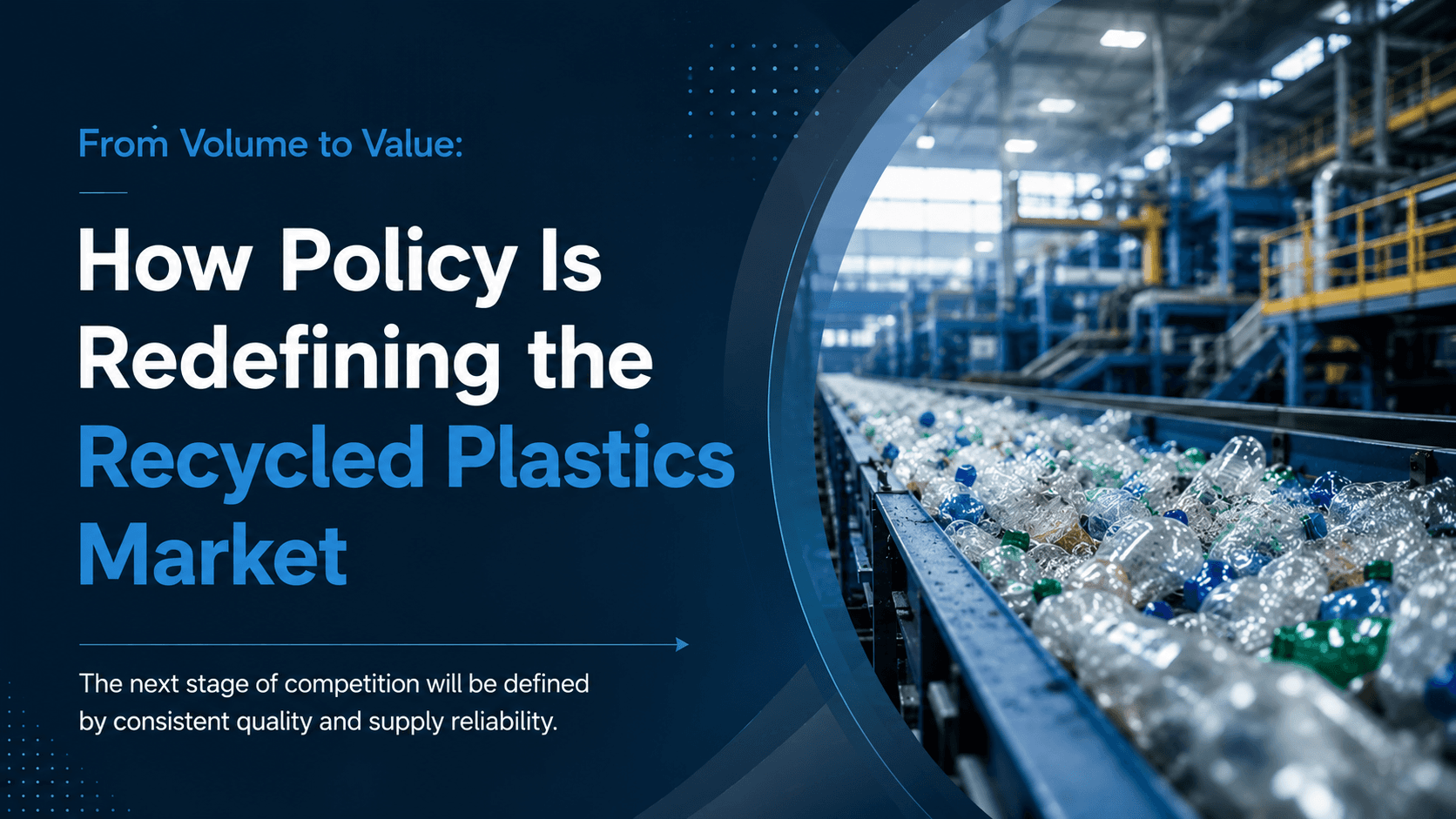
The recycled plastics market is shifting from volume-driven growth to a policy-driven model that prioritizes feedstock quality, supply stability, and traceability. With Asia-Pacific leading the market and China tightening sorting regulations, buyers increasingly need reliable, certification-ready suppliers.
The recycled plastics market is moving into a new phase. Growth is still important, but the bigger story is that policy is now shaping which suppliers can compete, and on what terms. In Asia-Pacific, that shift is especially visible because regulations are increasingly tied not just to recycling rates, but to sorting accuracy, feedstock quality, and supply chain traceability.
According to Mordor Intelligence, Asia-Pacific accounted for 48.7% of the global recycled plastics market in 2025 and is on track for 8.32% CAGR growth through 2031, as extended producer responsibility (EPR) programs spread across the region's fastest-growing consumer markets and major urban centers move to standardize how waste gets sorted. That share reflects more than manufacturing scale. It also reflects stronger collection systems, better sorting infrastructure, and policy frameworks that are pushing the market toward cleaner, more reliable recycled material.
China's Policy Signal
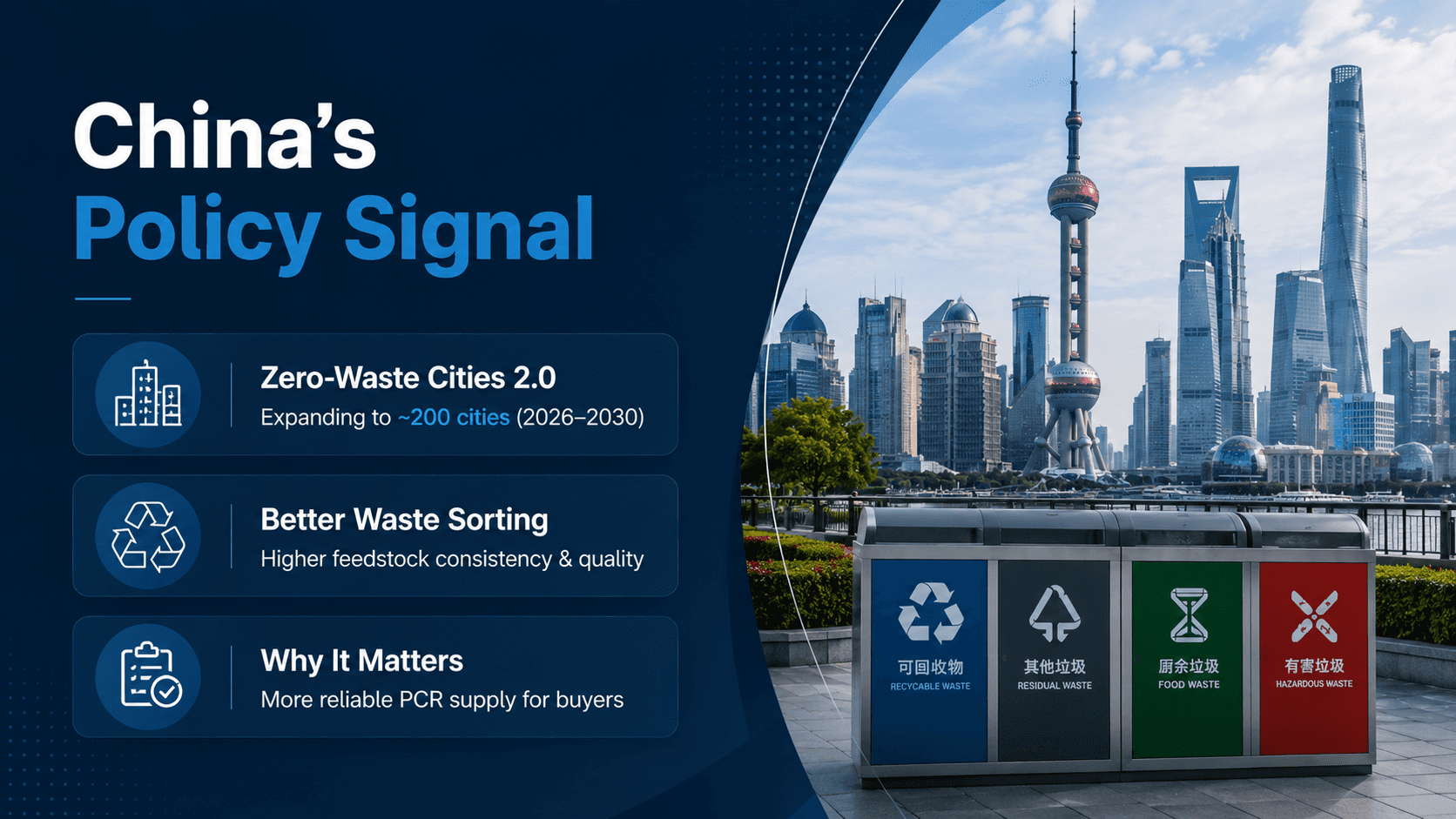
China's Zero-Waste Cities 2.0 initiative is one of the clearest examples of this shift. Rather than focusing only on higher recycling volumes, the program also emphasizes better waste sorting and improved feedstock consistency — and it's scaling fast, expanding to roughly 200 cities between 2026 and 2030, with a target of 60% participation by 2027 and full coverage by 2035. In practice, that means recycled plastics buyers are increasingly dealing with a market where quality control is built into the system earlier.
Shanghai's June 2024 zero-waste city regulation shows how this works at the city level. By tightening sorting compliance, the policy helped improve recycling performance and support more stable downstream feedstock supply. For buyers, that matters because supply reliability is no longer just a matter of capacity. It is becoming a function of how well local systems can separate, verify, and release material into the supply chain.
Why Quality Is the New Advantage
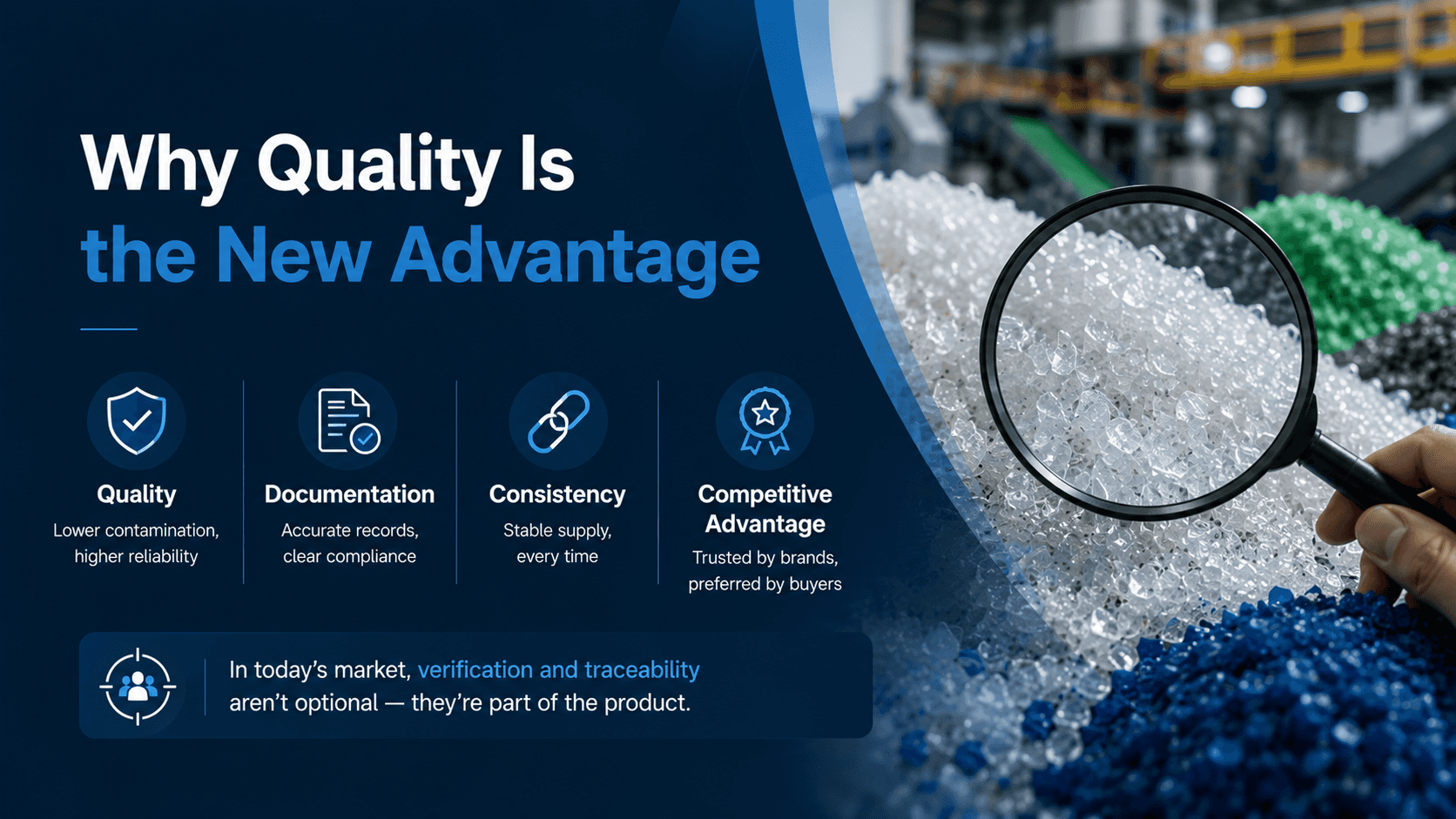
For recycled plastics suppliers, price alone is no longer enough to win business. Buyers using PCR content in packaging, consumer goods, and industrial applications are paying more attention to contamination levels, documentation quality, and sourcing consistency. That makes feedstock quality a real competitive advantage, especially when brands need dependable material over long procurement cycles.
This is also why sourcing strategy is changing. Companies are no longer looking only for the largest available volume. They are looking for suppliers that can prove material quality, compliance readiness, and consistency from the start. In a market like this, verification and traceability are not extra features — they are part of the product.
What Buyers Should Watch
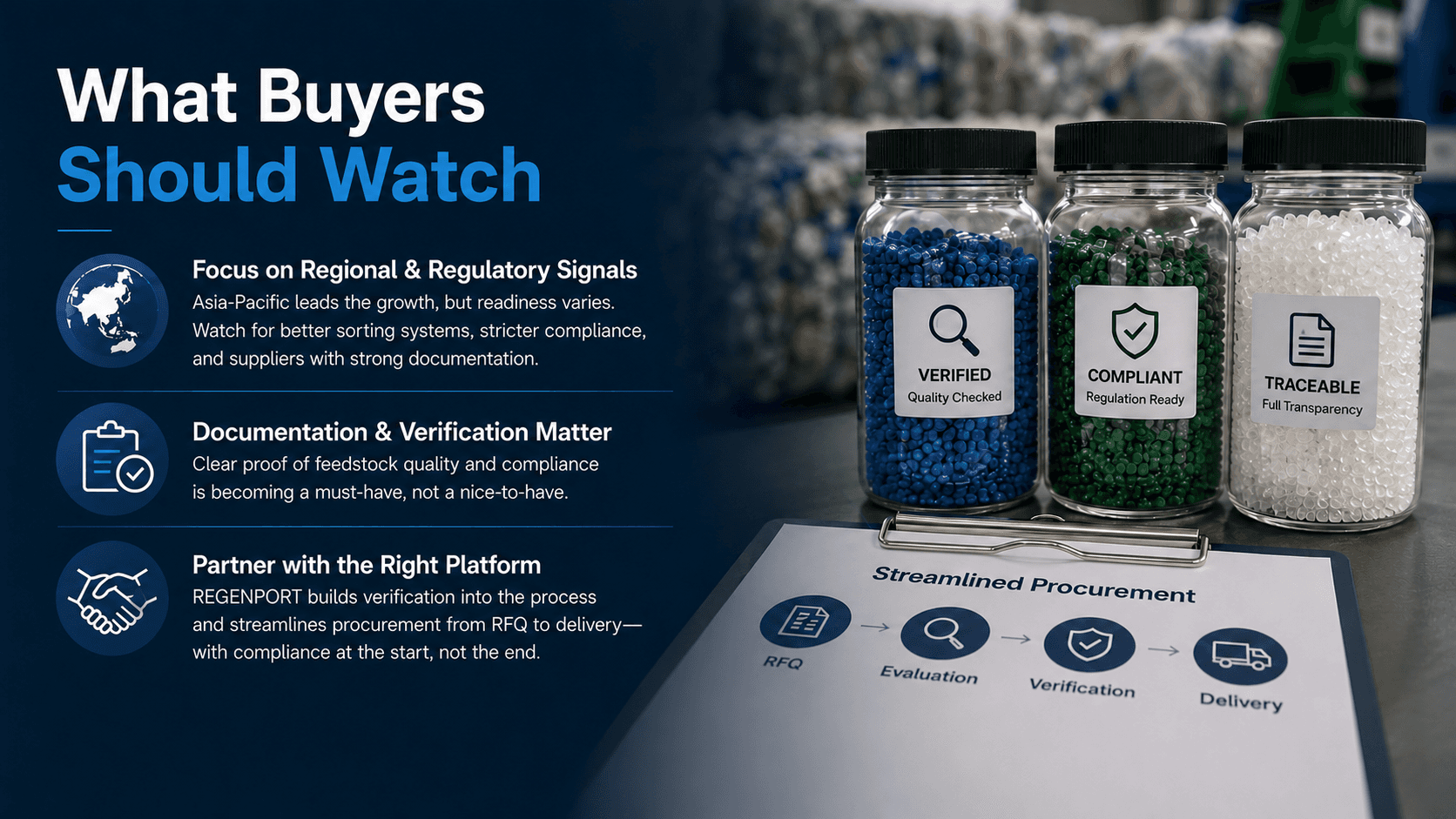
For companies sourcing recycled plastics, the most important signals are increasingly regional and regulatory. Asia-Pacific remains the key growth region, but not every market in the region is equally ready. Buyers should pay attention to where sorting systems are improving, where compliance requirements are becoming stricter, and where suppliers can show clear documentation for their feedstock.
That is where platforms like REGENPORT fit in. REGENPORT helps buyers source recycled materials with verification built into the process, so documentation is reviewed before materials are listed. It also supports a more streamlined procurement flow, from RFQ to delivery, with compliance considered from the beginning rather than after the fact.
What This Means Next
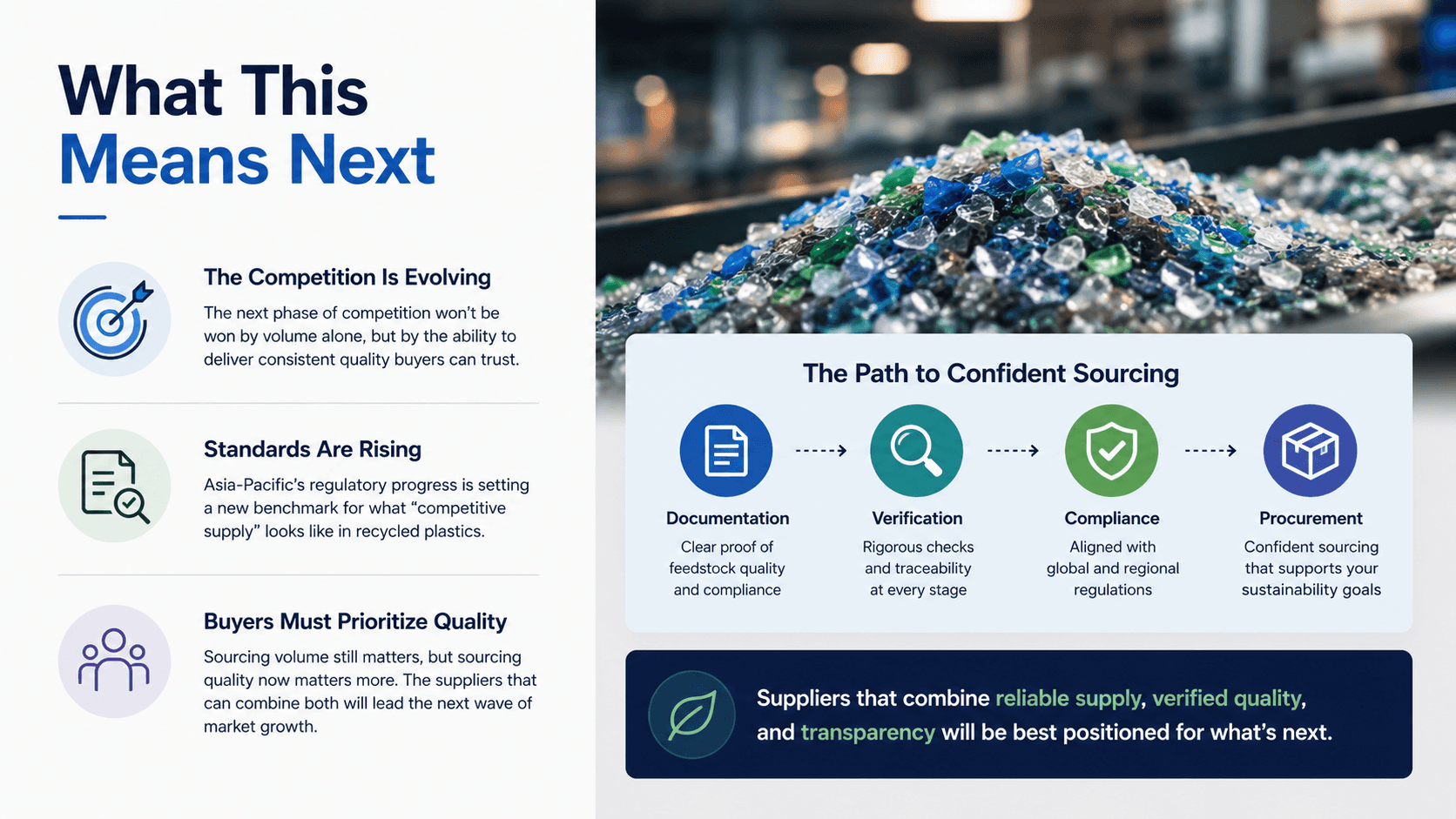
The next stage of competition in the recycled plastics market will not be decided only by who collects the most. It will be decided by who can consistently deliver feedstock that meets the standards buyers now expect. In that sense, Asia-Pacific's regulatory tightening is doing more than supporting market growth. It is defining what "competitive supply" looks like in recycled plastics.
For brands and buyers, the takeaway is clear: sourcing volume still matters, but sourcing quality now matters more. The suppliers that can combine both will be the ones best positioned for the next phase of market growth.
Image generated with ChatGPT
Source
Mordor Intelligence, "Recycled Plastics Market Size, Share & 2031 Outlook" → Read the Source
China.org.cn, "China steps up efforts to build zero-waste cities" → Read the Source
Shanghai Municipal People's Government, "Regulations of Shanghai Municipality on the Construction of the Zero Waste City" → Read the Source
The recycled plastics market is moving into a new phase. Growth is still important, but the bigger story is that policy is now shaping which suppliers can compete, and on what terms. In Asia-Pacific, that shift is especially visible because regulations are increasingly tied not just to recycling rates, but to sorting accuracy, feedstock quality, and supply chain traceability.
According to Mordor Intelligence, Asia-Pacific accounted for 48.7% of the global recycled plastics market in 2025 and is on track for 8.32% CAGR growth through 2031, as extended producer responsibility (EPR) programs spread across the region's fastest-growing consumer markets and major urban centers move to standardize how waste gets sorted. That share reflects more than manufacturing scale. It also reflects stronger collection systems, better sorting infrastructure, and policy frameworks that are pushing the market toward cleaner, more reliable recycled material.
China's Policy Signal
China's Zero-Waste Cities 2.0 initiative is one of the clearest examples of this shift. Rather than focusing only on higher recycling volumes, the program also emphasizes better waste sorting and improved feedstock consistency — and it's scaling fast, expanding to roughly 200 cities between 2026 and 2030, with a target of 60% participation by 2027 and full coverage by 2035. In practice, that means recycled plastics buyers are increasingly dealing with a market where quality control is built into the system earlier.
Shanghai's June 2024 zero-waste city regulation shows how this works at the city level. By tightening sorting compliance, the policy helped improve recycling performance and support more stable downstream feedstock supply. For buyers, that matters because supply reliability is no longer just a matter of capacity. It is becoming a function of how well local systems can separate, verify, and release material into the supply chain.
Why Quality Is the New Advantage
For recycled plastics suppliers, price alone is no longer enough to win business. Buyers using PCR content in packaging, consumer goods, and industrial applications are paying more attention to contamination levels, documentation quality, and sourcing consistency. That makes feedstock quality a real competitive advantage, especially when brands need dependable material over long procurement cycles.
This is also why sourcing strategy is changing. Companies are no longer looking only for the largest available volume. They are looking for suppliers that can prove material quality, compliance readiness, and consistency from the start. In a market like this, verification and traceability are not extra features — they are part of the product.
What Buyers Should Watch
For companies sourcing recycled plastics, the most important signals are increasingly regional and regulatory. Asia-Pacific remains the key growth region, but not every market in the region is equally ready. Buyers should pay attention to where sorting systems are improving, where compliance requirements are becoming stricter, and where suppliers can show clear documentation for their feedstock.
That is where platforms like REGENPORT fit in. REGENPORT helps buyers source recycled materials with verification built into the process, so documentation is reviewed before materials are listed. It also supports a more streamlined procurement flow, from RFQ to delivery, with compliance considered from the beginning rather than after the fact.
What This Means Next
The next stage of competition in the recycled plastics market will not be decided only by who collects the most. It will be decided by who can consistently deliver feedstock that meets the standards buyers now expect. In that sense, Asia-Pacific's regulatory tightening is doing more than supporting market growth. It is defining what "competitive supply" looks like in recycled plastics.
For brands and buyers, the takeaway is clear: sourcing volume still matters, but sourcing quality now matters more. The suppliers that can combine both will be the ones best positioned for the next phase of market growth.
Image generated with ChatGPT
Source
Mordor Intelligence, "Recycled Plastics Market Size, Share & 2031 Outlook" → Read the Source
China.org.cn, "China steps up efforts to build zero-waste cities" → Read the Source
Shanghai Municipal People's Government, "Regulations of Shanghai Municipality on the Construction of the Zero Waste City" → Read the Source
Sourcing Verified rPP
Grades • Specs • Availability
Browse rPP →
Sourcing Verified rPP
Sourcing Verified rPP
Review rPP grades by feedstock, properties, certification, stock and MOQ.
Review rPP grades by feedstock, properties, certification, stock and MOQ.
Browse rPP →
Browse rPP →
Looking for samples or ready to source? Submit your request for pricing, availability, and technical information.
Looking for samples or ready to source? Submit your request for pricing, availability, and technical information.
Request a Quote →
Request a Quote →
Posted by REGENPORT
REGENPORT is a global platform connecting buyers and suppliers in the recycled materials and sustainable packaging industries.