CATEGORY
CATEGORY
News
News
News
Why Brand Pledges on Recycled Plastics Are Falling Short
Why Brand Pledges on Recycled Plastics Are Falling Short
Why Brand Pledges on Recycled Plastics Are Falling Short

Major beverage brands are missing their own recycled-content targets even as EU and U.S. regulations tighten — why voluntary pledges alone aren't enough.
The Old Narrative: Shortage Meets Regulation
In recent years, the dominant narrative in the recycled plastics market has been: "supply shortage + stronger regulation → exploding demand for recycled plastics."
High-quality recycled feedstocks across resin types remain limited relative to global demand, creating an ongoing supply shortage and structural supply–demand imbalance. Regulations such as the EU's PPWR (Packaging and Packaging Waste Regulation) and ELVR (mandatory use of recycled plastics in vehicles), along with EPR and mandatory recycled-content schemes in multiple countries, are pushing companies to increase their use of recycled materials. Against this backdrop, the sector has largely been explained through a "supply shortage + regulatory pressure → demand explosion" scenario.
Recycled plastics companies and traders have therefore focused on building portfolios anchored in regulatory-driven demand, while strengthening certification systems (GRS, GR) and supply chains that meet food-grade standards. Market reports suggest that food-grade recycled plastics demand is expected to grow at around 8% annually through 2030, with demand likely to continue outpacing supply and maintaining a structural price premium.
Brands Scaling Back Their Pledges
However, recent developments show a different story emerging from the demand side of the recycled plastics market.
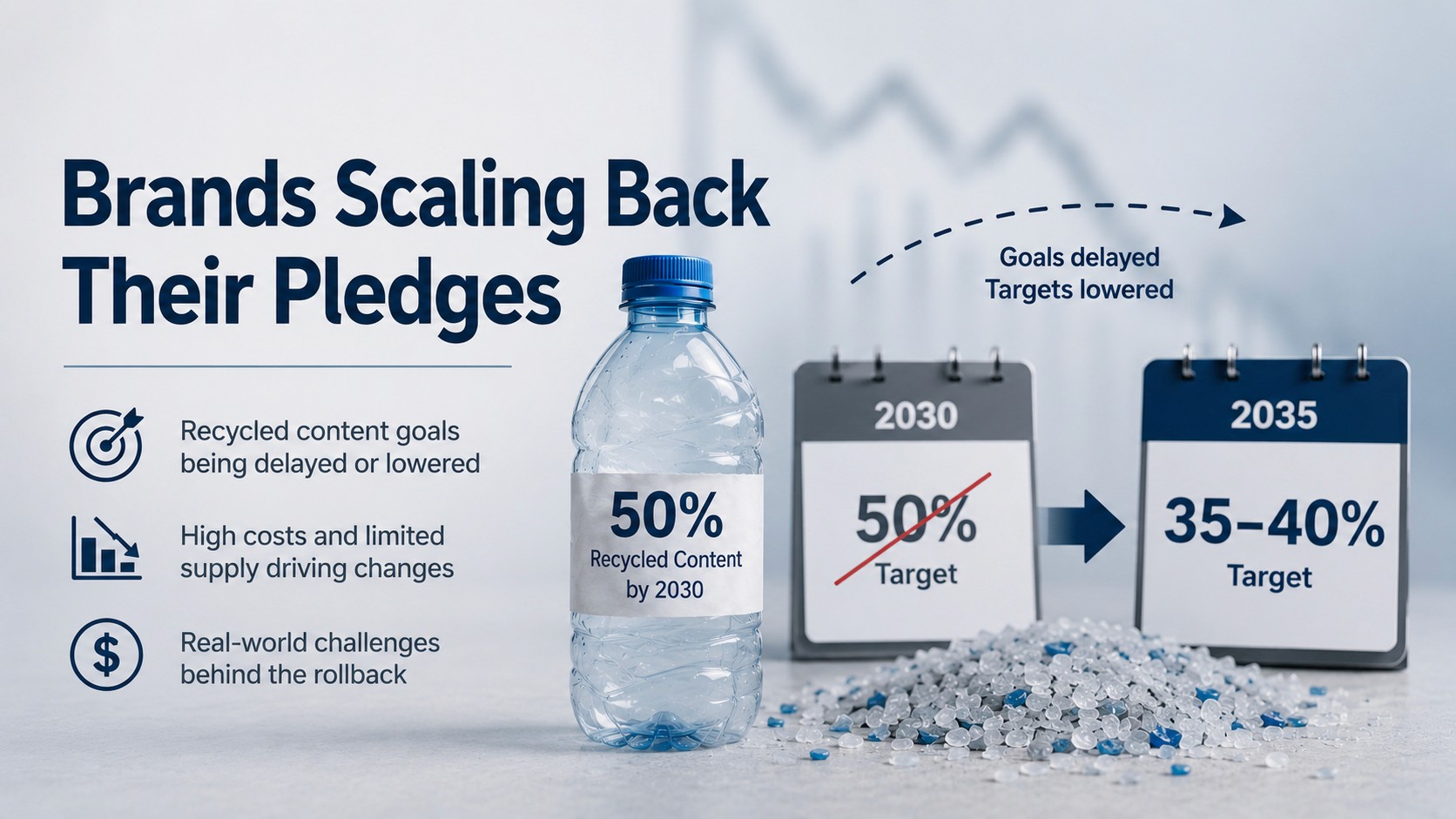
According to recent reporting in Chemical & Engineering News (C&EN), major CPG brands such as Coca-Cola, PepsiCo, Unilever, and Danone are struggling to meet ambitious recycled-content targets set several years ago, including goals to use 50% recycled content in packaging by 2030. Some companies are now extending timelines or scaling back targets, citing high costs and limited availability of recycled materials.
For example, Coca-Cola has shifted its recycled-content horizon from 2030 to 2035, lowering its target from 50% to 35–40%. PepsiCo has sunset its virgin-plastic-reduction goal altogether and pushed its recycled-content target from 50% by 2030 to 40%-or-greater by 2035. Similar adjustments are being reported at Unilever, which now targets a 30% virgin-plastic reduction by 2026 in place of its earlier 50% goal, and at Danone, which replaced its 2025 recycled-content targets with new virgin-reduction goals of 30% by 2030 and 50% by 2040. While environmental groups have criticized such moves as "greenwashing," industry experts argue that these changes also reflect the real economic and recycled-resin supply-shortage constraints that the industry has been facing.

A Paradoxical Market Structure
This creates a new, paradoxical structure in the recycled plastics market: while government regulations (EPR, mandatory recycled-content rules) are tightening and regulatory-driven demand is expected to grow, the voluntary commitments from global brands — the main source of real market demand — are being scaled back or reconsidered.
The potential recycled plastics demand risk includes:
Regulatory-driven demand may expand, but brand-led (pledge-driven) demand could contract.
With recycled resin supply still tight and brands retreating from targets, the price-premium structure could become more volatile.
Recycled plastics companies will need to rethink how to balance regulatory-driven addressable demand with brand-driven addressable demand.
This signals that the recycled plastics market is still on a growth path, but cannot be explained by a simple "demand explosion" narrative alone.
REGENPORT's Strategic Response
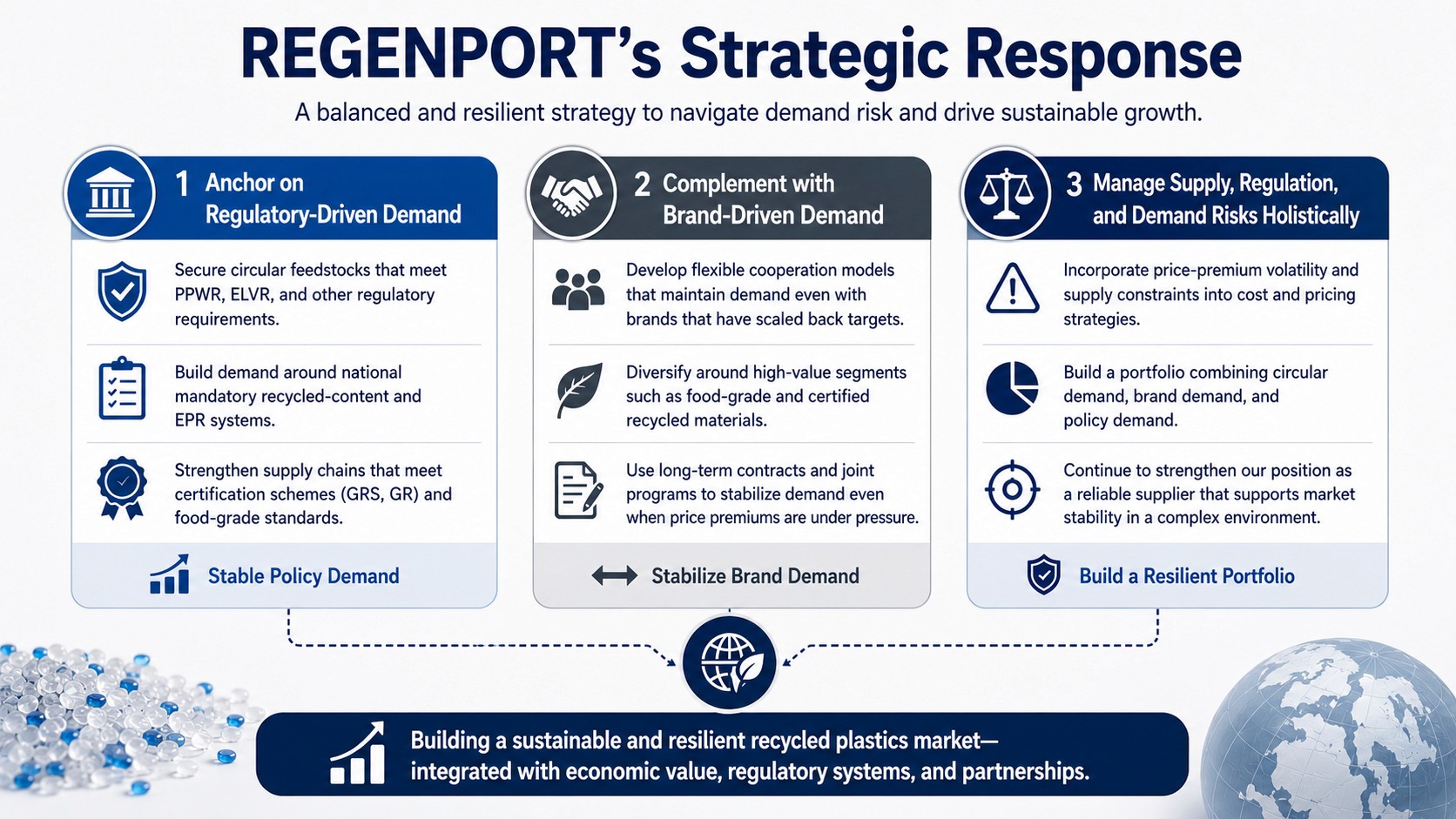
For companies like REGENPORT, navigating this demand risk requires a more balanced and resilient strategy.
Anchor on regulatory-driven demand
Secure circular feedstocks that meet PPWR, ELVR, and other regulatory requirements.
Build demand around national mandatory recycled-content and EPR systems.
Strengthen supply chains that meet certification schemes (GRS, GR) and food-grade standards.
Complement with brand-driven demand
Develop flexible cooperation models that maintain demand even with brands that have scaled back targets.
Diversify around high-value segments such as food-grade and certified recycled materials.
Use long-term contracts and joint programs to stabilize demand even when the price premium for recycled resins is under pressure.
Manage supply, regulation, and demand risks holistically
Incorporate the risk of a more volatile price-premium structure into cost and pricing strategies, acknowledging persistent recycled-resin supply constraints and brand target retreats.
Build a portfolio that combines circular demand, brand demand, and policy demand.
Continue to strengthen REGENPORT's position as a reliable supplier that can support market stability even in a more complex regulatory and demand environment.
This approach conveys that the recycled plastics market can continue to grow sustainably — not just as an "environmental story," but as an industry deeply integrated with economic and regulatory systems.
Conclusion: Toward a Mature Industry
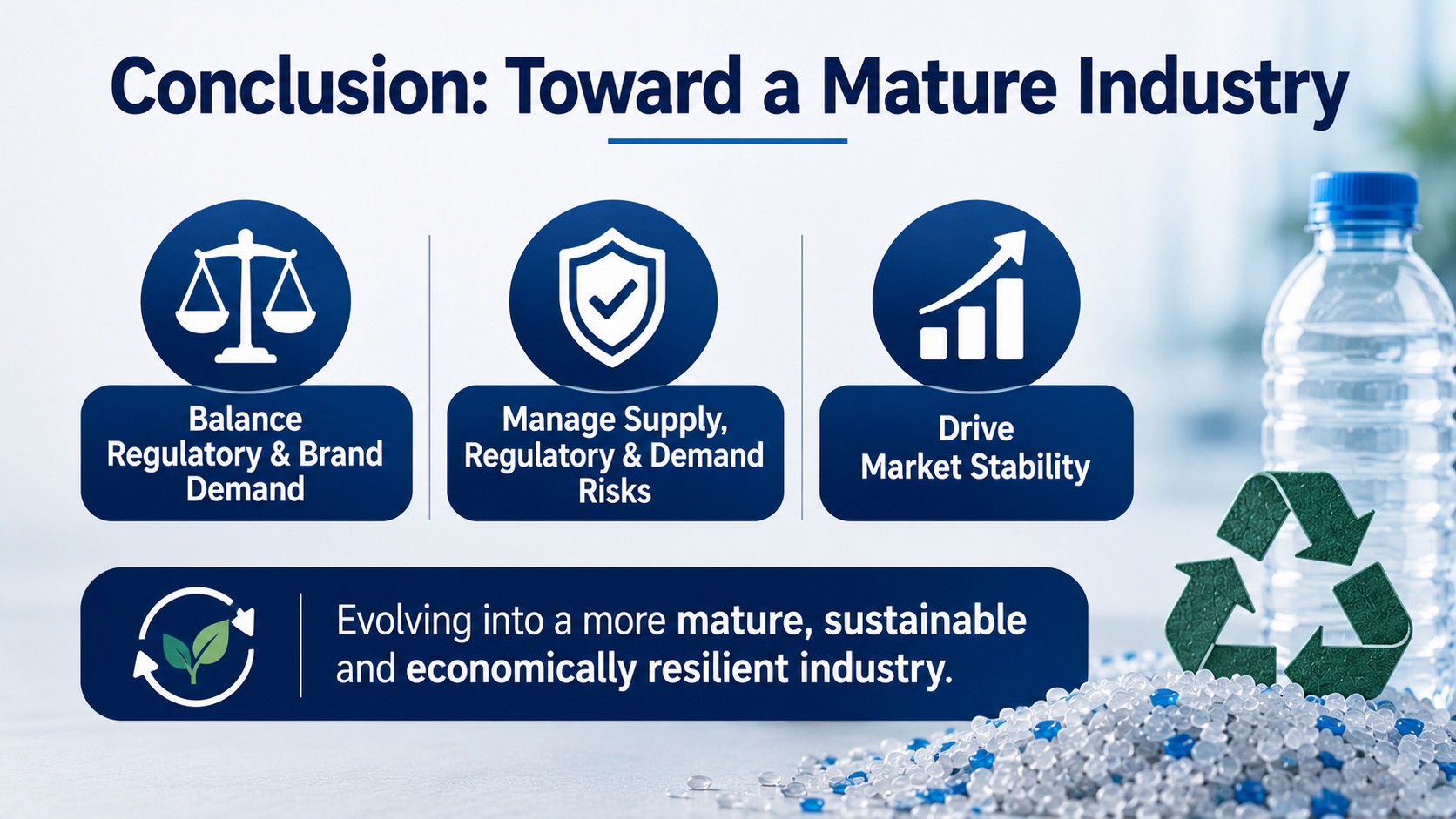
While supply shortages remain, the future shape of prices and demand in the recycled plastics market depends heavily on how brands adjust their commitments. Recycled plastics companies must now think carefully about how to balance regulatory-driven and brand-driven demand, and how to manage supply, regulatory, and demand risks together.
Companies like REGENPORT can play a key role in maintaining market stability by providing reliable circular feedstocks and supply chains — signaling that the recycled plastics sector is evolving into a more mature industry grounded in both sustainability and economic reality.
Image generated with ChatGPT
Source
Chemical & Engineering News, "Plastics recycling is in trouble" → Read the Source
ESG Dive, "Unilever to scale back ESG pledges focused on plastic usage and diversity" → Read the Source
The Old Narrative: Shortage Meets Regulation
In recent years, the dominant narrative in the recycled plastics market has been: "supply shortage + stronger regulation → exploding demand for recycled plastics."
High-quality recycled feedstocks across resin types remain limited relative to global demand, creating an ongoing supply shortage and structural supply–demand imbalance. Regulations such as the EU's PPWR (Packaging and Packaging Waste Regulation) and ELVR (mandatory use of recycled plastics in vehicles), along with EPR and mandatory recycled-content schemes in multiple countries, are pushing companies to increase their use of recycled materials. Against this backdrop, the sector has largely been explained through a "supply shortage + regulatory pressure → demand explosion" scenario.
Recycled plastics companies and traders have therefore focused on building portfolios anchored in regulatory-driven demand, while strengthening certification systems (GRS, GR) and supply chains that meet food-grade standards. Market reports suggest that food-grade recycled plastics demand is expected to grow at around 8% annually through 2030, with demand likely to continue outpacing supply and maintaining a structural price premium.
Brands Scaling Back Their Pledges
However, recent developments show a different story emerging from the demand side of the recycled plastics market.
According to recent reporting in Chemical & Engineering News (C&EN), major CPG brands such as Coca-Cola, PepsiCo, Unilever, and Danone are struggling to meet ambitious recycled-content targets set several years ago, including goals to use 50% recycled content in packaging by 2030. Some companies are now extending timelines or scaling back targets, citing high costs and limited availability of recycled materials.
For example, Coca-Cola has shifted its recycled-content horizon from 2030 to 2035, lowering its target from 50% to 35–40%. PepsiCo has sunset its virgin-plastic-reduction goal altogether and pushed its recycled-content target from 50% by 2030 to 40%-or-greater by 2035. Similar adjustments are being reported at Unilever, which now targets a 30% virgin-plastic reduction by 2026 in place of its earlier 50% goal, and at Danone, which replaced its 2025 recycled-content targets with new virgin-reduction goals of 30% by 2030 and 50% by 2040. While environmental groups have criticized such moves as "greenwashing," industry experts argue that these changes also reflect the real economic and recycled-resin supply-shortage constraints that the industry has been facing.
A Paradoxical Market Structure
This creates a new, paradoxical structure in the recycled plastics market: while government regulations (EPR, mandatory recycled-content rules) are tightening and regulatory-driven demand is expected to grow, the voluntary commitments from global brands — the main source of real market demand — are being scaled back or reconsidered.
The potential recycled plastics demand risk includes:
Regulatory-driven demand may expand, but brand-led (pledge-driven) demand could contract.
With recycled resin supply still tight and brands retreating from targets, the price-premium structure could become more volatile.
Recycled plastics companies will need to rethink how to balance regulatory-driven addressable demand with brand-driven addressable demand.
This signals that the recycled plastics market is still on a growth path, but cannot be explained by a simple "demand explosion" narrative alone.
REGENPORT's Strategic Response
For companies like REGENPORT, navigating this demand risk requires a more balanced and resilient strategy.
Anchor on regulatory-driven demand
Secure circular feedstocks that meet PPWR, ELVR, and other regulatory requirements.
Build demand around national mandatory recycled-content and EPR systems.
Strengthen supply chains that meet certification schemes (GRS, GR) and food-grade standards.
Complement with brand-driven demand
Develop flexible cooperation models that maintain demand even with brands that have scaled back targets.
Diversify around high-value segments such as food-grade and certified recycled materials.
Use long-term contracts and joint programs to stabilize demand even when the price premium for recycled resins is under pressure.
Manage supply, regulation, and demand risks holistically
Incorporate the risk of a more volatile price-premium structure into cost and pricing strategies, acknowledging persistent recycled-resin supply constraints and brand target retreats.
Build a portfolio that combines circular demand, brand demand, and policy demand.
Continue to strengthen REGENPORT's position as a reliable supplier that can support market stability even in a more complex regulatory and demand environment.
This approach conveys that the recycled plastics market can continue to grow sustainably — not just as an "environmental story," but as an industry deeply integrated with economic and regulatory systems.
Conclusion: Toward a Mature Industry
While supply shortages remain, the future shape of prices and demand in the recycled plastics market depends heavily on how brands adjust their commitments. Recycled plastics companies must now think carefully about how to balance regulatory-driven and brand-driven demand, and how to manage supply, regulatory, and demand risks together.
Companies like REGENPORT can play a key role in maintaining market stability by providing reliable circular feedstocks and supply chains — signaling that the recycled plastics sector is evolving into a more mature industry grounded in both sustainability and economic reality.
Image generated with ChatGPT
Source
Chemical & Engineering News, "Plastics recycling is in trouble" → Read the Source
ESG Dive, "Unilever to scale back ESG pledges focused on plastic usage and diversity" → Read the Source
Turning Pledges Into Orders
Grades • Specs • Availability
Browse rPP →
Turning Pledges Into Orders
Turning Pledges Into Orders
Review rPP grades by feedstock, properties, stock and MOQ.
Review rPP grades by feedstock, properties, stock and MOQ.
Browse rPP →
Browse rPP →
Looking for samples or ready to source? Submit your request for pricing, availability, and technical information.
Looking for samples or ready to source? Submit your request for pricing, availability, and technical information.
Request a Quote →
Request a Quote →
Posted by REGENPORT
REGENPORT is a global platform connecting buyers and suppliers in the recycled materials and sustainable packaging industries.