CATEGORY
CATEGORY
Regulation
Regulation
Regulation
California SB 54 and PCR Content Requirements: Packaging Compliance Guide for Brands
California SB 54 and PCR Content Requirements: Packaging Compliance Guide for Brands
California SB 54 and PCR Content Requirements: Packaging Compliance Guide for Brands
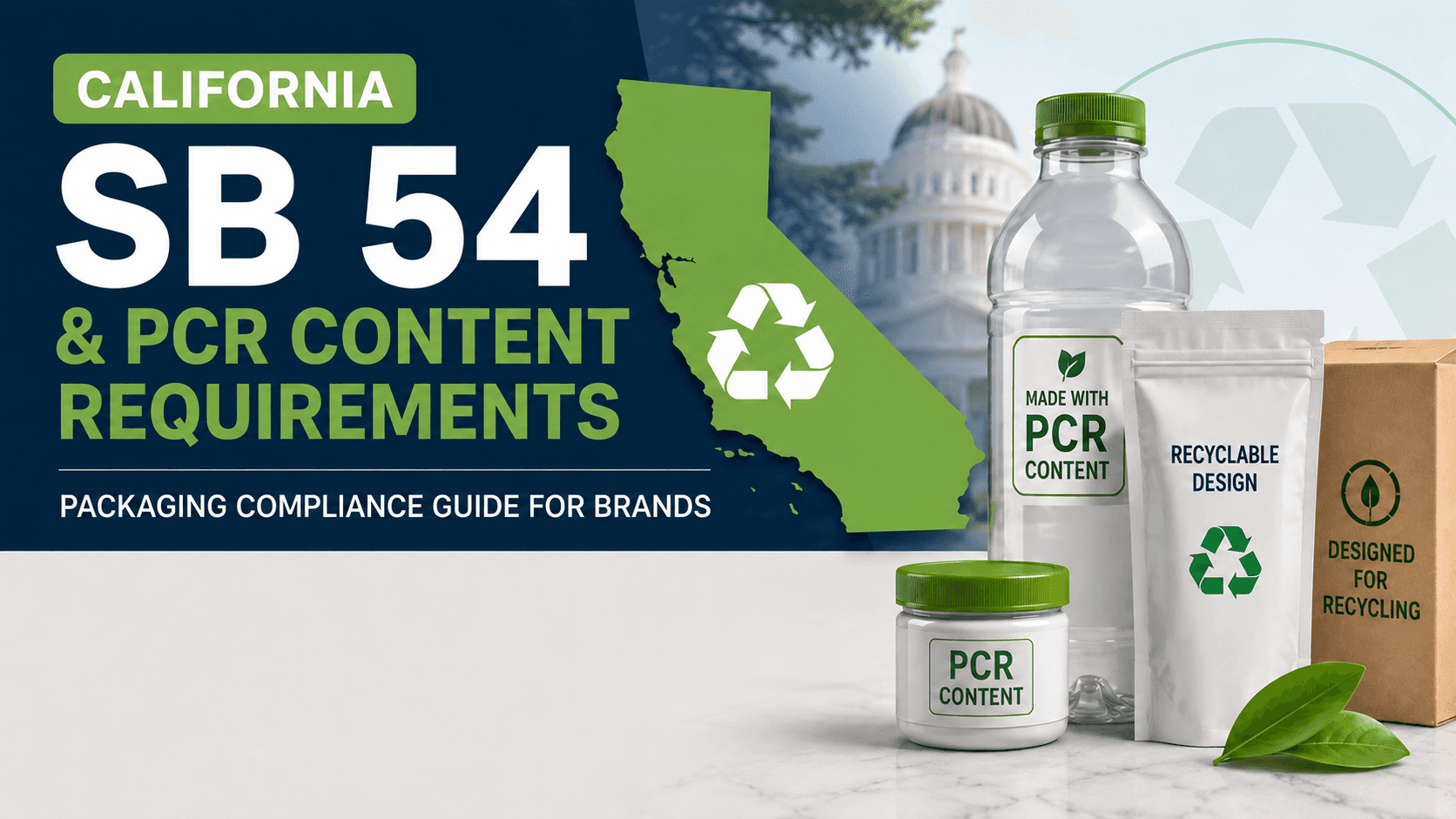
California's SB 54 isn't a direct PCR mandate, but its EPR requirements are accelerating recycled-content integration and compliance planning for U.S. packaging — here's what to review.
What SB 54 Changes in Packaging Regulation
California SB 54 introduces extended producer responsibility (EPR) requirements that change how packaging performance is evaluated. Instead of relying on general sustainability claims, companies are expected to demonstrate measurable and reportable outcomes. This shift requires brands to review packaging not only from a design perspective but also in terms of regulatory compliance and long-term performance.
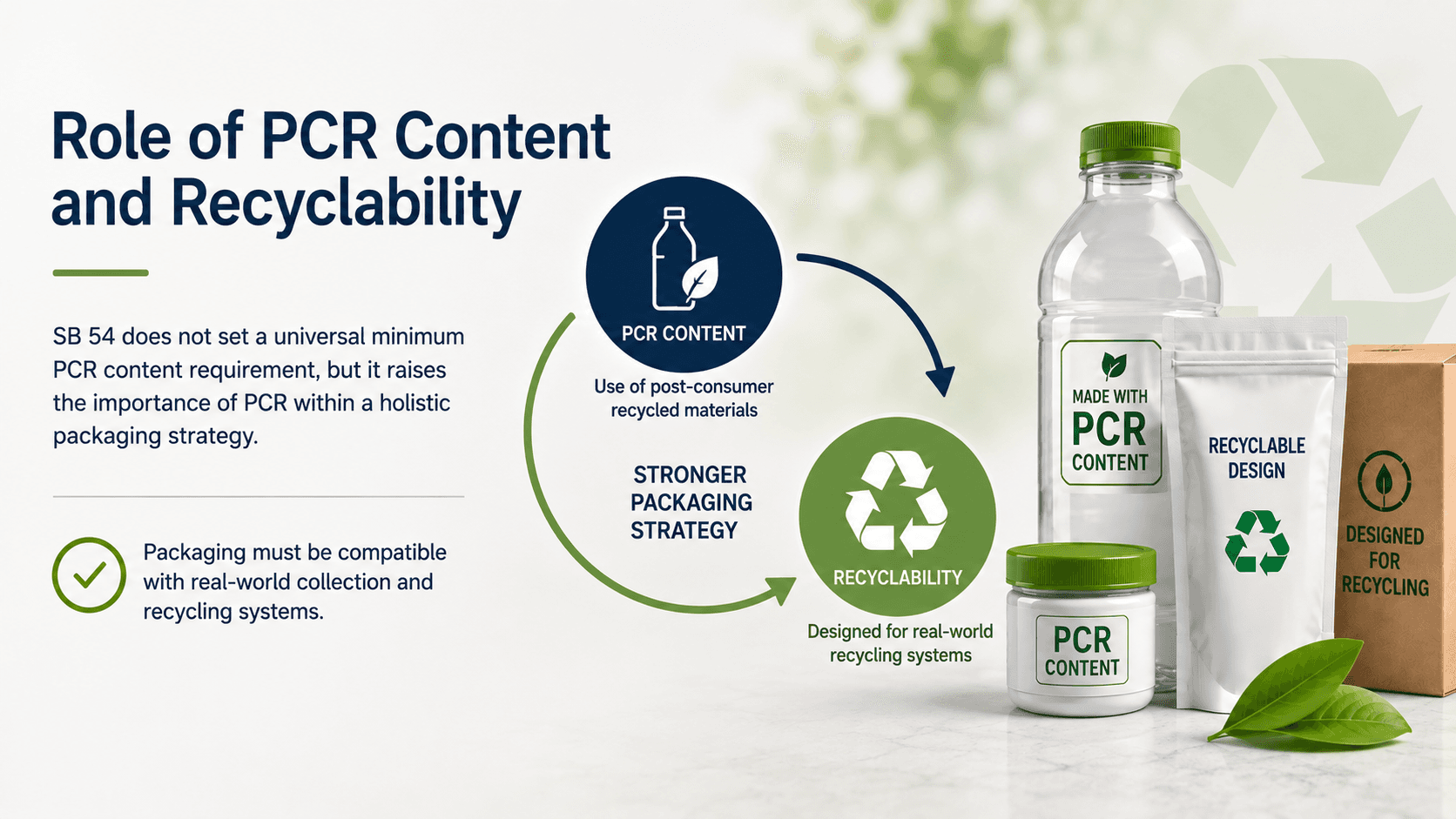
Role of PCR Content and Recyclability
SB 54 does not impose a universal minimum requirement for post-consumer recycled (PCR) content. However, it has increased the importance of PCR within broader packaging strategies. Companies now need to evaluate recycled content together with recyclability, material selection, and end-of-life processing. A key requirement is that packaging must be compatible with real-world collection and recycling systems. For example, multi-layer flexible packaging may be technically recyclable but still face compliance challenges if it is not widely processed in practice.
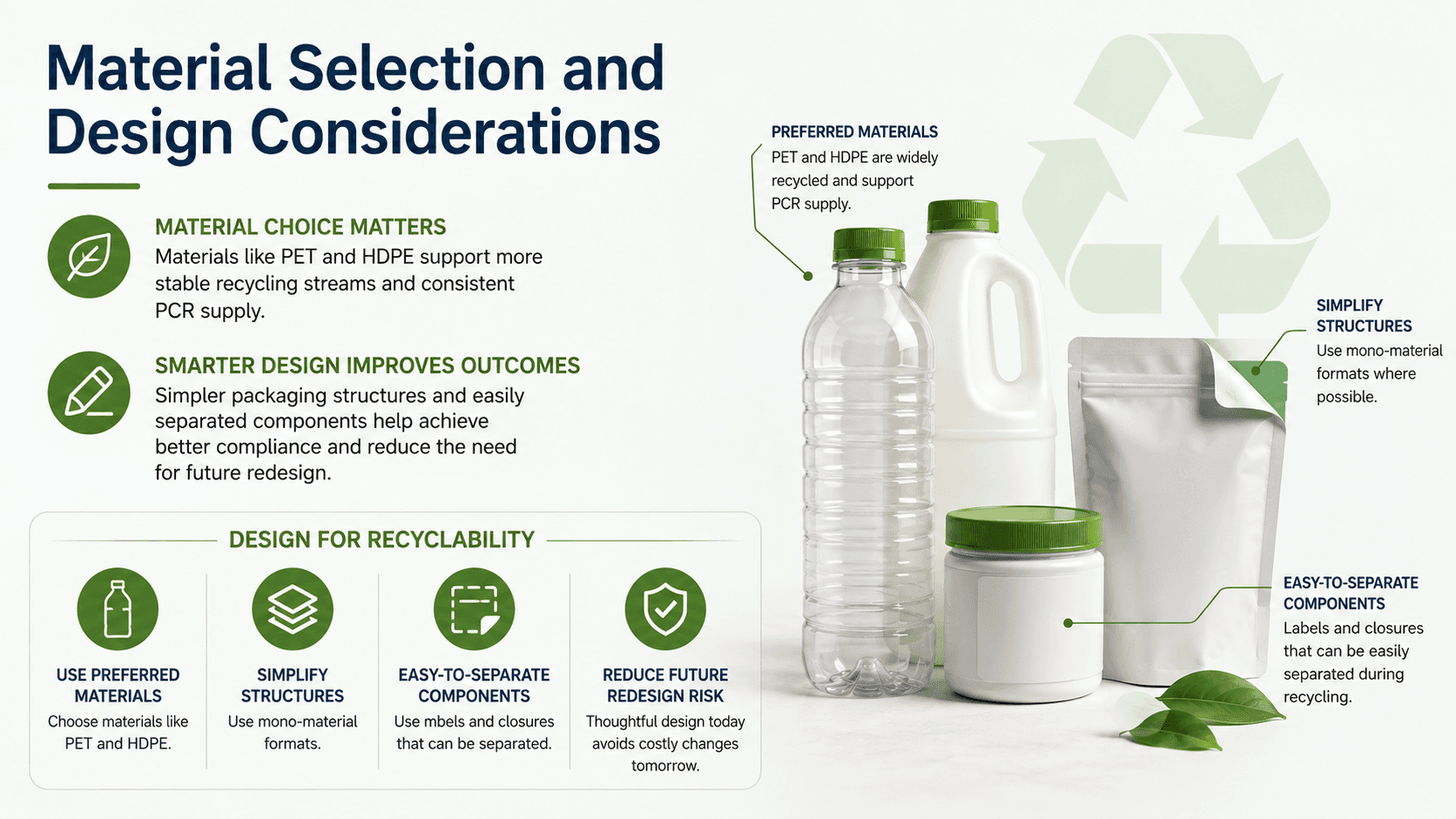
Material Selection and Design Considerations
Material choice plays a central role in both recyclability and PCR feasibility. Materials such as PET and HDPE are more likely to support stable recycling streams and consistent PCR supply. From a design perspective, simplifying packaging structures can improve compliance outcomes. This includes using mono-material formats, reducing incompatible components, and applying labels that can be easily separated during recycling. These design adjustments can also reduce the likelihood of future redesign.
PCR Sourcing and Regulatory Uncertainty
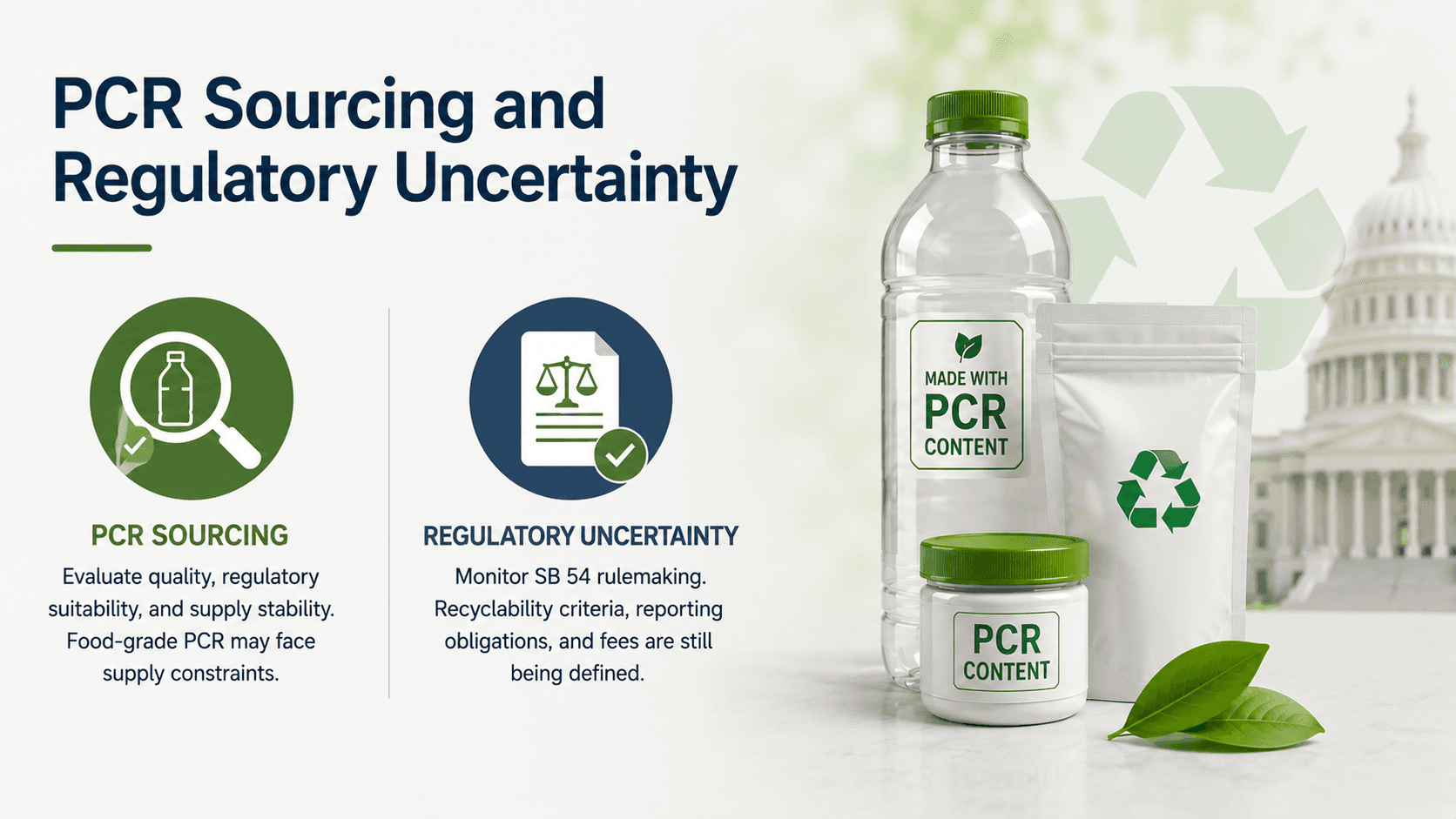
PCR sourcing requires evaluation of quality, regulatory suitability, and supply stability. In particular, food-grade PCR may face supply constraints due to processing and regulatory requirements. At the same time, companies should monitor ongoing rulemaking under SB 54. Key elements such as recyclability criteria, reporting obligations, and fee structures are still being defined and will directly affect compliance requirements.
Practical Example and Business Implications
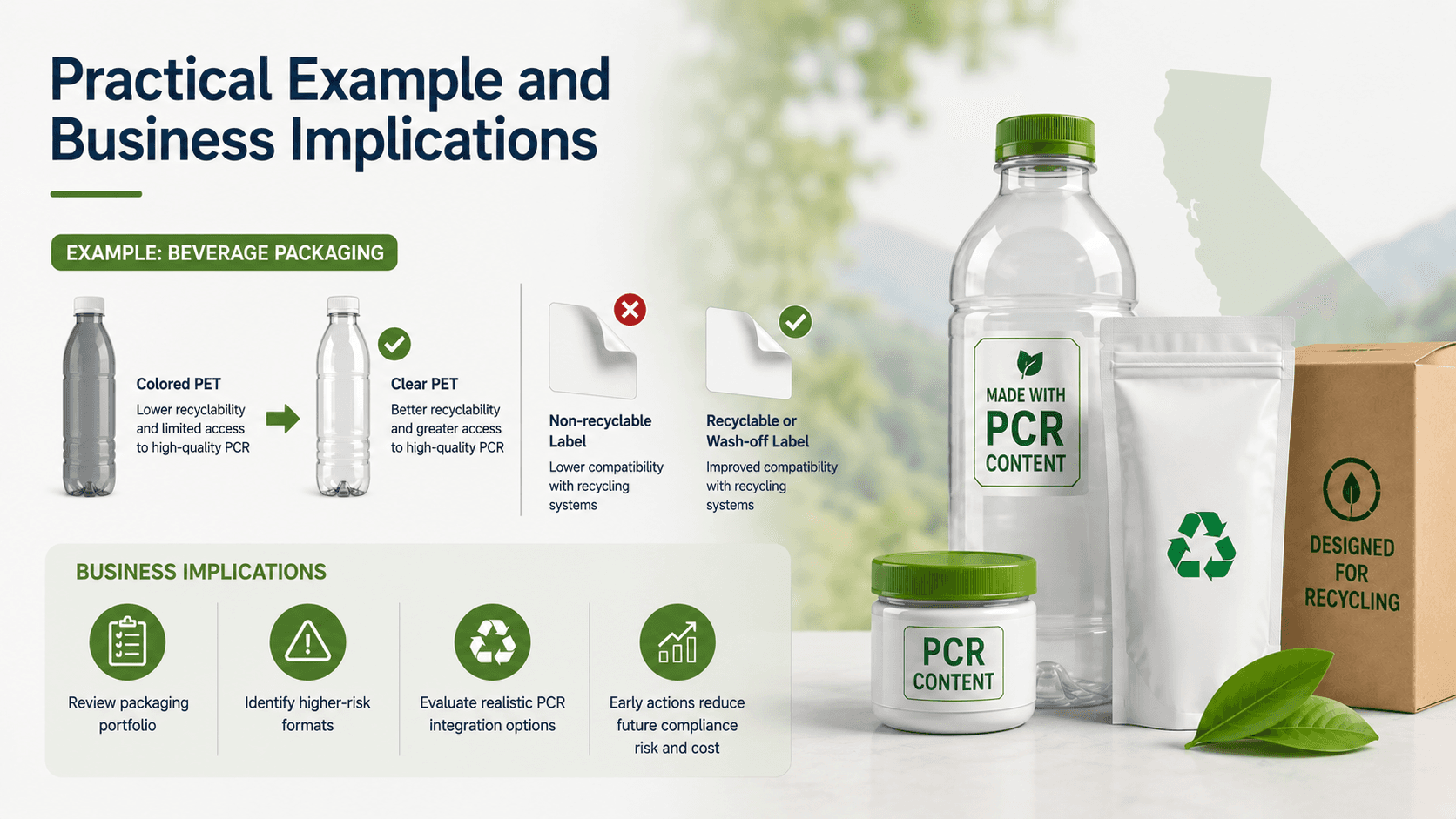
A common example is beverage packaging. Transitioning from colored PET to clear PET can improve recyclability and increase access to high-quality PCR. Similarly, replacing non-recyclable labels with recyclable or wash-off alternatives can improve compatibility with recycling systems. Companies selling into California should review their packaging portfolio, identify higher-risk formats, and evaluate realistic PCR integration options. SB 54 should be treated as an ongoing operational requirement, where early and incremental adjustments help reduce future compliance risk and cost.
Image generated with ChatGPT
What SB 54 Changes in Packaging Regulation
California SB 54 introduces extended producer responsibility (EPR) requirements that change how packaging performance is evaluated. Instead of relying on general sustainability claims, companies are expected to demonstrate measurable and reportable outcomes. This shift requires brands to review packaging not only from a design perspective but also in terms of regulatory compliance and long-term performance.
Role of PCR Content and Recyclability
SB 54 does not impose a universal minimum requirement for post-consumer recycled (PCR) content. However, it has increased the importance of PCR within broader packaging strategies. Companies now need to evaluate recycled content together with recyclability, material selection, and end-of-life processing. A key requirement is that packaging must be compatible with real-world collection and recycling systems. For example, multi-layer flexible packaging may be technically recyclable but still face compliance challenges if it is not widely processed in practice.
Material Selection and Design Considerations
Material choice plays a central role in both recyclability and PCR feasibility. Materials such as PET and HDPE are more likely to support stable recycling streams and consistent PCR supply. From a design perspective, simplifying packaging structures can improve compliance outcomes. This includes using mono-material formats, reducing incompatible components, and applying labels that can be easily separated during recycling. These design adjustments can also reduce the likelihood of future redesign.
PCR Sourcing and Regulatory Uncertainty
PCR sourcing requires evaluation of quality, regulatory suitability, and supply stability. In particular, food-grade PCR may face supply constraints due to processing and regulatory requirements. At the same time, companies should monitor ongoing rulemaking under SB 54. Key elements such as recyclability criteria, reporting obligations, and fee structures are still being defined and will directly affect compliance requirements.
Practical Example and Business Implications
A common example is beverage packaging. Transitioning from colored PET to clear PET can improve recyclability and increase access to high-quality PCR. Similarly, replacing non-recyclable labels with recyclable or wash-off alternatives can improve compatibility with recycling systems. Companies selling into California should review their packaging portfolio, identify higher-risk formats, and evaluate realistic PCR integration options. SB 54 should be treated as an ongoing operational requirement, where early and incremental adjustments help reduce future compliance risk and cost.
Image generated with ChatGPT
Sourcing for SB 54 Compliance
Grades • Specs • Availability
Browse rPP →
Sourcing for SB 54 Compliance
Sourcing for SB 54 Compliance
Compare rPP grades by feedstock, properties, certification, stock and MOQ.
Compare rPP grades by feedstock, properties, certification, stock and MOQ.
Browse rPP →
Browse rPP →
Looking for samples or ready to source? Submit your request for pricing, availability, and technical information.
Looking for samples or ready to source? Submit your request for pricing, availability, and technical information.
Request a Quote →
Request a Quote →
Posted by REGENPORT
REGENPORT is a global platform connecting buyers and suppliers in the recycled materials and sustainable packaging industries.