CATEGORY
CATEGORY
News
News
News
Eight Years After National Sword: How China’s Plastic Waste Ban Reshaped the Recycling Market
Eight Years After National Sword: How China’s Plastic Waste Ban Reshaped the Recycling Market
Eight Years After National Sword: How China’s Plastic Waste Ban Reshaped the Recycling Market
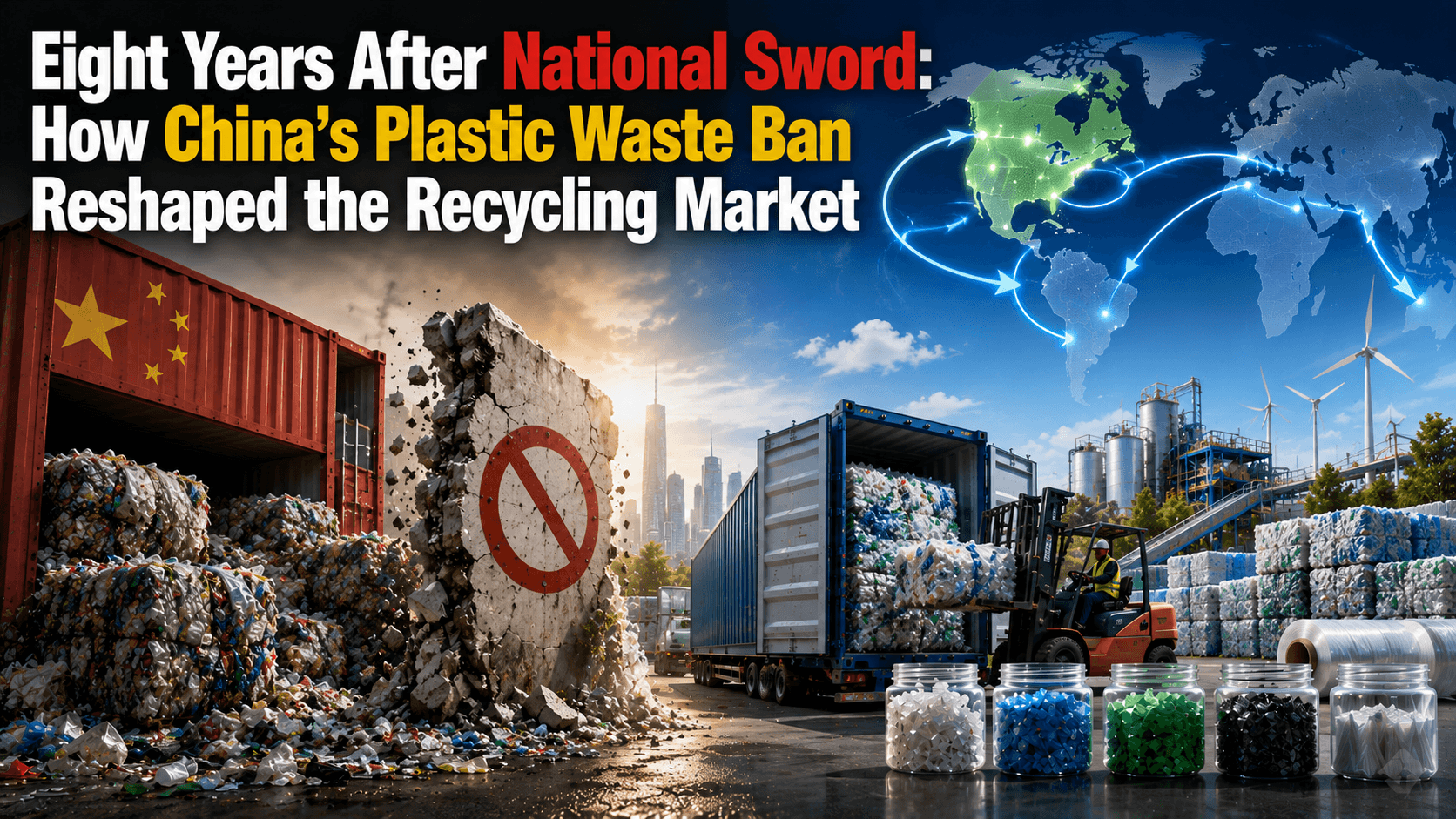
China's 2018 National Sword ban on plastic waste imports upended the global recycled plastics trade, forcing a shift from global efficiency to regional supply chains. Eight years later, that shift has hardened into stricter quality standards and rising demand for verified PCR material.
In a previous post, we covered the policy itself — what National Sword was, and why it mattered: China's National Sword Policy: How It Reshaped Global Recycling (And Why It Still Matters)
This post looks at what the market actually looks like eight years on.
For years, the global recycled plastics market ran on a simple idea: the US and Europe exported plastic waste, and China processed it. At its peak, nearly half of the world's recyclable materials flowed into China.
Then, in 2018, that system broke — and it sent shockwaves the market is still absorbing today.
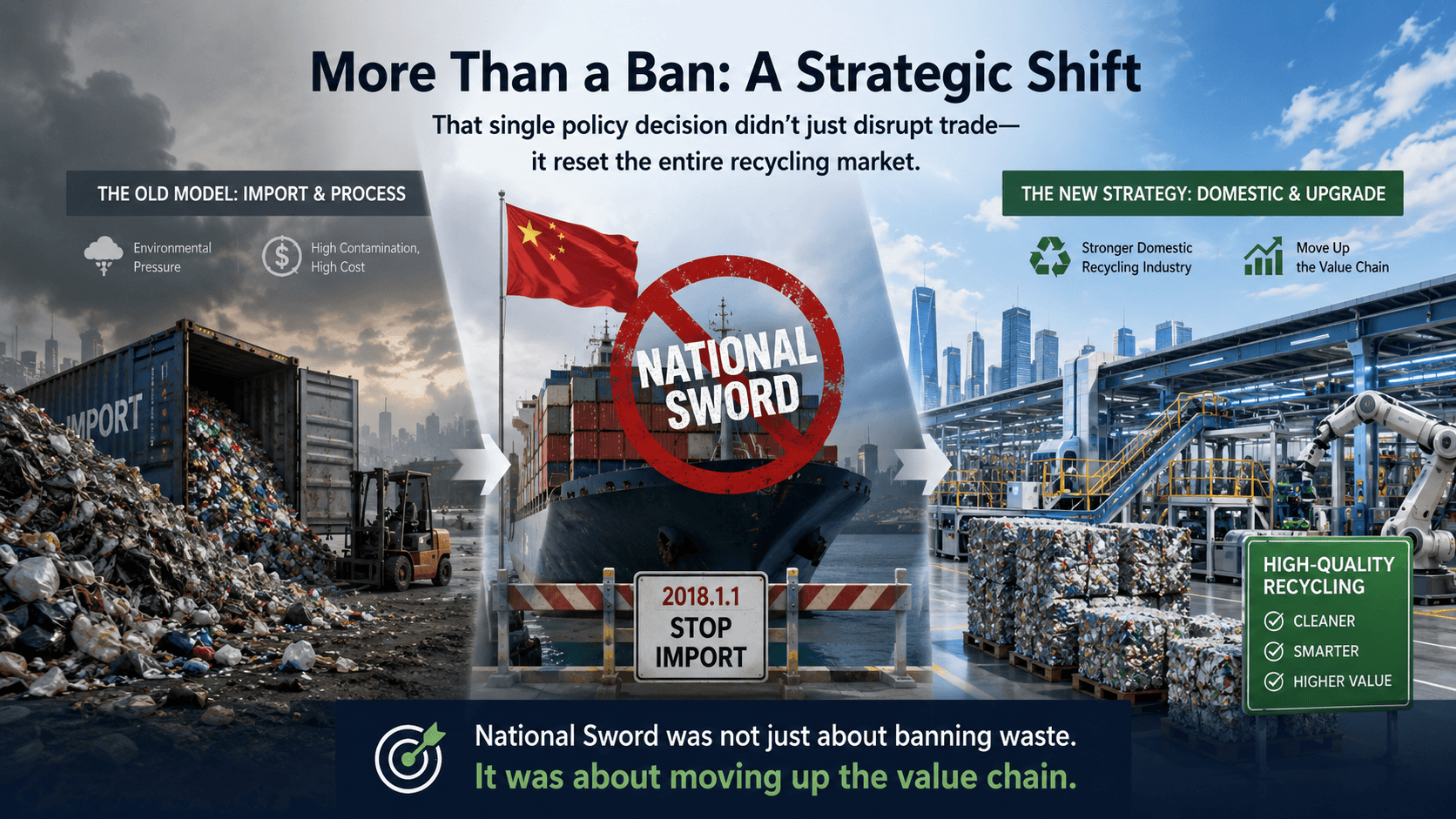
More Than a Ban: A Strategic Shift
That single policy decision didn’t just disrupt trade—it reset the entire recycling market.
China’s move was driven by both environmental pressure and industrial strategy. Contaminated waste had become a growing burden, generating pollution and additional processing costs. At the same time, China’s domestic recycling sector had matured, reducing its reliance on imported materials.
National Sword was not just about banning waste. It was about moving up the value chain.
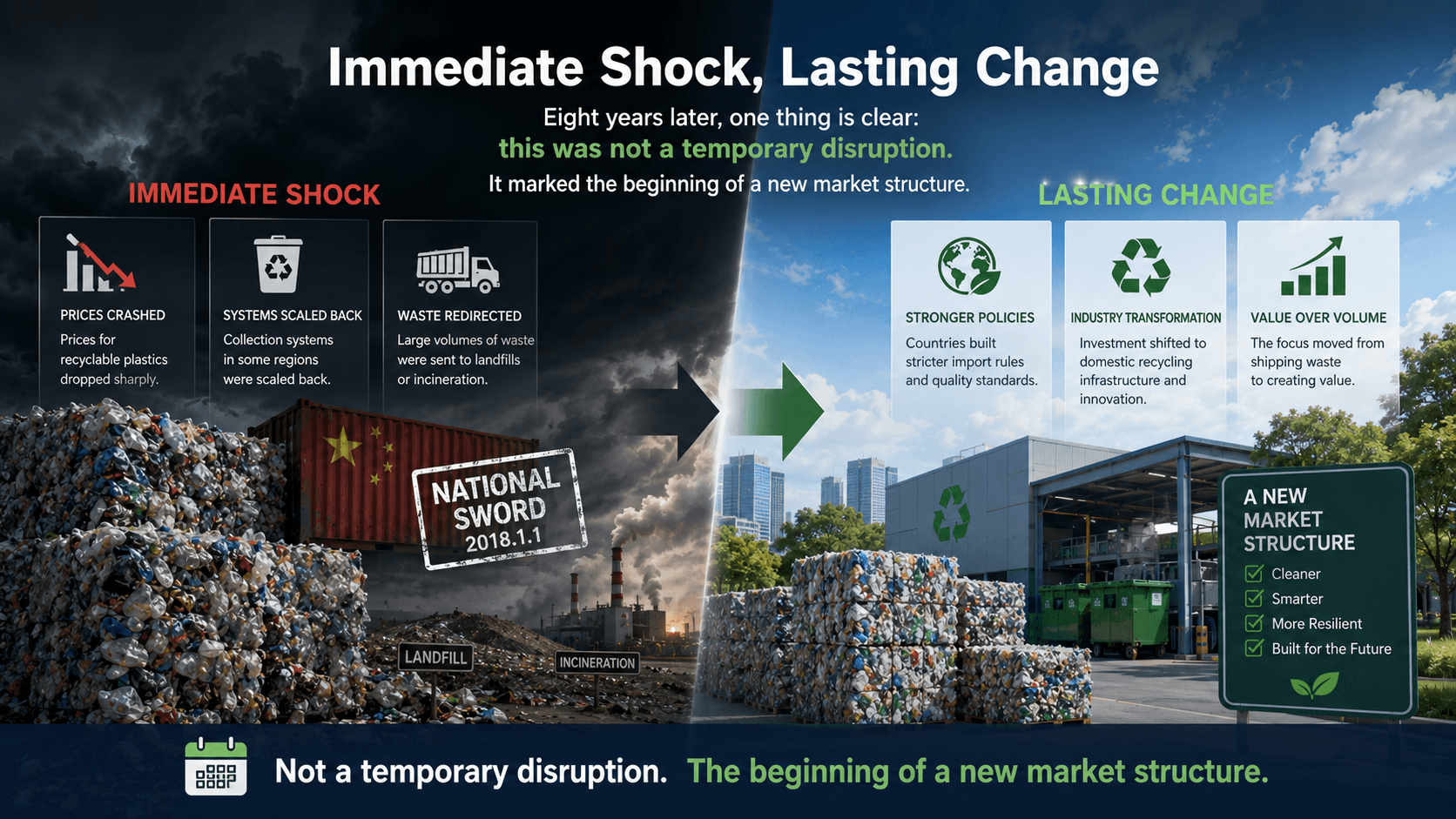
Immediate Shock, Lasting Change
The shock was immediate. Prices for recyclable plastics dropped, collection systems in some regions were scaled back, and large volumes of waste were redirected to landfills or incineration.
Eight years later, one thing is clear: this was not a temporary disruption. It marked the beginning of a new market structure.
Trade Flows Rewritten
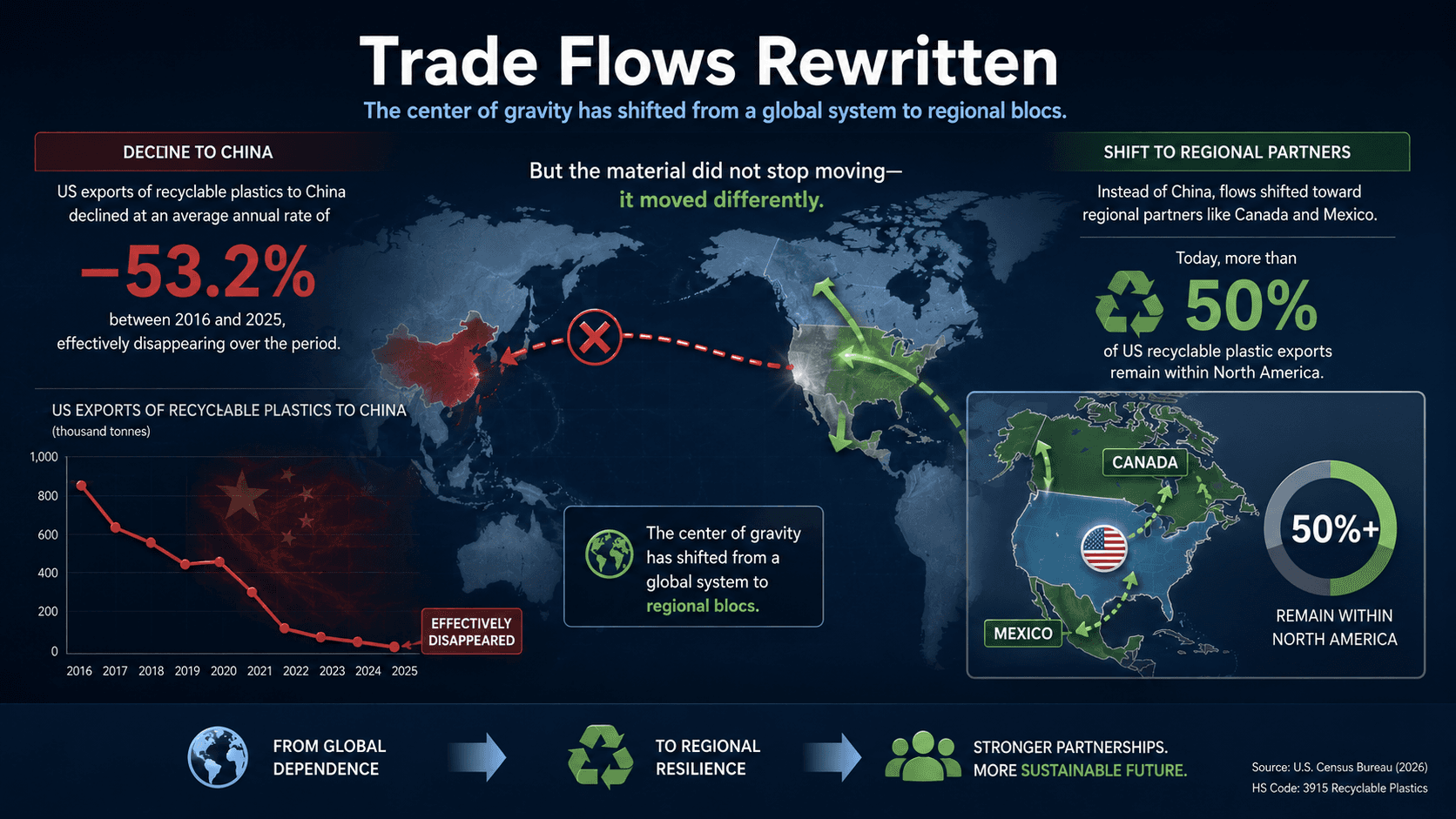
Recent data from 2026 makes that shift unmistakable. US exports of recyclable plastics to China declined at an average annual rate of –53.2% between 2016 and 2025, effectively disappearing over the period.
But the material did not stop moving—it moved differently. Instead of China, flows shifted toward regional partners like Canada and Mexico. Today, more than half of US recyclable plastic exports remain within North America.
The center of gravity has shifted from a global system to regional blocs.
Domestic Processing and Market Fragmentation
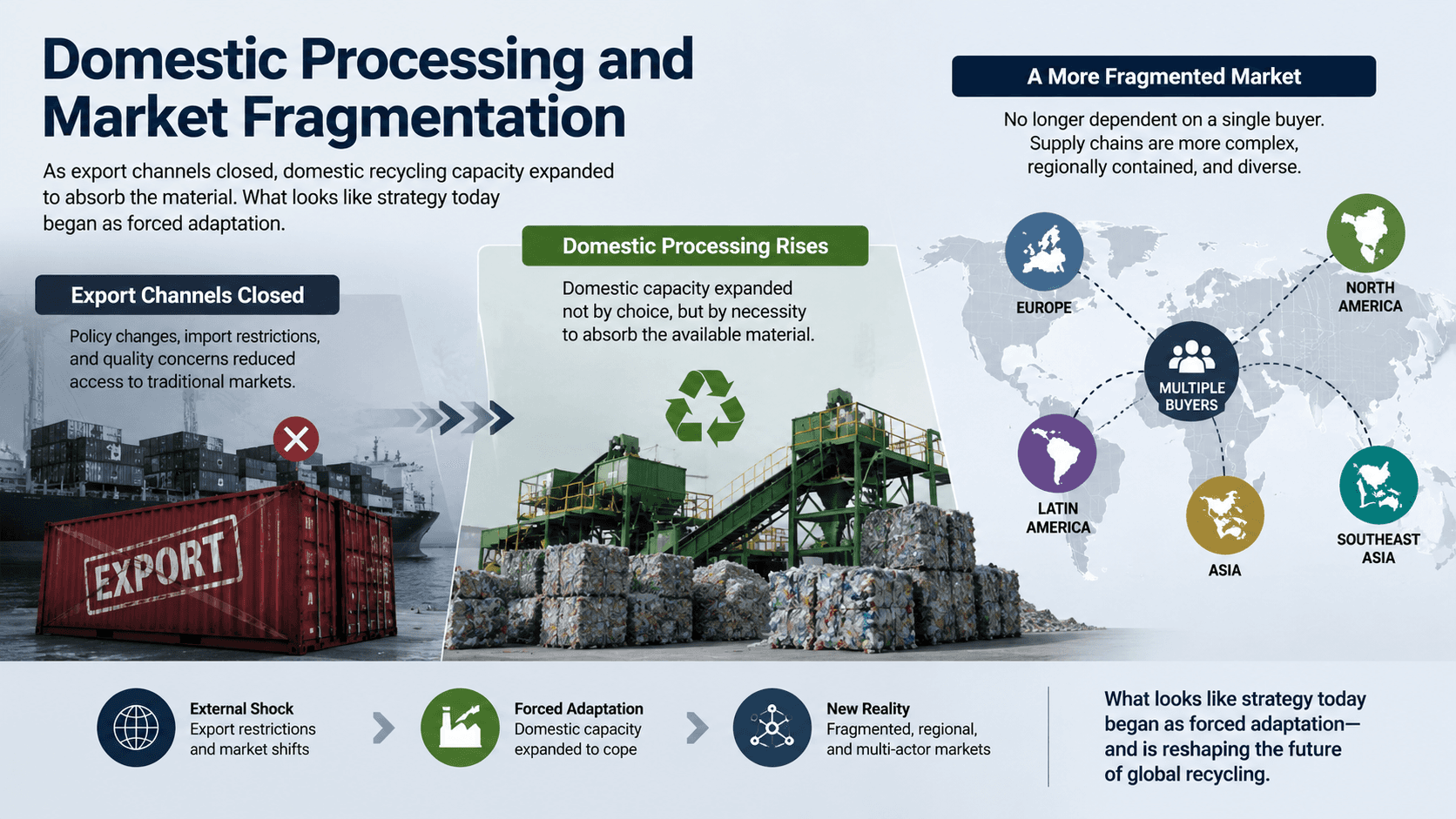
Another critical shift is the rise of domestic processing. This is often misunderstood. Countries did not reduce exports because they chose to recycle more locally—the opposite happened.
As export channels closed, domestic recycling capacity expanded to absorb the material. What looks like strategy today began as forced adaptation.
At the same time, the market itself has become more fragmented. It is no longer built around a single dominant buyer, and supply chains are increasingly complex and regionally contained.
From Volume to Quality
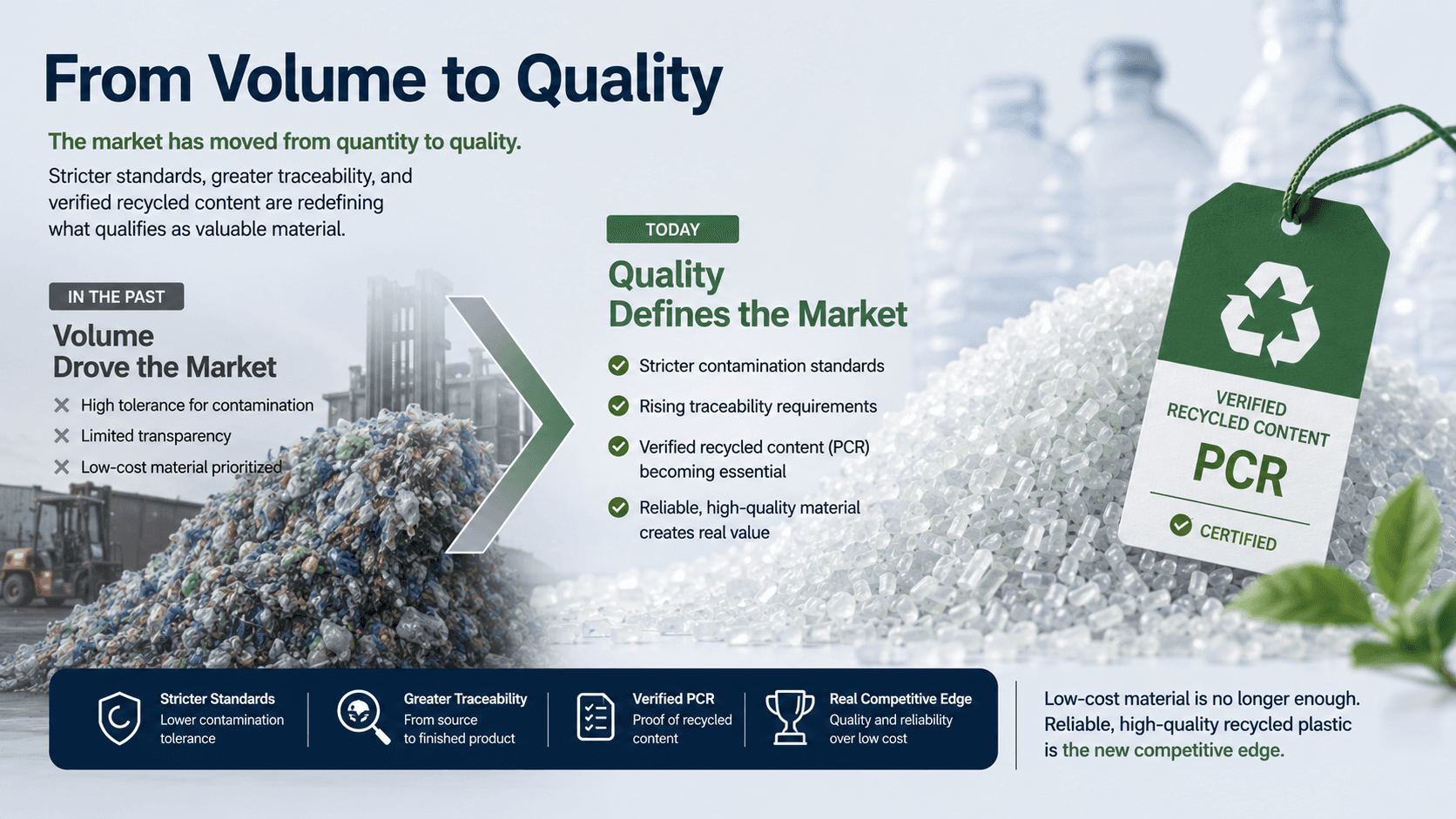
Perhaps the most important change is not where materials go, but what qualifies as acceptable material.
In the past, volume drove the market. Today, quality defines it. Contamination standards are stricter, traceability requirements are rising, and verified recycled content—PCR—is becoming essential.
Low-cost material is no longer enough. Reliable, high-quality recycled plastic is now the real competitive edge.
A Fundamentally Different Market
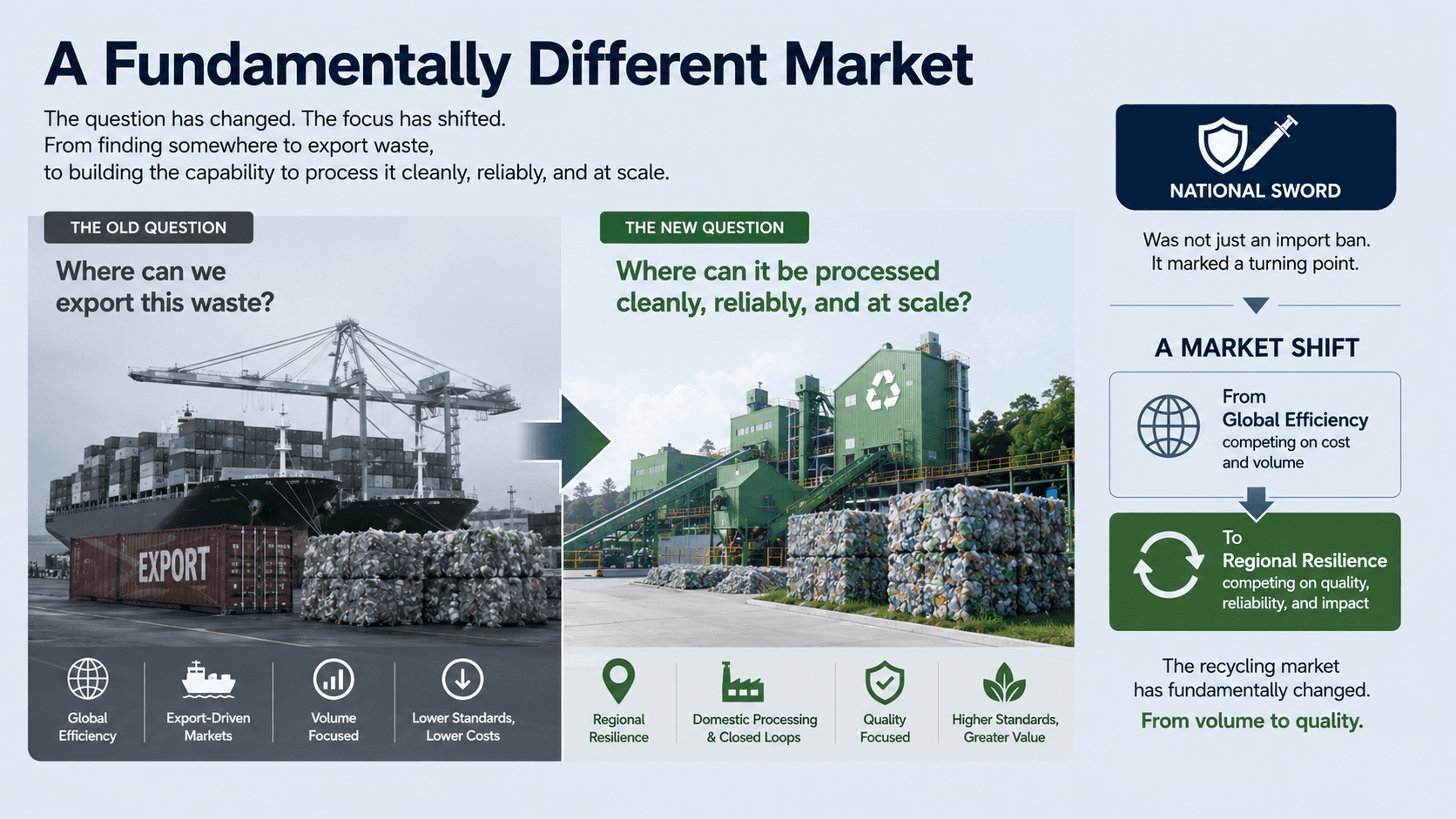
In simple terms, the question has changed. It used to be: where can we export this waste? Now it is: where can it be processed cleanly, reliably, and at scale?
National Sword was not just an import ban. It marked the shift of the recycling market from global efficiency to regional resilience—and from volume to quality.
Image generated with ChatGPT
Source: Plastics Today, "US Recyclable Plastics Trade Shifts as Domestic Recycling Expands", 3 June 2026 → Read the Source
In a previous post, we covered the policy itself — what National Sword was, and why it mattered: China's National Sword Policy: How It Reshaped Global Recycling (And Why It Still Matters)
This post looks at what the market actually looks like eight years on.
For years, the global recycled plastics market ran on a simple idea: the US and Europe exported plastic waste, and China processed it. At its peak, nearly half of the world's recyclable materials flowed into China.
Then, in 2018, that system broke — and it sent shockwaves the market is still absorbing today.
More Than a Ban: A Strategic Shift
That single policy decision didn’t just disrupt trade—it reset the entire recycling market.
China’s move was driven by both environmental pressure and industrial strategy. Contaminated waste had become a growing burden, generating pollution and additional processing costs. At the same time, China’s domestic recycling sector had matured, reducing its reliance on imported materials.
National Sword was not just about banning waste. It was about moving up the value chain.
Immediate Shock, Lasting Change
The shock was immediate. Prices for recyclable plastics dropped, collection systems in some regions were scaled back, and large volumes of waste were redirected to landfills or incineration.
Eight years later, one thing is clear: this was not a temporary disruption. It marked the beginning of a new market structure.
Trade Flows Rewritten
Recent data from 2026 makes that shift unmistakable. US exports of recyclable plastics to China declined at an average annual rate of –53.2% between 2016 and 2025, effectively disappearing over the period.
But the material did not stop moving—it moved differently. Instead of China, flows shifted toward regional partners like Canada and Mexico. Today, more than half of US recyclable plastic exports remain within North America.
The center of gravity has shifted from a global system to regional blocs.
Domestic Processing and Market Fragmentation
Another critical shift is the rise of domestic processing. This is often misunderstood. Countries did not reduce exports because they chose to recycle more locally—the opposite happened.
As export channels closed, domestic recycling capacity expanded to absorb the material. What looks like strategy today began as forced adaptation.
At the same time, the market itself has become more fragmented. It is no longer built around a single dominant buyer, and supply chains are increasingly complex and regionally contained.
From Volume to Quality
Perhaps the most important change is not where materials go, but what qualifies as acceptable material.
In the past, volume drove the market. Today, quality defines it. Contamination standards are stricter, traceability requirements are rising, and verified recycled content—PCR—is becoming essential.
Low-cost material is no longer enough. Reliable, high-quality recycled plastic is now the real competitive edge.
A Fundamentally Different Market
In simple terms, the question has changed. It used to be: where can we export this waste? Now it is: where can it be processed cleanly, reliably, and at scale?
National Sword was not just an import ban. It marked the shift of the recycling market from global efficiency to regional resilience—and from volume to quality.
Image generated with ChatGPT
Source: Plastics Today, "US Recyclable Plastics Trade Shifts as Domestic Recycling Expands", 3 June 2026 → Read the Source
Sourcing After the Ban
Grades • Specs • Availability
Browse rLDPE →
Sourcing After the Ban
Sourcing After the Ban
Compare rLDPE grades by application — film, sheet, pipe and compounding.
Compare rLDPE grades by application — film, sheet, pipe and compounding.
Browse rLDPE →
Browse rLDPE →
Looking for samples or ready to source? Submit your request for pricing, availability, and technical information.
Looking for samples or ready to source? Submit your request for pricing, availability, and technical information.
Request a Quote →
Request a Quote →
Posted by REGENPORT
REGENPORT is a global platform connecting buyers and suppliers in the recycled materials and sustainable packaging industries.