CATEGORY
CATEGORY
Regulation
Regulation
Regulation
PCR Materials for Non-Food Packaging: Key Considerations
PCR Materials for Non-Food Packaging: Key Considerations
PCR Materials for Non-Food Packaging: Key Considerations

PCR materials can work well for non-food packaging when consistency, contamination control, processing compatibility, and supply stability are properly evaluated. Flexibility doesn't mean simplicity—successful adoption still requires balancing sustainability goals with real-world performance.
Why Non-Food PCR Packaging Still Needs Careful Selection
As discussed in the previous article on food-contact recycled plastics regulations, PCR materials for food applications must meet highly stringent compliance requirements. By contrast, non-food and industrial packaging applications offer greater flexibility in the use of post-consumer recycled (PCR) materials. However, this does not mean material selection becomes simple. In practice, non-food PCR packaging still requires a structured assessment of performance, consistency, contamination risk, and supply reliability.
Common Applications of Non-Food PCR Materials
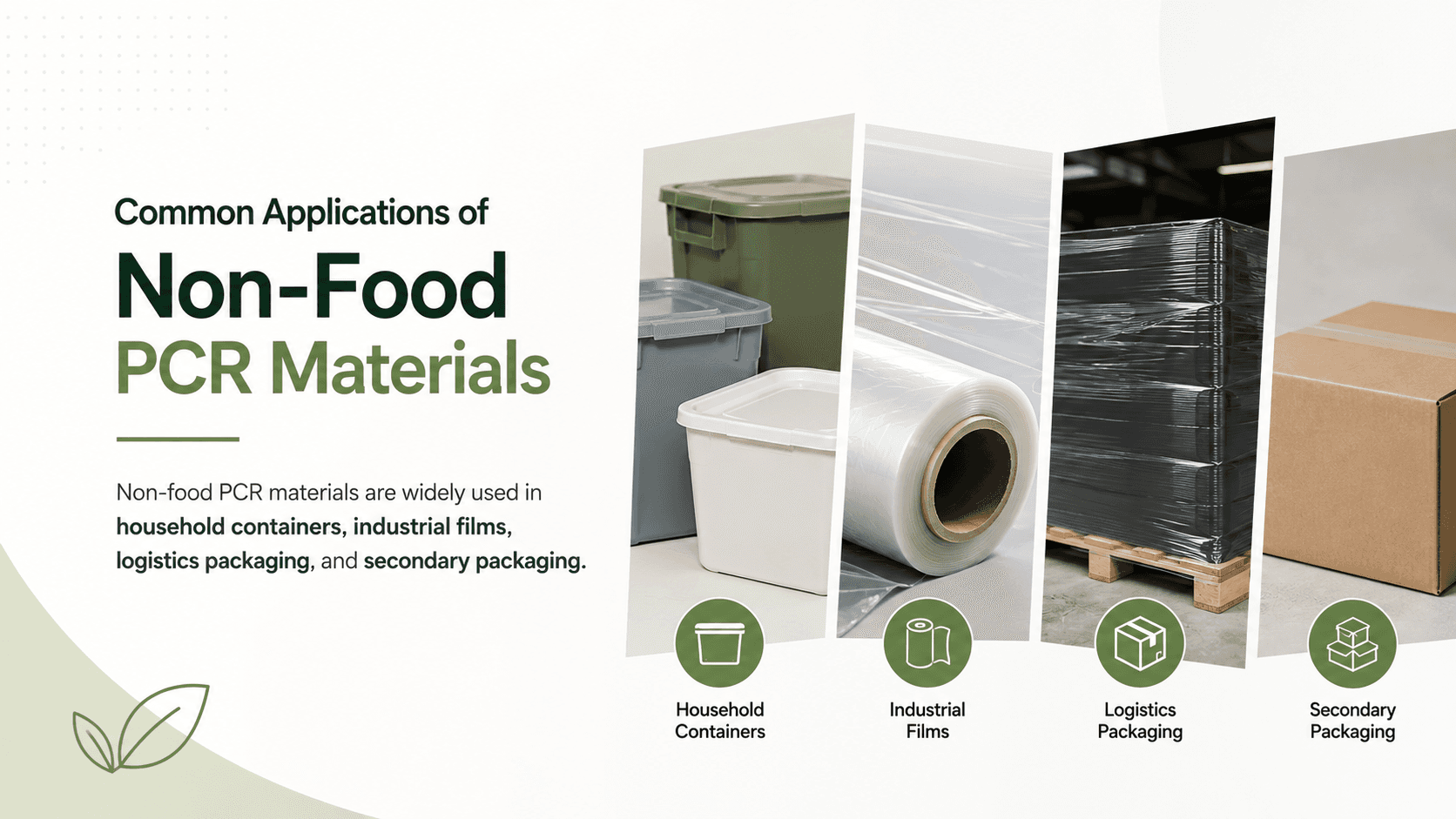
Non-food PCR packaging is widely used in applications such as household containers, industrial films, logistics packaging, and secondary packaging. These applications are not subject to the same level of regulatory scrutiny as food-contact materials, but they still must meet functional and commercial expectations. As a result, material selection should be based not only on recycled content targets, but also on whether the material can perform reliably in real manufacturing and end-use conditions.
Material Consistency Is the First Priority
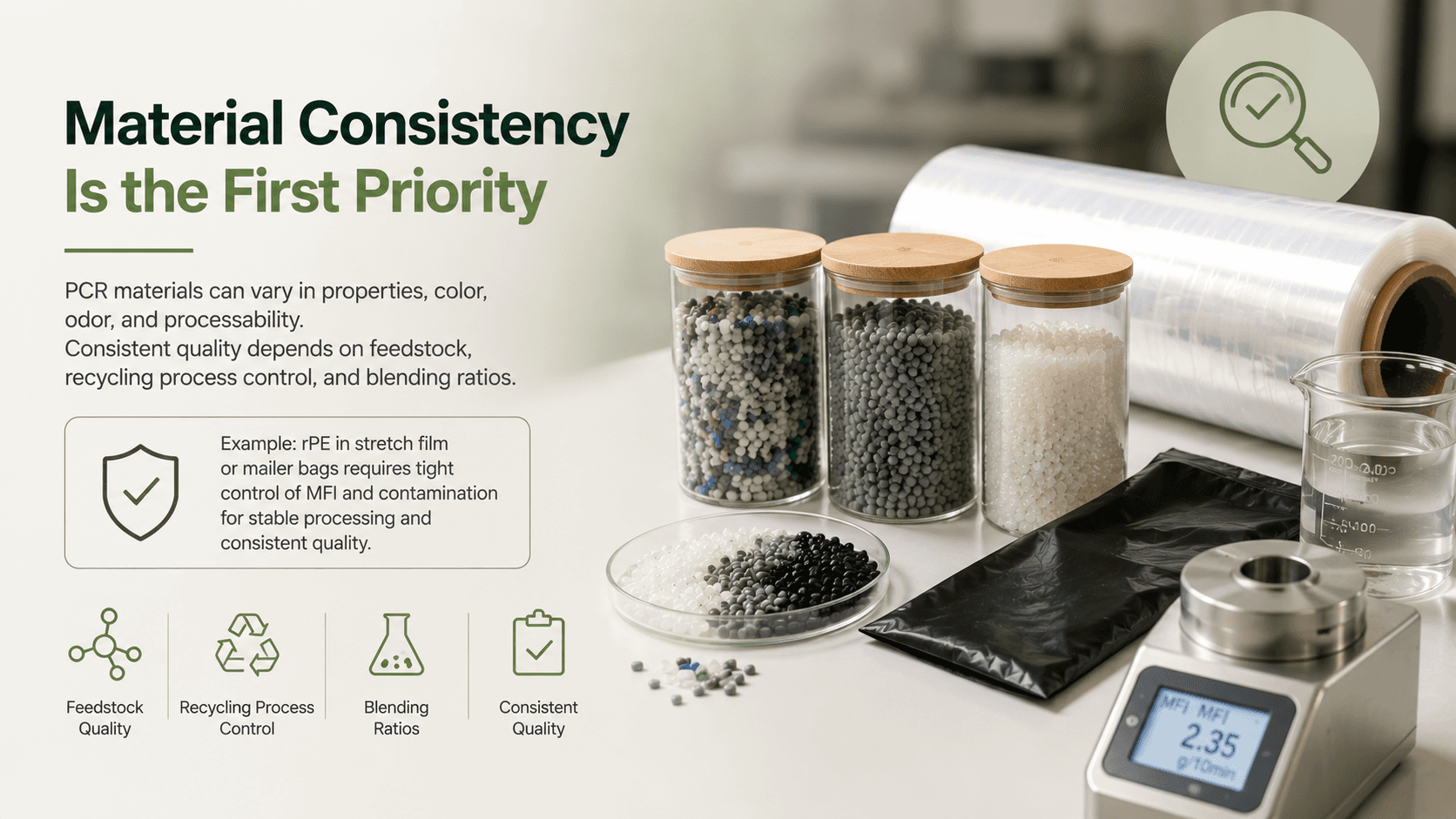
One of the most important considerations is material consistency. Compared with virgin polymers, PCR materials often show greater variation in mechanical properties, color, odor, and processability. These differences are influenced by feedstock quality, recycling process control, and blending ratios. For example, recycled polyethylene (rPE) used in stretch film or mailer bags may require tight control of melt flow index (MFI) and contamination levels to ensure stable processing and consistent product quality.
Key Evaluation Criteria for PCR Selection
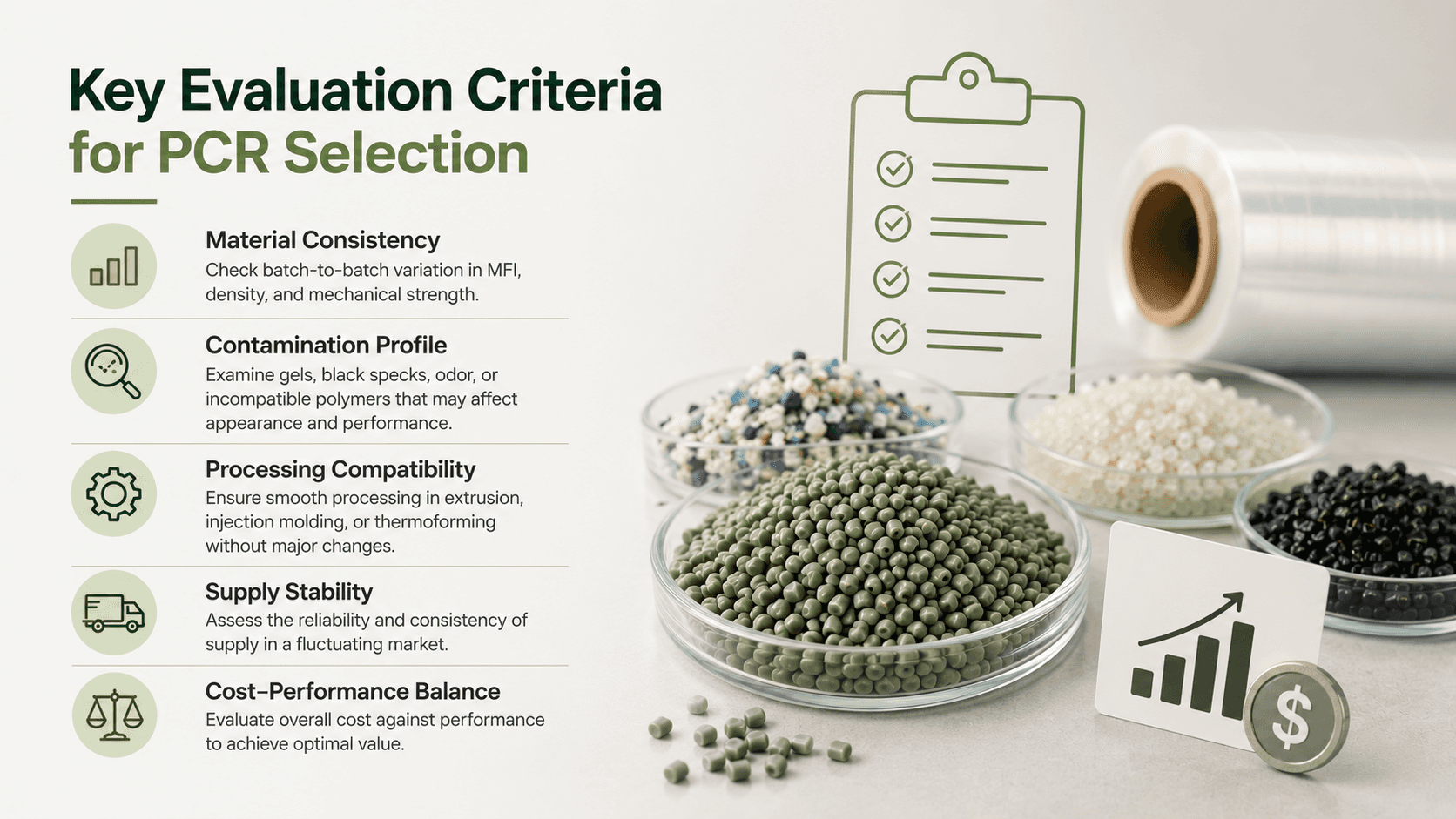
When evaluating PCR materials for non-food packaging, several key criteria should be reviewed carefully. Material consistency should be checked through batch-to-batch variation in MFI, density, and mechanical strength. The contamination profile should also be examined, including the presence of gels, black specks, odor, or incompatible polymers that may affect appearance and performance. In addition, processing compatibility is essential, since the material must work well in extrusion, injection molding, or thermoforming without requiring major process changes. Supply stability and cost-performance balance are also critical, especially in markets where recycled resin availability can fluctuate.
rPE Film Applications and Practical Trade-Offs
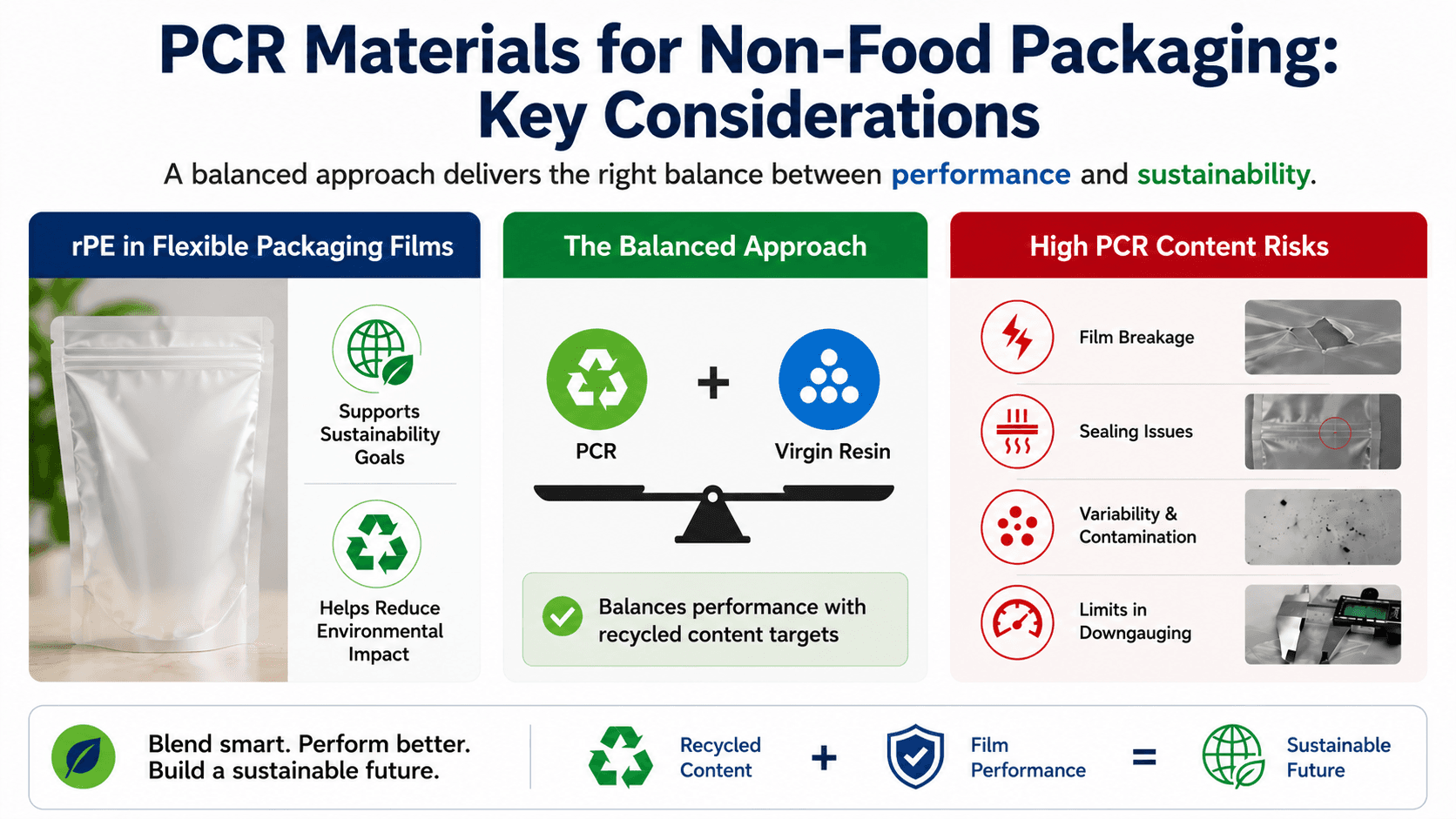
A practical example can be seen in flexible packaging films using rPE. Higher PCR content can help support sustainability goals, but excessive variability or contamination can lead to film breakage, sealing issues, or limitations in downgauging. For this reason, many converters adopt a blended approach, combining PCR with virgin resin to balance performance and recycled content targets. This approach is often more realistic than trying to maximize PCR content at all costs.
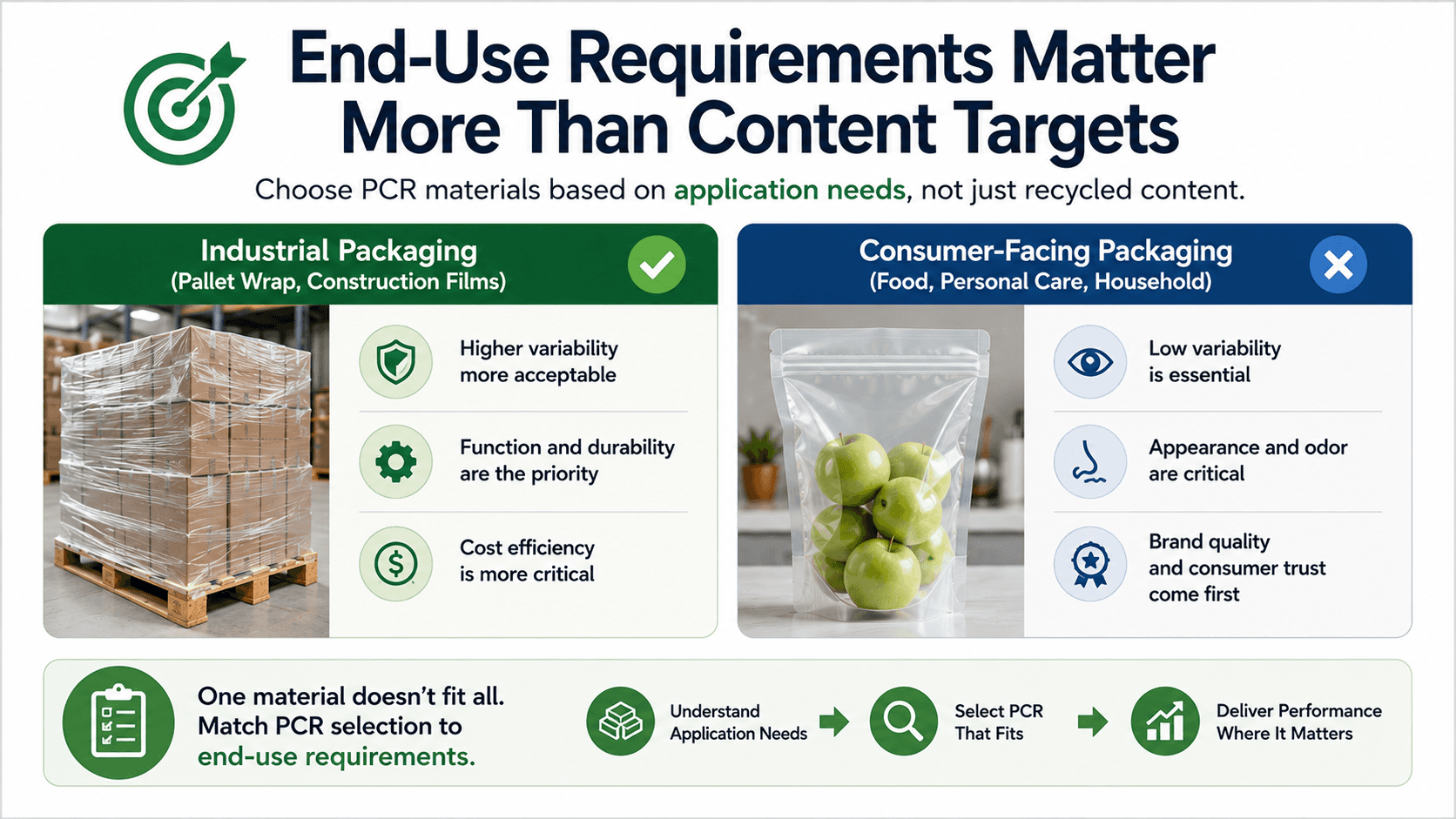
End-Use Requirements Matter More Than Content Targets
Application-specific risk tolerance is another important factor. Industrial packaging applications such as pallet wrap or construction films can often tolerate higher levels of variability than consumer-facing packaging, where appearance and odor are more critical. This means PCR material selection should be aligned with end-use requirements rather than driven solely by recycled content targets. A material that works well in one application may perform poorly in another if the quality expectations are different.
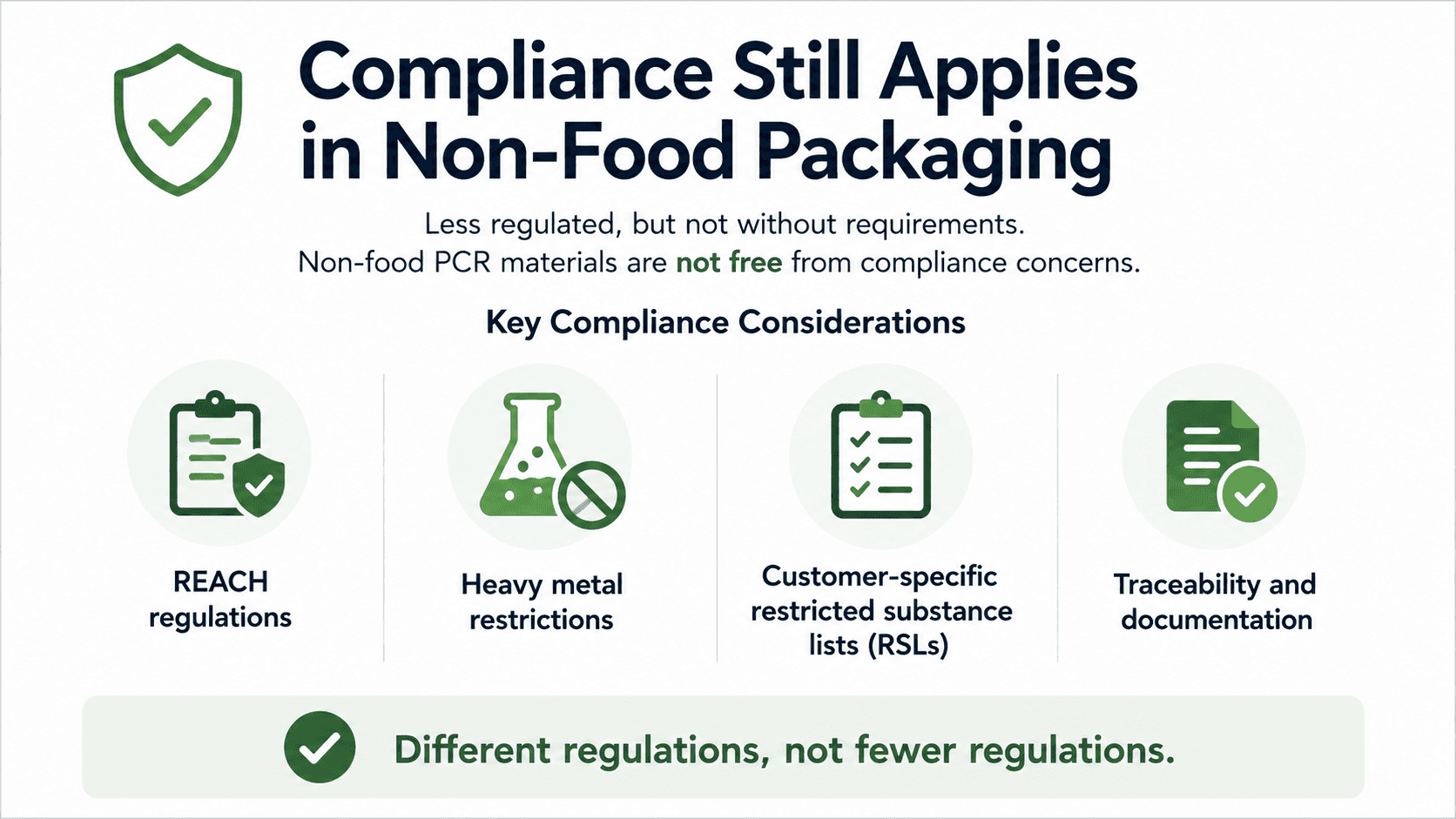
Compliance Still Applies in Non-Food Packaging
Although non-food applications are less regulated, some compliance considerations still apply. In Europe, for example, REACH regulations, heavy metal restrictions, and customer-specific restricted substance lists (RSLs) can influence material selection. Some global brands also apply internal PCR packaging guidelines that require traceability and documentation. In other words, non-food PCR materials are not free from compliance concerns; they are simply governed by a different set of requirements.
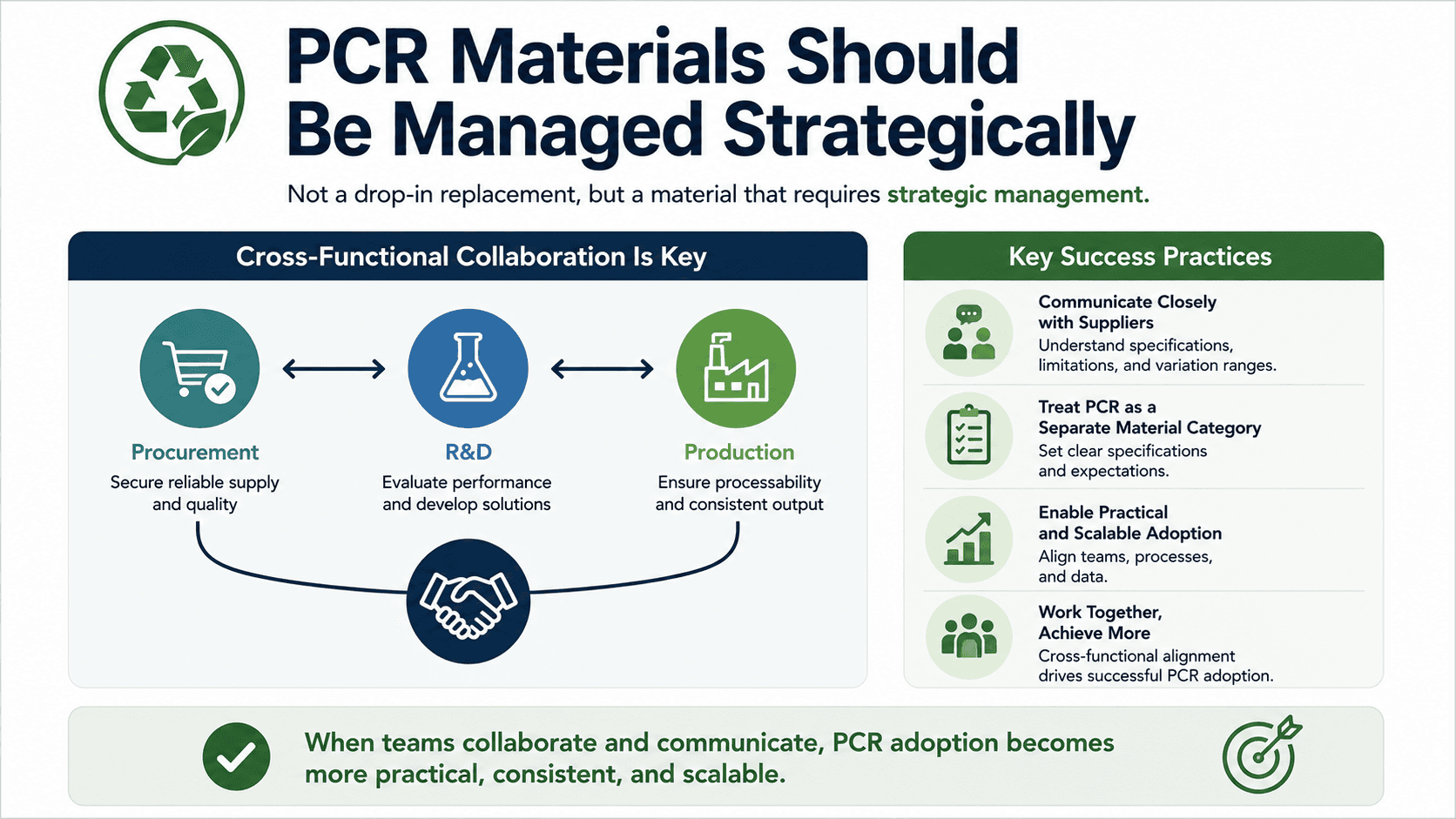
PCR Materials Should Be Managed Strategically
From a strategic perspective, PCR materials should not be treated as simple drop-in replacements for virgin plastics. Instead, they should be managed as a separate material category that requires collaboration between procurement, R&D, and production teams. Close communication with suppliers is also essential to understand material specifications, limitations, and acceptable variation ranges. When these functions work together, PCR adoption becomes more practical and scalable.
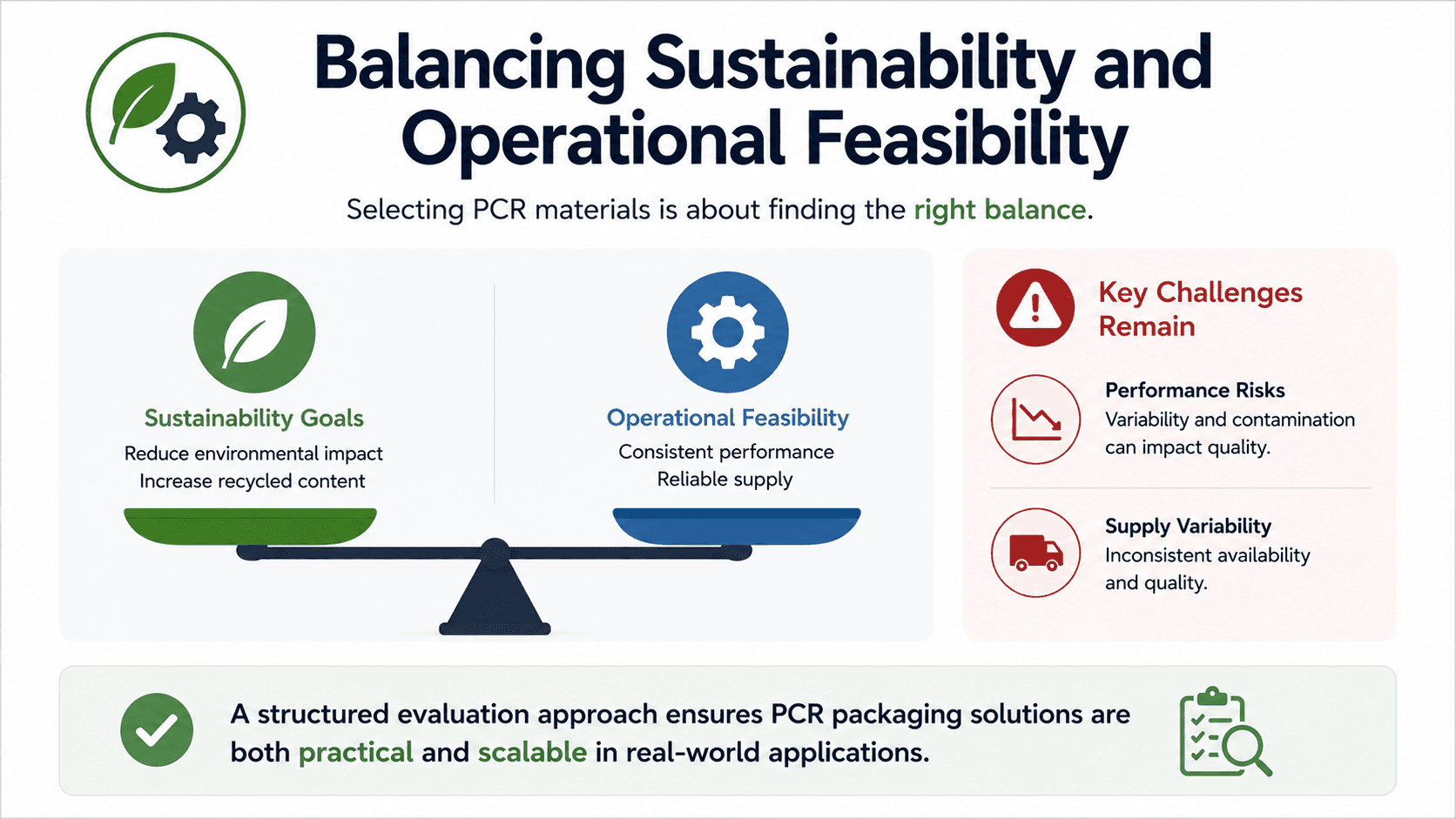
Balancing Sustainability and Operational Feasibility
Ultimately, selecting PCR materials for non-food packaging is a matter of balancing sustainability goals with operational feasibility. Although the regulatory barriers are lower than in food-contact recycled plastics, performance risks and supply variability remain significant challenges. A structured evaluation approach helps ensure that PCR packaging solutions are both practical and scalable in real-world applications.
Image generated with ChatGPT
Why Non-Food PCR Packaging Still Needs Careful Selection
As discussed in the previous article on food-contact recycled plastics regulations, PCR materials for food applications must meet highly stringent compliance requirements. By contrast, non-food and industrial packaging applications offer greater flexibility in the use of post-consumer recycled (PCR) materials. However, this does not mean material selection becomes simple. In practice, non-food PCR packaging still requires a structured assessment of performance, consistency, contamination risk, and supply reliability.
Common Applications of Non-Food PCR Materials
Non-food PCR packaging is widely used in applications such as household containers, industrial films, logistics packaging, and secondary packaging. These applications are not subject to the same level of regulatory scrutiny as food-contact materials, but they still must meet functional and commercial expectations. As a result, material selection should be based not only on recycled content targets, but also on whether the material can perform reliably in real manufacturing and end-use conditions.
Material Consistency Is the First Priority
One of the most important considerations is material consistency. Compared with virgin polymers, PCR materials often show greater variation in mechanical properties, color, odor, and processability. These differences are influenced by feedstock quality, recycling process control, and blending ratios. For example, recycled polyethylene (rPE) used in stretch film or mailer bags may require tight control of melt flow index (MFI) and contamination levels to ensure stable processing and consistent product quality.
Key Evaluation Criteria for PCR Selection
When evaluating PCR materials for non-food packaging, several key criteria should be reviewed carefully. Material consistency should be checked through batch-to-batch variation in MFI, density, and mechanical strength. The contamination profile should also be examined, including the presence of gels, black specks, odor, or incompatible polymers that may affect appearance and performance. In addition, processing compatibility is essential, since the material must work well in extrusion, injection molding, or thermoforming without requiring major process changes. Supply stability and cost-performance balance are also critical, especially in markets where recycled resin availability can fluctuate.
rPE Film Applications and Practical Trade-Offs
A practical example can be seen in flexible packaging films using rPE. Higher PCR content can help support sustainability goals, but excessive variability or contamination can lead to film breakage, sealing issues, or limitations in downgauging. For this reason, many converters adopt a blended approach, combining PCR with virgin resin to balance performance and recycled content targets. This approach is often more realistic than trying to maximize PCR content at all costs.
End-Use Requirements Matter More Than Content Targets
Application-specific risk tolerance is another important factor. Industrial packaging applications such as pallet wrap or construction films can often tolerate higher levels of variability than consumer-facing packaging, where appearance and odor are more critical. This means PCR material selection should be aligned with end-use requirements rather than driven solely by recycled content targets. A material that works well in one application may perform poorly in another if the quality expectations are different.
Compliance Still Applies in Non-Food Packaging
Although non-food applications are less regulated, some compliance considerations still apply. In Europe, for example, REACH regulations, heavy metal restrictions, and customer-specific restricted substance lists (RSLs) can influence material selection. Some global brands also apply internal PCR packaging guidelines that require traceability and documentation. In other words, non-food PCR materials are not free from compliance concerns; they are simply governed by a different set of requirements.
PCR Materials Should Be Managed Strategically
From a strategic perspective, PCR materials should not be treated as simple drop-in replacements for virgin plastics. Instead, they should be managed as a separate material category that requires collaboration between procurement, R&D, and production teams. Close communication with suppliers is also essential to understand material specifications, limitations, and acceptable variation ranges. When these functions work together, PCR adoption becomes more practical and scalable.
Balancing Sustainability and Operational Feasibility
Ultimately, selecting PCR materials for non-food packaging is a matter of balancing sustainability goals with operational feasibility. Although the regulatory barriers are lower than in food-contact recycled plastics, performance risks and supply variability remain significant challenges. A structured evaluation approach helps ensure that PCR packaging solutions are both practical and scalable in real-world applications.
Image generated with ChatGPT
PCR in Non-Food Film
Grades • Specs • Availability
Browse rLLDPE →
PCR in Non-Food Film
PCR in Non-Food Film
Review rLLDPE grades by feedstock, MFI, density, stock and MOQ.
Review rLLDPE grades by feedstock, MFI, density, stock and MOQ.
Browse rLLDPE →
Browse rLLDPE →
Looking for samples or ready to source? Submit your request for pricing, availability, and technical information.
Looking for samples or ready to source? Submit your request for pricing, availability, and technical information.
Request a Quote →
Request a Quote →
Posted by REGENPORT
REGENPORT is a global platform connecting buyers and suppliers in the recycled materials and sustainable packaging industries.