CATEGORY
CATEGORY
News
News
News
Why PET Leads the Global Recycled Plastics Market
Why PET Leads the Global Recycled Plastics Market
Why PET Leads the Global Recycled Plastics Market
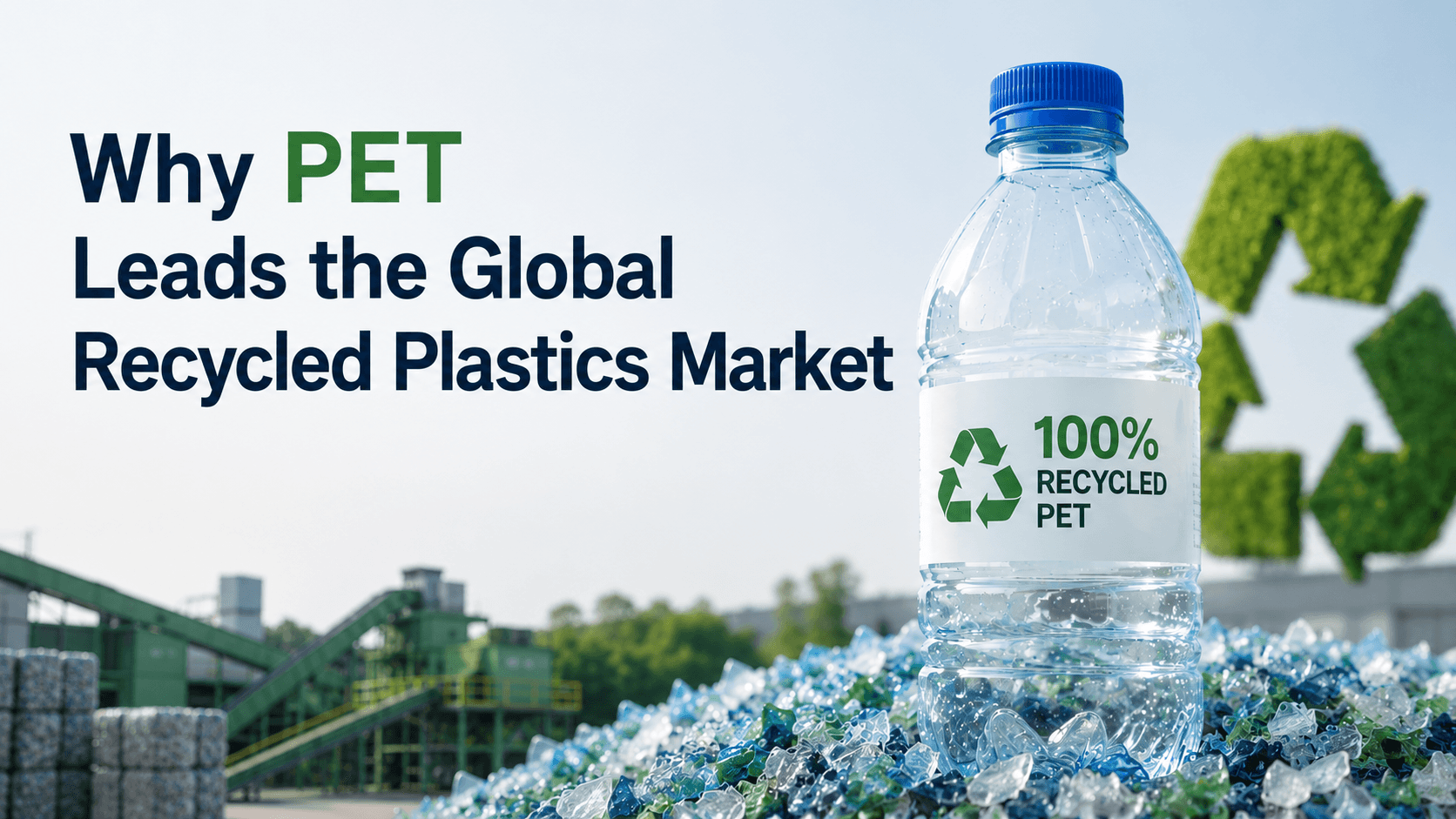
Recycled PET (rPET) has become one of the leading materials in the global recycled plastics market, supported by PET recycling systems, food-grade demand, packaging regulations, and mechanical recycling growth.
The recycled plastics market is expanding across packaging, consumer goods, textiles, and industrial applications. Among the many recycled polymers, recycled PET (rPET) has emerged as one of the earliest and most established segments in the global market.
PET’s growth was driven by a combination of standardized collection systems, packaging regulations, brand commitments, and improvements in mechanical recycling. As a result, PET continues to lead many recycled plastics applications, especially in the packaging industry.
PET Recycling Started With Strong Collection Infrastructure
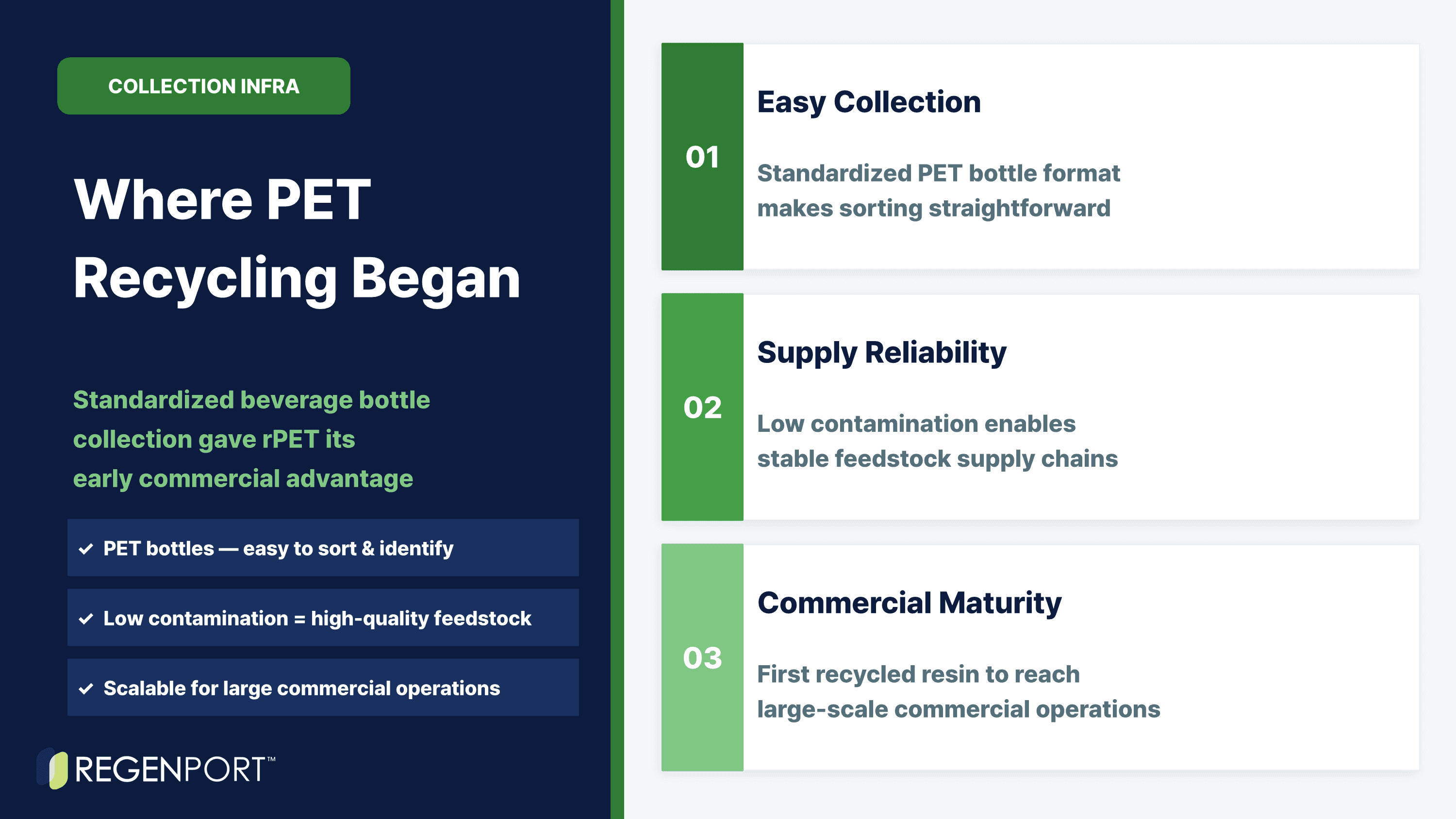
One of the biggest reasons PET recycling scaled earlier than many other plastics is the existing collection stream for beverage bottles. Compared with mixed plastic packaging, PET bottles are easier to identify, sort, and collect at scale.
This gave PET recycling an advantage from the start. In many regions, post-consumer PET bottles entered recycling systems more efficiently because they were relatively standardized and less contaminated than flexible films or multi-layer plastics.
That made PET a practical feedstock for large-scale recycling operations. Over time, this helped rPET become one of the most commercially established recycled resins in the market.
Regulations and Brand Demand Support rPET Growth
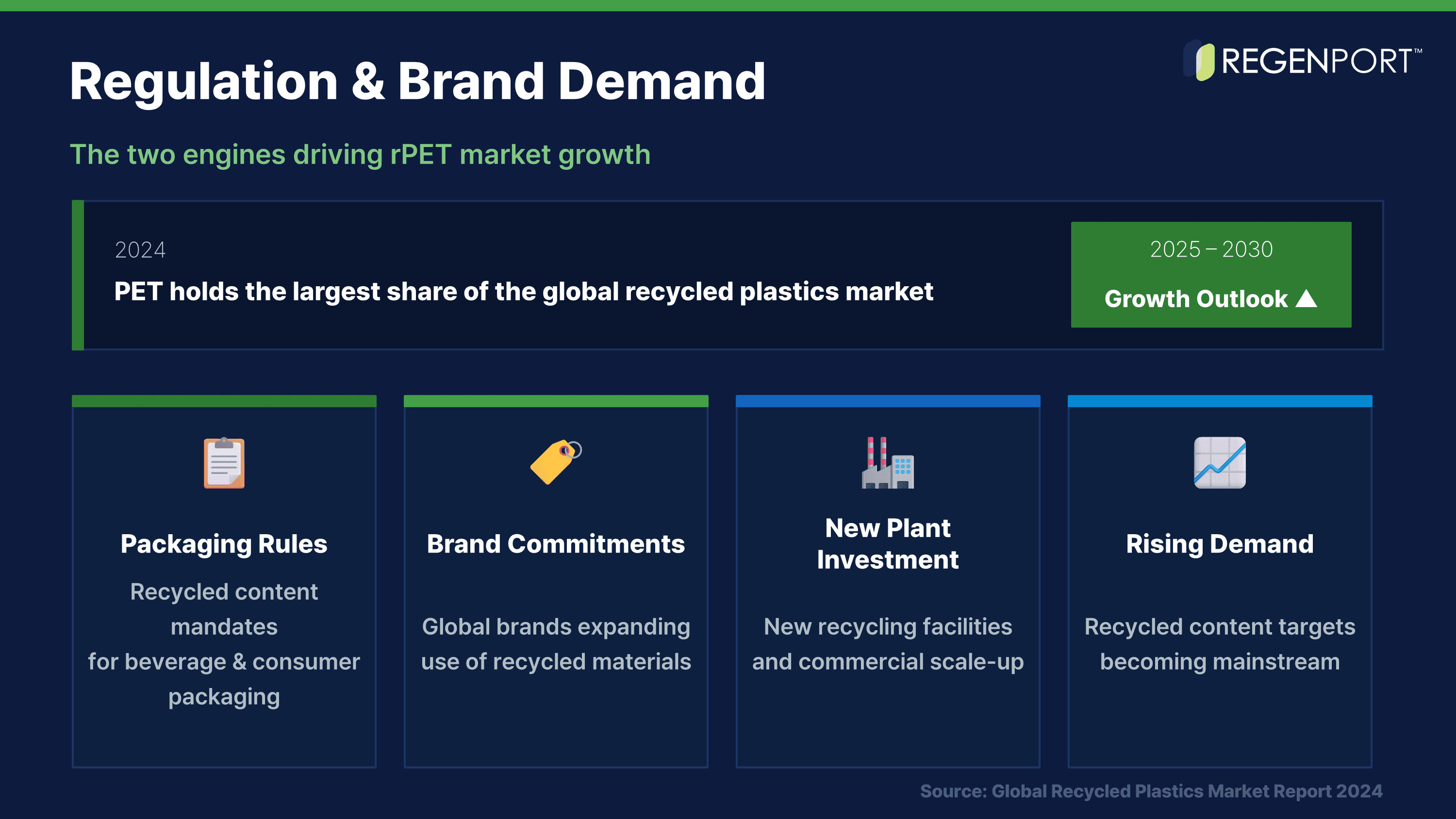
Recent global recycling market reports show that polyethylene terephthalate (PET) held the largest share of the recycled plastics market in 2024 and is expected to continue growing from 2025 to 2030. The market outlook is being supported by stricter recycling regulations and rising commitments from consumer goods companies, retail brands, and apparel manufacturers.
These commitments are especially visible in packaging, where global brands are under pressure to increase recycled content in beverage bottles and consumer packaging. As recycled content targets become more common, demand for recycled PET continues to rise.
At the same time, investments in new recycling plants and improvements in large-scale mechanical recycling are making rPET supply chains more commercially viable. This is one reason PET remains strongly positioned in the global recycled plastics market.
Why PET Works Well in Closed-Loop Recycling
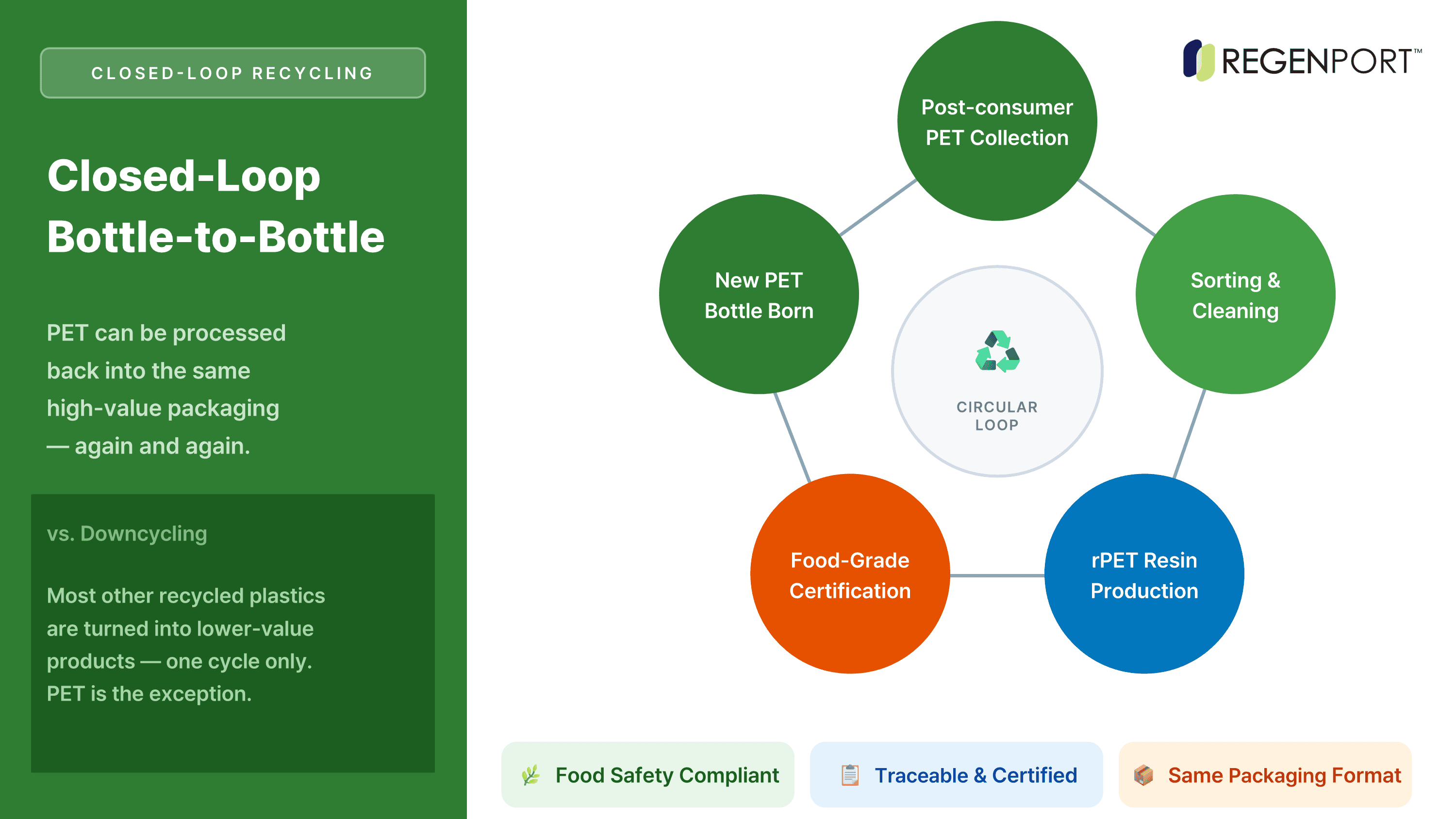
PET is also well suited to closed-loop recycling systems. In bottle-to-bottle recycling, used PET bottles can be processed into recycled resin that may be used again in new bottles, depending on processing quality and regulatory compliance.
This makes PET especially valuable for food and beverage packaging, where material consistency, safety, and traceability matter. For brands pursuing sustainability goals, food-grade rPET offers a practical path to increasing recycled content without changing packaging formats dramatically.
By comparison, many other recycled plastics are more often used in downcycled applications. That means the recycled material is turned into lower-value products rather than returned to the same high-value packaging use.
Food-Grade rPET Demand Is Rising
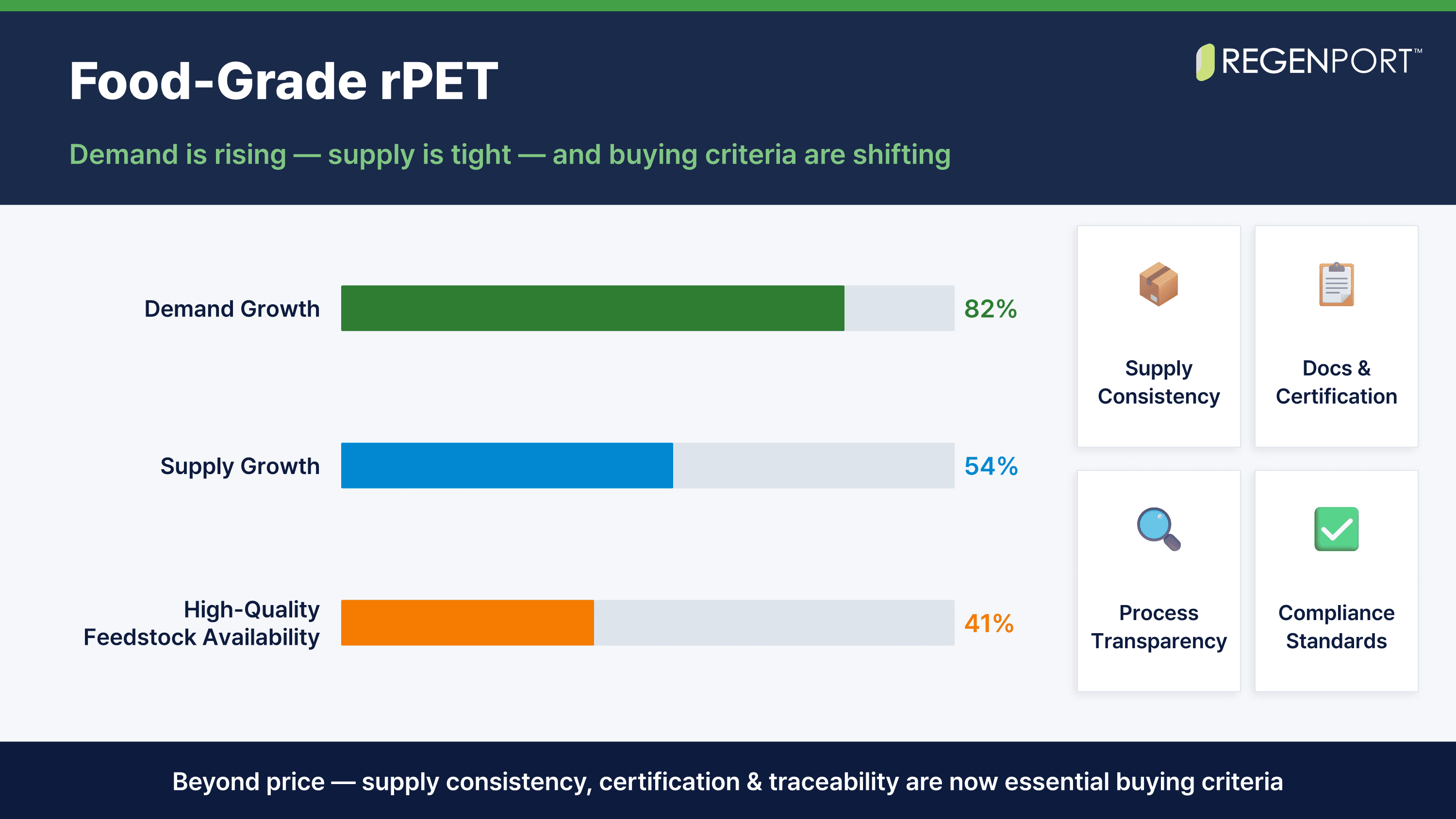
As more companies adopt recycled content targets, demand for food-grade rPET continues to grow. However, supply remains tight in some markets because high-quality post-consumer PET feedstock is not always available in sufficient volume.
Food-grade recycling capacity, material traceability, and certification also affect market stability and pricing. For buyers, recycled resin sourcing increasingly depends on more than just price. Supply consistency, documentation, certification, and processing transparency are becoming essential purchasing criteria.
This is especially important in regulated supply chains, where brand owners need dependable recycled materials that meet both quality and compliance requirements.
Recycling Technology Continues to Improve
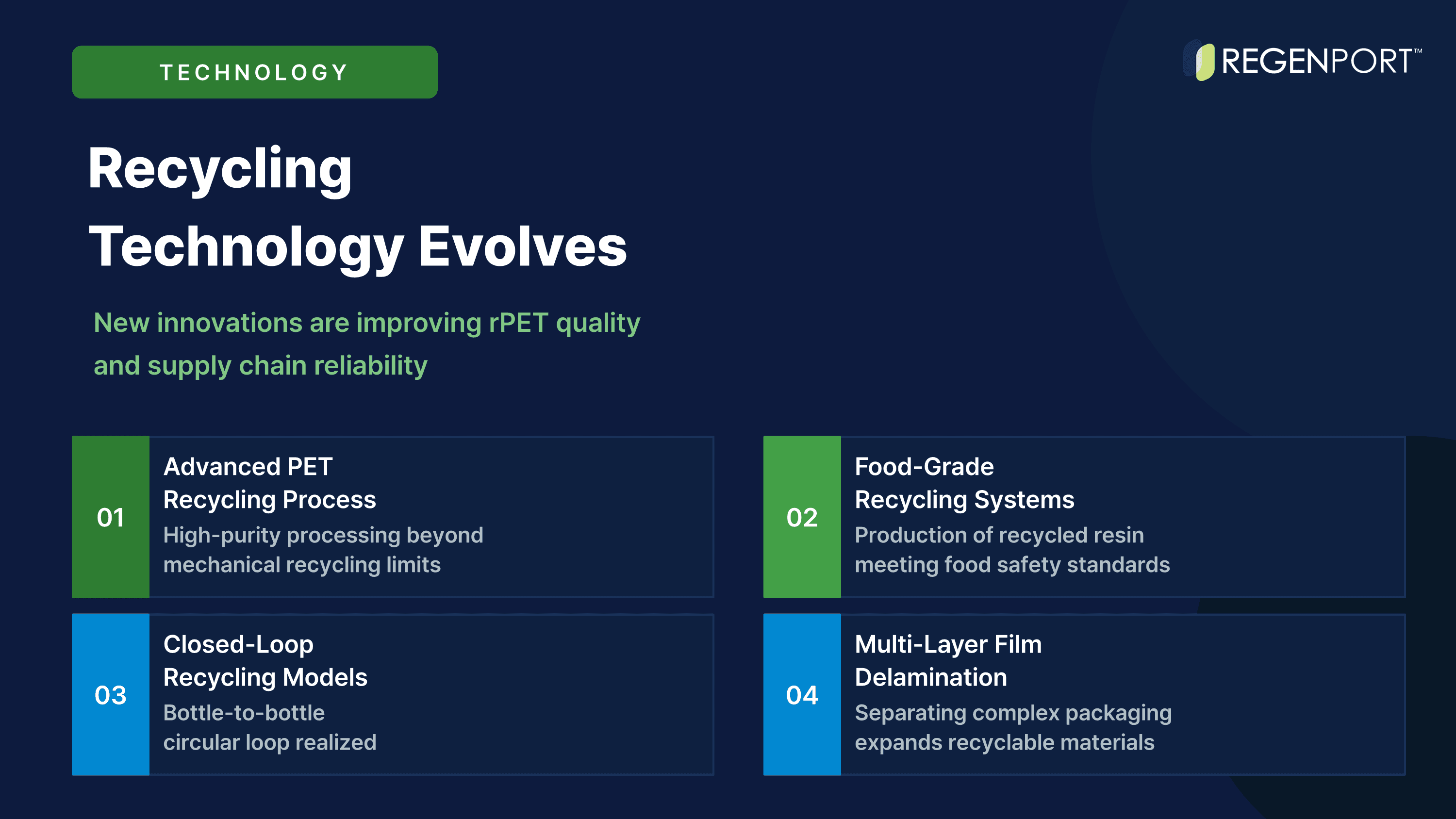
New developments in recycling technology are supporting the long-term expansion of the recycled plastics market. Industry reports increasingly reference advanced PET recycling processes, food-grade recycling systems, closed-loop recycling models, and delamination technologies for multi-layer plastics.
These technologies are helping improve material quality and expand recycling possibilities for more plastic types. While technical and economic challenges remain, ongoing innovation is making rPET and other recycled resins more commercially attractive.
For the packaging industry, these advances are especially important because they support higher-quality recycled material streams and more stable supply chains.
PET Remains a Leading Recycled Resin
The global recycled plastics market continues to evolve alongside regulation, brand commitments, and infrastructure investment. Among recycled polymers, PET reached commercial scale earlier than many others because collection systems, regulatory demand, and packaging applications aligned relatively early.
That is why recycled PET remains one of the most important materials in the market today. As recycled plastics move deeper into mainstream manufacturing and packaging supply chains, stable sourcing, verified documentation, and material traceability are likely to become even more important.
Image generated with ChatGPT and Claude
Reference : Plastics Recycling Global Markets Report 2026: Delamination Technology for Multi-Layer Plastics, Food-Grade Recycling, Advanced PET Recycling Process, Closed-Recycling Loop for Multi-Layer Packaging — GlobeNewswire, April 23, 2026
View Source →
The recycled plastics market is expanding across packaging, consumer goods, textiles, and industrial applications. Among the many recycled polymers, recycled PET (rPET) has emerged as one of the earliest and most established segments in the global market.
PET’s growth was driven by a combination of standardized collection systems, packaging regulations, brand commitments, and improvements in mechanical recycling. As a result, PET continues to lead many recycled plastics applications, especially in the packaging industry.
PET Recycling Started With Strong Collection Infrastructure
One of the biggest reasons PET recycling scaled earlier than many other plastics is the existing collection stream for beverage bottles. Compared with mixed plastic packaging, PET bottles are easier to identify, sort, and collect at scale.
This gave PET recycling an advantage from the start. In many regions, post-consumer PET bottles entered recycling systems more efficiently because they were relatively standardized and less contaminated than flexible films or multi-layer plastics.
That made PET a practical feedstock for large-scale recycling operations. Over time, this helped rPET become one of the most commercially established recycled resins in the market.
Regulations and Brand Demand Support rPET Growth
Recent global recycling market reports show that polyethylene terephthalate (PET) held the largest share of the recycled plastics market in 2024 and is expected to continue growing from 2025 to 2030. The market outlook is being supported by stricter recycling regulations and rising commitments from consumer goods companies, retail brands, and apparel manufacturers.
These commitments are especially visible in packaging, where global brands are under pressure to increase recycled content in beverage bottles and consumer packaging. As recycled content targets become more common, demand for recycled PET continues to rise.
At the same time, investments in new recycling plants and improvements in large-scale mechanical recycling are making rPET supply chains more commercially viable. This is one reason PET remains strongly positioned in the global recycled plastics market.
Why PET Works Well in Closed-Loop Recycling
PET is also well suited to closed-loop recycling systems. In bottle-to-bottle recycling, used PET bottles can be processed into recycled resin that may be used again in new bottles, depending on processing quality and regulatory compliance.
This makes PET especially valuable for food and beverage packaging, where material consistency, safety, and traceability matter. For brands pursuing sustainability goals, food-grade rPET offers a practical path to increasing recycled content without changing packaging formats dramatically.
By comparison, many other recycled plastics are more often used in downcycled applications. That means the recycled material is turned into lower-value products rather than returned to the same high-value packaging use.
Food-Grade rPET Demand Is Rising
As more companies adopt recycled content targets, demand for food-grade rPET continues to grow. However, supply remains tight in some markets because high-quality post-consumer PET feedstock is not always available in sufficient volume.
Food-grade recycling capacity, material traceability, and certification also affect market stability and pricing. For buyers, recycled resin sourcing increasingly depends on more than just price. Supply consistency, documentation, certification, and processing transparency are becoming essential purchasing criteria.
This is especially important in regulated supply chains, where brand owners need dependable recycled materials that meet both quality and compliance requirements.
Recycling Technology Continues to Improve
New developments in recycling technology are supporting the long-term expansion of the recycled plastics market. Industry reports increasingly reference advanced PET recycling processes, food-grade recycling systems, closed-loop recycling models, and delamination technologies for multi-layer plastics.
These technologies are helping improve material quality and expand recycling possibilities for more plastic types. While technical and economic challenges remain, ongoing innovation is making rPET and other recycled resins more commercially attractive.
For the packaging industry, these advances are especially important because they support higher-quality recycled material streams and more stable supply chains.
PET Remains a Leading Recycled Resin
The global recycled plastics market continues to evolve alongside regulation, brand commitments, and infrastructure investment. Among recycled polymers, PET reached commercial scale earlier than many others because collection systems, regulatory demand, and packaging applications aligned relatively early.
That is why recycled PET remains one of the most important materials in the market today. As recycled plastics move deeper into mainstream manufacturing and packaging supply chains, stable sourcing, verified documentation, and material traceability are likely to become even more important.
Image generated with ChatGPT and Claude
Reference : Plastics Recycling Global Markets Report 2026: Delamination Technology for Multi-Layer Plastics, Food-Grade Recycling, Advanced PET Recycling Process, Closed-Recycling Loop for Multi-Layer Packaging — GlobeNewswire, April 23, 2026
View Source →
Beyond PET: rHDPE Grades
Grades • Specs • Availability
Browse rHDPE →
Beyond PET: rHDPE Grades
Beyond PET: rHDPE Grades
Review rHDPE grades by feedstock, properties, applications, stock and MOQ.
Review rHDPE grades by feedstock, properties, applications, stock and MOQ.
Browse rHDPE →
Browse rHDPE →
Looking for samples or ready to source? Submit your request for pricing, availability, and technical information.
Looking for samples or ready to source? Submit your request for pricing, availability, and technical information.
Request a Quote →
Request a Quote →
Posted by REGENPORT
REGENPORT is a global platform connecting buyers and suppliers in the recycled materials and sustainable packaging industries.