CATEGORY
CATEGORY
Regulation
Regulation
Regulation
US Packaging EPR Compliance in 2026: What Producers Should Build Now
US Packaging EPR Compliance in 2026: What Producers Should Build Now
US Packaging EPR Compliance in 2026: What Producers Should Build Now

A practical roadmap for producers navigating seven-state packaging EPR obligations — from data mapping to long-term compliance management.
In our breakdown of the seven-state packaging EPR landscape, we covered where California, Colorado, Oregon, Maine, Maryland, Minnesota, and Washington each stand in 2026. Knowing the timeline is one thing — building the internal systems to act on it is another. With Colorado already invoicing fees and California's Program Plan moving toward a January 2027 launch, producers selling into multiple states need operational infrastructure now, not after the next deadline passes.
Mapping Packaging Data by State and SKU
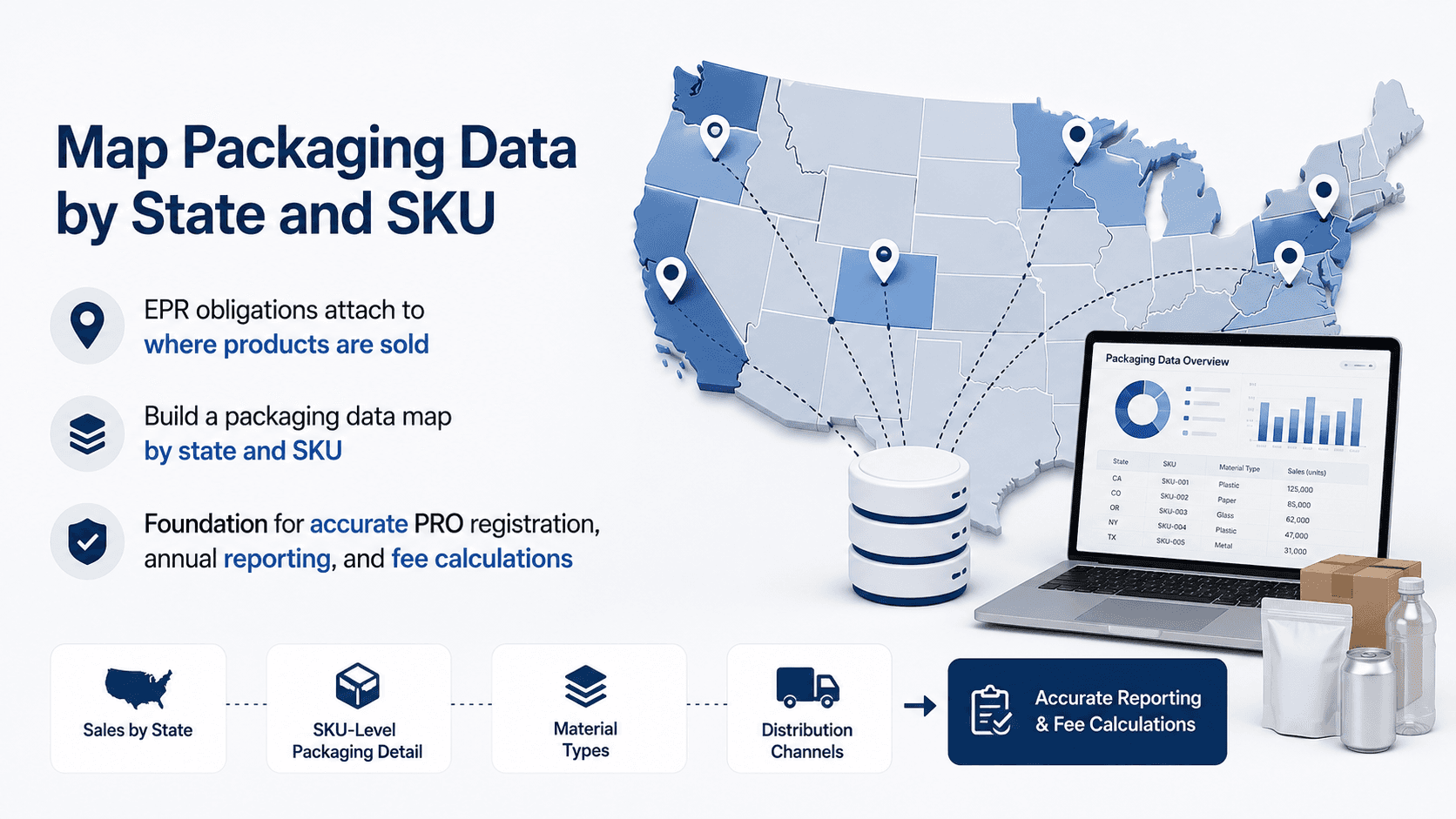
EPR obligations attach to where products are sold, not where a company is headquartered — a distinction that catches many first-time filers off guard. Producers should build a packaging data map covering sales by state, SKU-level packaging detail, material types, and distribution channels. This data map is the foundation for accurate PRO registration, annual reporting to organizations like the CAA, and the fee calculations that follow.
Building a Reporting System Before Deadlines Hit
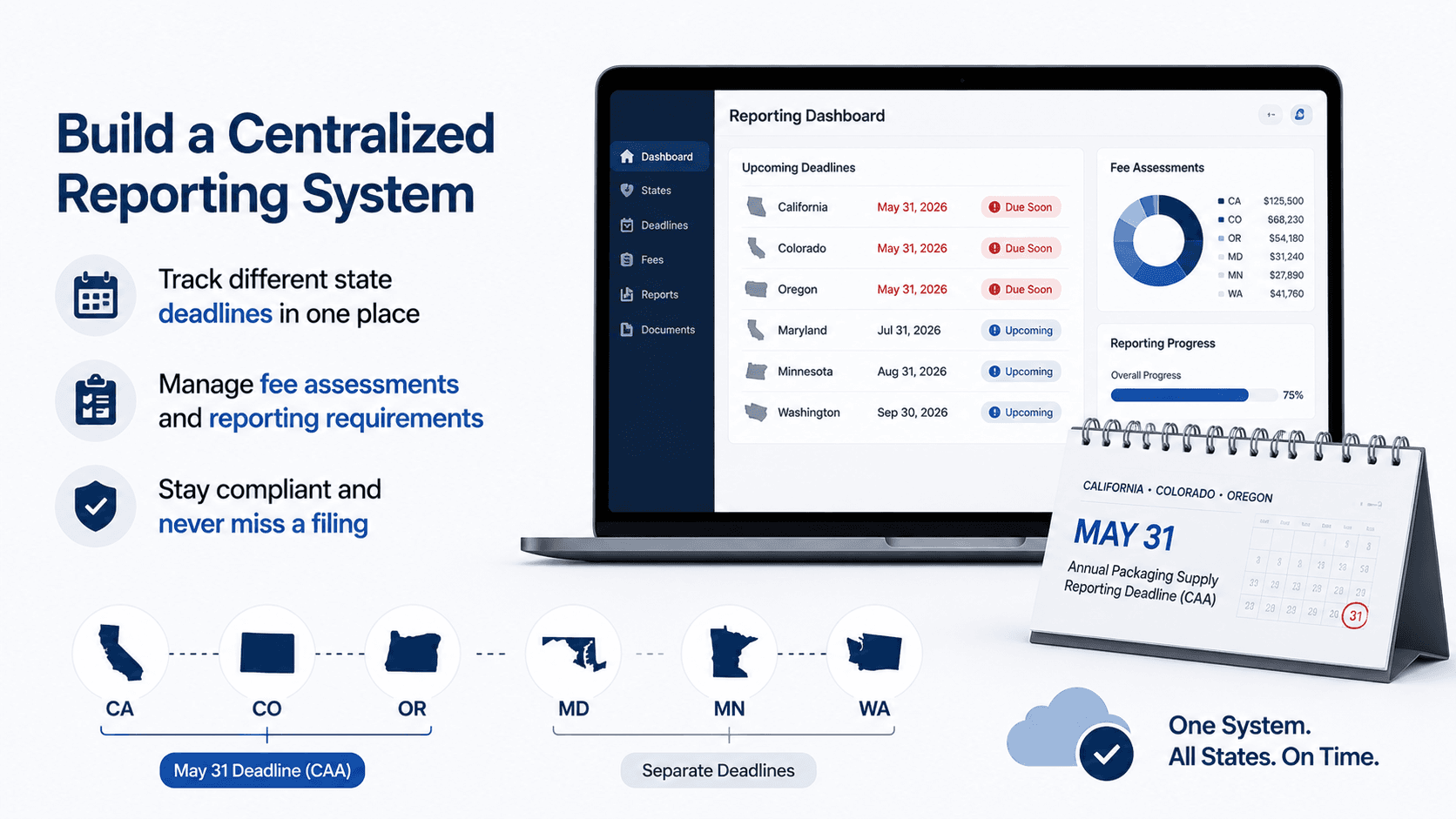
PRO registration is only the starting point. California, Colorado, and Oregon producers already share a May 31 annual packaging supply reporting deadline through the CAA, while Maryland, Minnesota, and Washington run on separate, later schedules. Because these calendars don't align, producers operating across states need a centralized system — not a spreadsheet per state — to track deadlines, fee assessments, and reporting requirements without missing a filing.
Why PCR Documentation Is Becoming Non-Negotiable
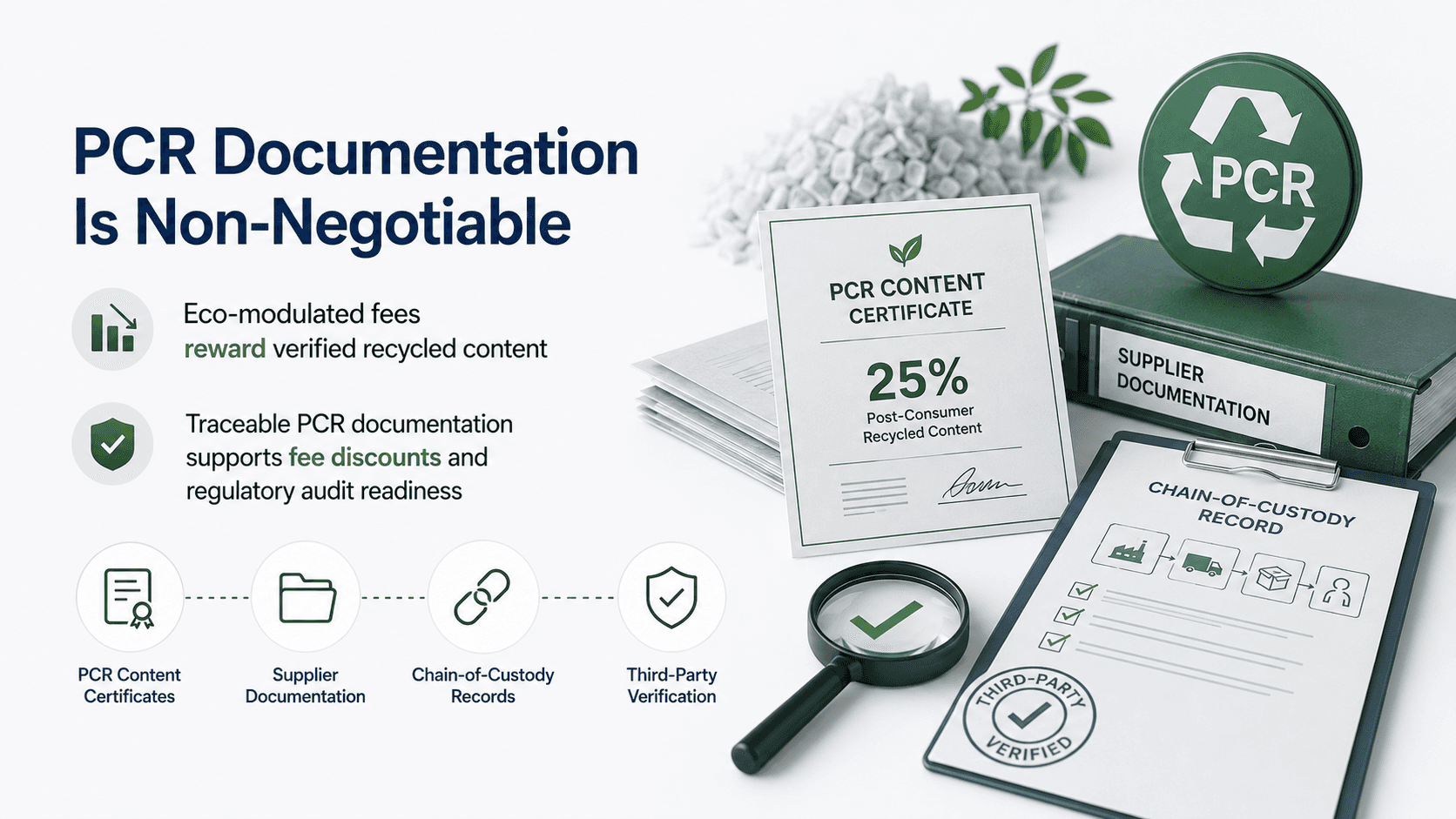
Several states use eco-modulated fees that reduce costs for packaging with verified recycled content, which raises the practical value of traceable PCR documentation. Producers should maintain PCR content certificates, supplier documentation, chain-of-custody records, and third-party verification. A transparent documentation system does double duty: it supports fee discounts under eco-modulation and gives procurement teams the audit trail regulators increasingly expect.
Bringing Suppliers Into the Compliance Process Early
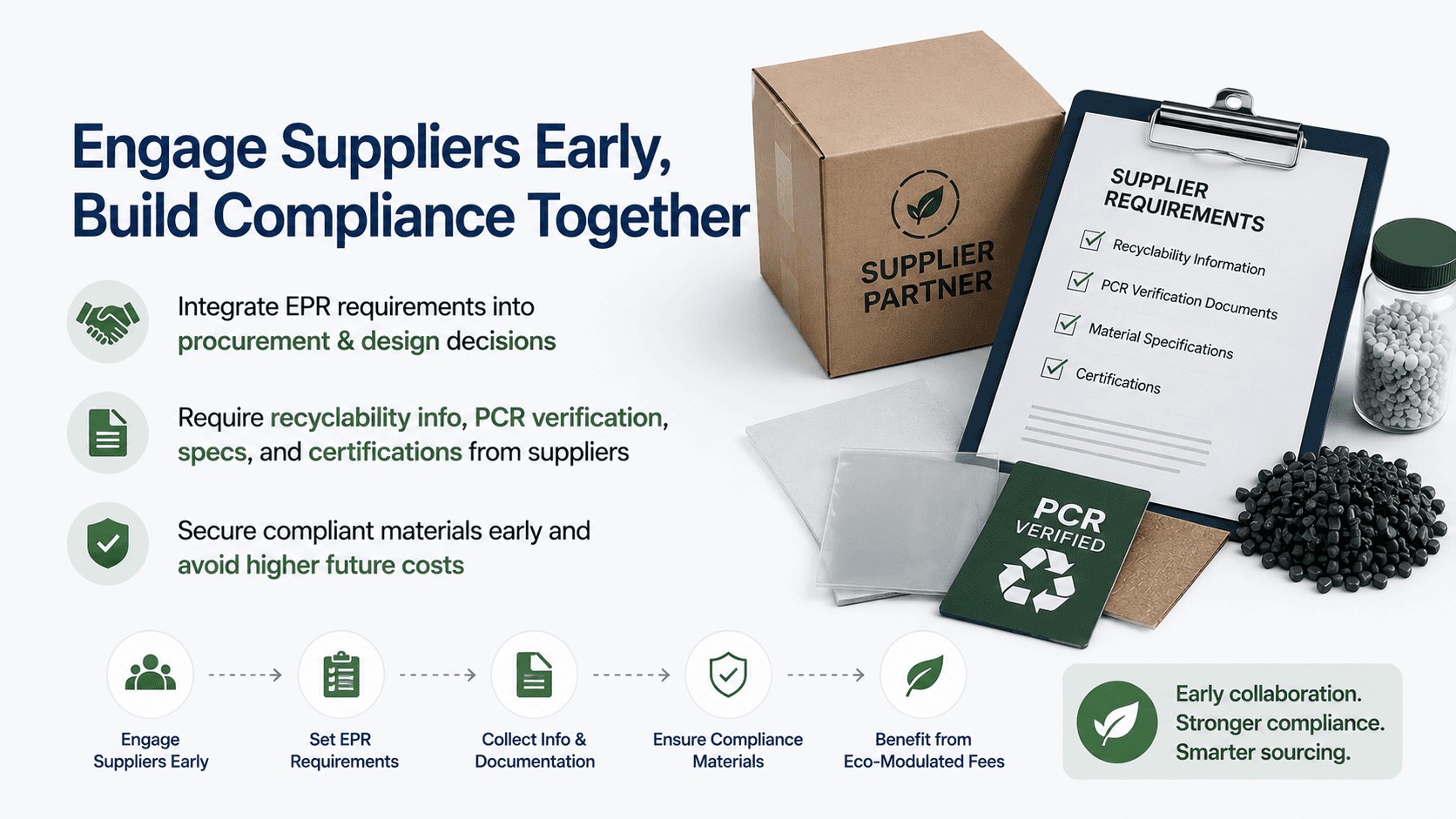
Packaging EPR works best when it's built into procurement and packaging design decisions rather than handled after the fact. That means updating supplier requirements to include recyclability information, PCR verification documents, material specifications, and current certifications. Producers who engage suppliers early are better positioned to secure compliant materials before eco-modulated fee structures make sourcing decisions more costly to reverse.
Planning for a Landscape That Keeps Shifting
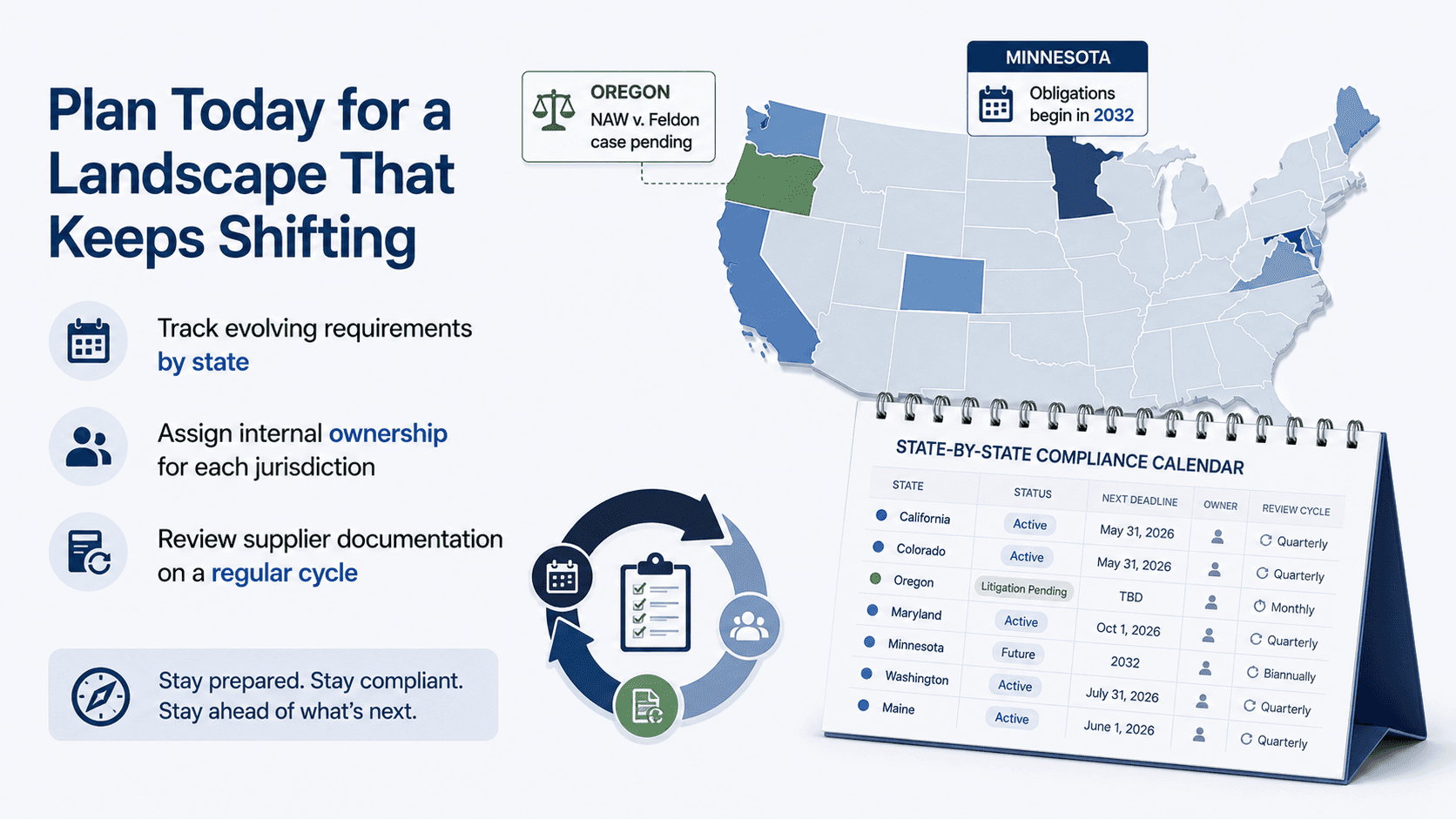
As we noted in our state-by-state review, Oregon's NAW v. Feldon case is still awaiting a ruling, and Minnesota's real obligations don't begin until 2032 — this landscape will keep moving. Producers should maintain a state-by-state compliance calendar, assign internal ownership for each jurisdiction, and review supplier documentation on a regular cycle so new requirements don't arrive as surprises.
Packaging EPR Compliance Checklist for Producers in 2026
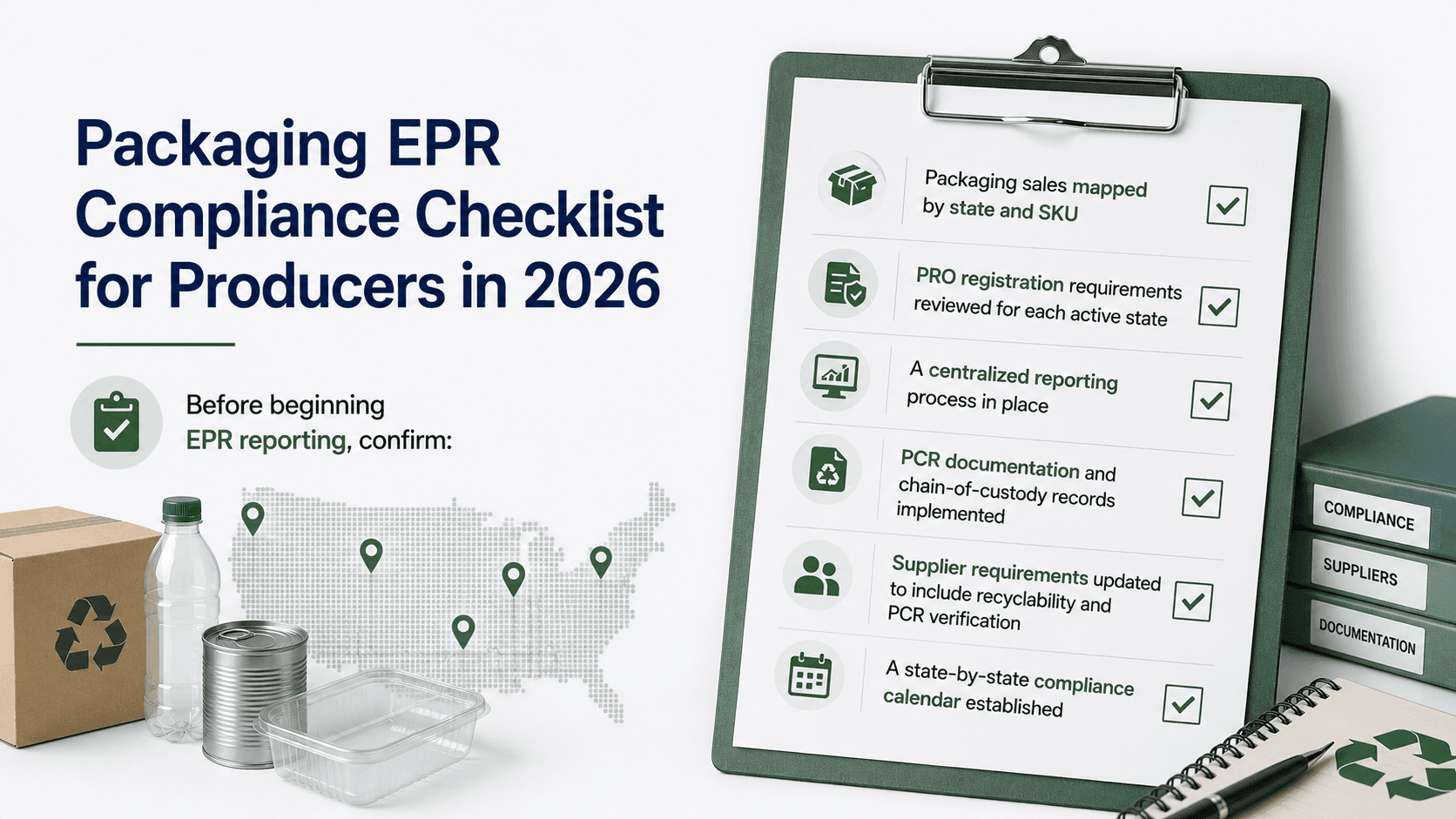
Before beginning EPR reporting, confirm:
Packaging sales mapped by state and SKU
PRO registration requirements reviewed for each active state
A centralized reporting process in place
PCR documentation and chain-of-custody records implemented
Supplier requirements updated to include recyclability and PCR verification
A state-by-state compliance calendar established
Frequently Asked Questions
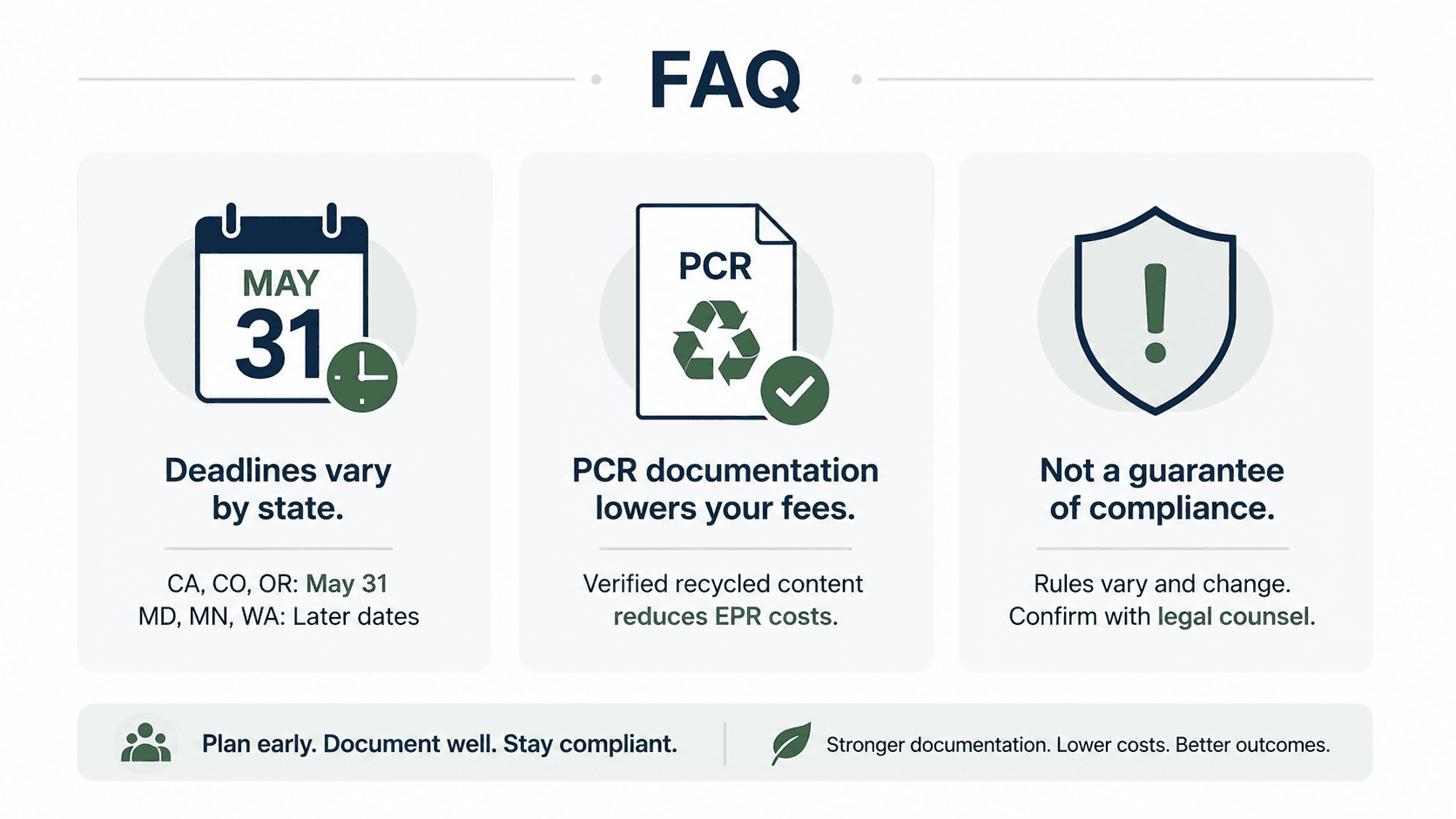
Do all seven EPR states share the same reporting deadline? No. California, Colorado, and Oregon share a May 31 annual packaging supply reporting deadline through the CAA, while Maryland, Minnesota, and Washington run on separate, later timelines — see our full state-by-state breakdown for specifics.
Why does PCR documentation matter for EPR compliance, not just sustainability reporting? Several states apply eco-modulated fees that reduce costs for packaging with verified recycled content, so traceable PCR documentation now directly affects what producers pay, not just how they report.
Is this checklist enough to guarantee compliance? No — requirements vary by state and continue to change (notably pending litigation in Oregon). This roadmap covers the operational systems producers typically need; specific obligations should be confirmed with qualified legal counsel.
About This Guide
This guide reflects publicly available information on US packaging EPR requirements as of July 2026, building on our state-by-state review linked above. Requirements, fee schedules, and litigation outcomes continue to evolve. This content is intended for general informational purposes and does not constitute legal or compliance advice. Producers should consult qualified legal counsel for guidance specific to their packaging portfolio and target states.
Looking for traceable, certified recycled materials to support your PCR documentation? Get in touch for samples, specs, and availability. Visit REGENPORT →
Image generated with ChatGPT
In our breakdown of the seven-state packaging EPR landscape, we covered where California, Colorado, Oregon, Maine, Maryland, Minnesota, and Washington each stand in 2026. Knowing the timeline is one thing — building the internal systems to act on it is another. With Colorado already invoicing fees and California's Program Plan moving toward a January 2027 launch, producers selling into multiple states need operational infrastructure now, not after the next deadline passes.
Mapping Packaging Data by State and SKU
EPR obligations attach to where products are sold, not where a company is headquartered — a distinction that catches many first-time filers off guard. Producers should build a packaging data map covering sales by state, SKU-level packaging detail, material types, and distribution channels. This data map is the foundation for accurate PRO registration, annual reporting to organizations like the CAA, and the fee calculations that follow.
Building a Reporting System Before Deadlines Hit
PRO registration is only the starting point. California, Colorado, and Oregon producers already share a May 31 annual packaging supply reporting deadline through the CAA, while Maryland, Minnesota, and Washington run on separate, later schedules. Because these calendars don't align, producers operating across states need a centralized system — not a spreadsheet per state — to track deadlines, fee assessments, and reporting requirements without missing a filing.
Why PCR Documentation Is Becoming Non-Negotiable
Several states use eco-modulated fees that reduce costs for packaging with verified recycled content, which raises the practical value of traceable PCR documentation. Producers should maintain PCR content certificates, supplier documentation, chain-of-custody records, and third-party verification. A transparent documentation system does double duty: it supports fee discounts under eco-modulation and gives procurement teams the audit trail regulators increasingly expect.
Bringing Suppliers Into the Compliance Process Early
Packaging EPR works best when it's built into procurement and packaging design decisions rather than handled after the fact. That means updating supplier requirements to include recyclability information, PCR verification documents, material specifications, and current certifications. Producers who engage suppliers early are better positioned to secure compliant materials before eco-modulated fee structures make sourcing decisions more costly to reverse.
Planning for a Landscape That Keeps Shifting
As we noted in our state-by-state review, Oregon's NAW v. Feldon case is still awaiting a ruling, and Minnesota's real obligations don't begin until 2032 — this landscape will keep moving. Producers should maintain a state-by-state compliance calendar, assign internal ownership for each jurisdiction, and review supplier documentation on a regular cycle so new requirements don't arrive as surprises.
Packaging EPR Compliance Checklist for Producers in 2026
Before beginning EPR reporting, confirm:
Packaging sales mapped by state and SKU
PRO registration requirements reviewed for each active state
A centralized reporting process in place
PCR documentation and chain-of-custody records implemented
Supplier requirements updated to include recyclability and PCR verification
A state-by-state compliance calendar established
Frequently Asked Questions
Do all seven EPR states share the same reporting deadline? No. California, Colorado, and Oregon share a May 31 annual packaging supply reporting deadline through the CAA, while Maryland, Minnesota, and Washington run on separate, later timelines — see our full state-by-state breakdown for specifics.
Why does PCR documentation matter for EPR compliance, not just sustainability reporting? Several states apply eco-modulated fees that reduce costs for packaging with verified recycled content, so traceable PCR documentation now directly affects what producers pay, not just how they report.
Is this checklist enough to guarantee compliance? No — requirements vary by state and continue to change (notably pending litigation in Oregon). This roadmap covers the operational systems producers typically need; specific obligations should be confirmed with qualified legal counsel.
About This Guide
This guide reflects publicly available information on US packaging EPR requirements as of July 2026, building on our state-by-state review linked above. Requirements, fee schedules, and litigation outcomes continue to evolve. This content is intended for general informational purposes and does not constitute legal or compliance advice. Producers should consult qualified legal counsel for guidance specific to their packaging portfolio and target states.
Looking for traceable, certified recycled materials to support your PCR documentation? Get in touch for samples, specs, and availability. Visit REGENPORT →
Image generated with ChatGPT
Sourcing for US EPR
Grades • Specs • Availability
Browse rPP →
Sourcing for US EPR
Sourcing for US EPR
Compare rPP grades by feedstock, properties, certification, stock and MOQ.
Compare rPP grades by feedstock, properties, certification, stock and MOQ.
Browse rPP →
Browse rPP →
Looking for samples or ready to source? Submit your request for pricing, availability, and technical information.
Looking for samples or ready to source? Submit your request for pricing, availability, and technical information.
Request a Quote →
Request a Quote →
Posted by REGENPORT
REGENPORT is a global platform connecting buyers and suppliers in the recycled materials and sustainable packaging industries.