CATEGORY
CATEGORY
News
News
News
US-Iran MOU and Strait of Hormuz Reopening: How Falling Oil Prices Are Reshaping the Virgin vs. Recycled Plastics Landscape
US-Iran MOU and Strait of Hormuz Reopening: How Falling Oil Prices Are Reshaping the Virgin vs. Recycled Plastics Landscape
US-Iran MOU and Strait of Hormuz Reopening: How Falling Oil Prices Are Reshaping the Virgin vs. Recycled Plastics Landscape
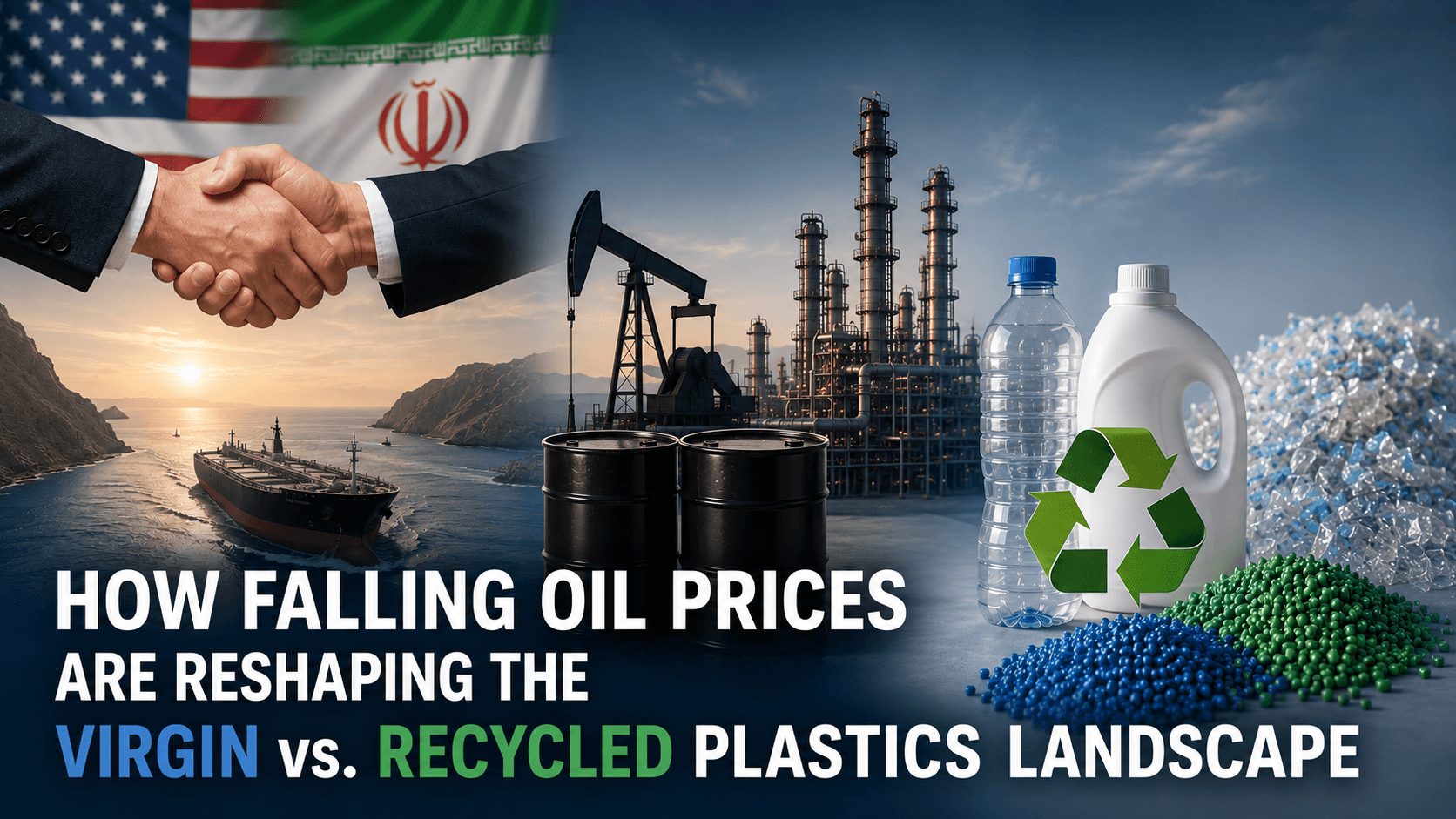
The US-Iran MOU has confirmed the Strait of Hormuz will reopen, sending oil prices lower. As virgin plastic costs recover, recycled materials may lose short-term price advantage — but regulatory pressure from EU PPWR and ESG commitments remain intact. Here's how the competitive landscape is shifting.
The announcement of the US-Iran MOU and the expected reopening of the Strait of Hormuz sent immediate shockwaves through oil markets. Brent crude fell 3.8% to $84.02/barrel, and markets moved fast. But this is more than a diplomatic headline. It is a signal reshaping the competitive dynamics between virgin and recycled plastics.
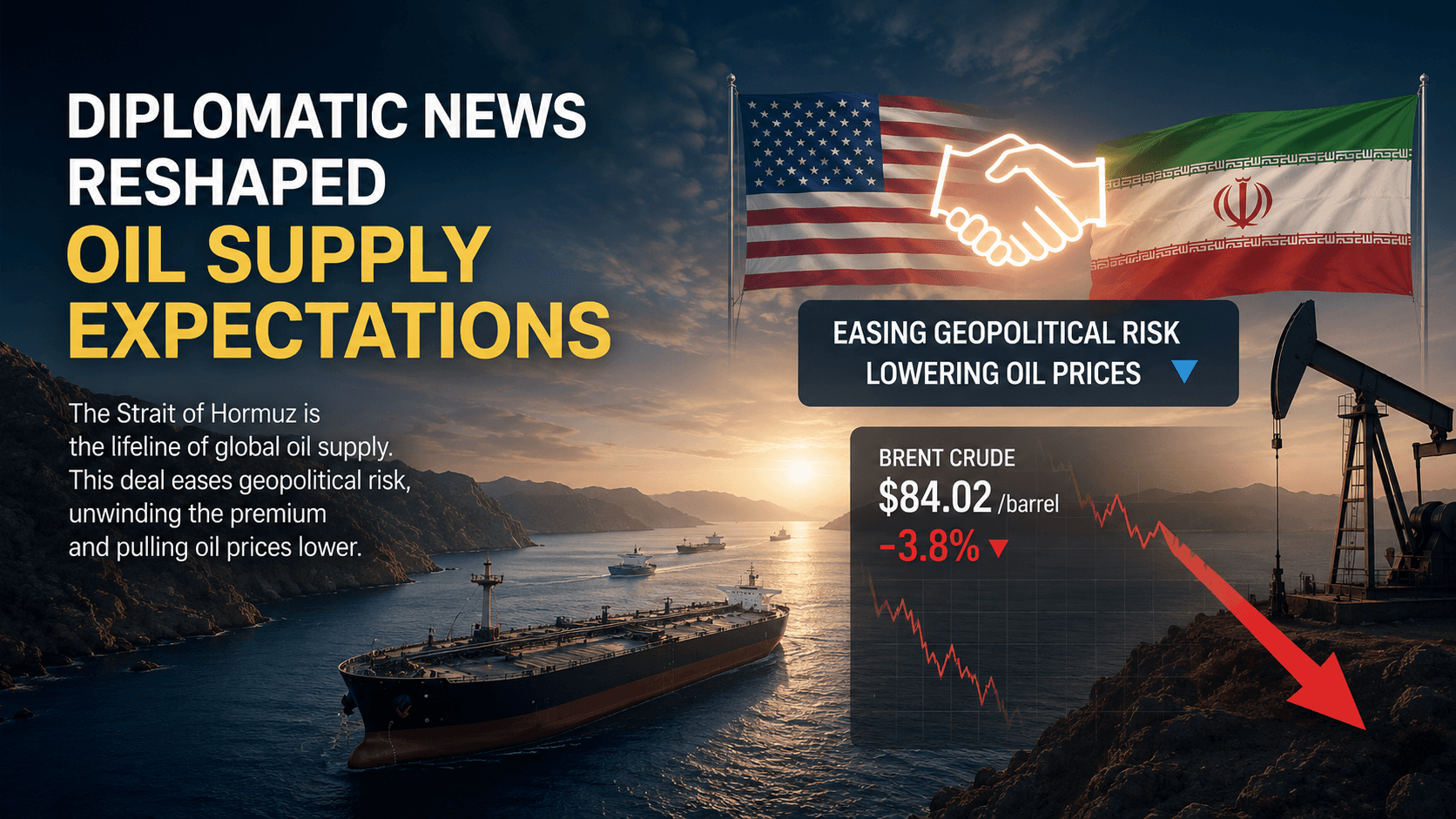
Diplomatic News Reshaped Oil Supply Expectations
This is not just a political development — it is an event that reset oil market supply expectations. The Strait of Hormuz is the core route for global oil transportation, and markets react swiftly to any shift in its status.
Until now, geopolitical risk premiums from the Middle East were embedded in oil prices. This deal has partially unwound that premium, pulling prices lower.
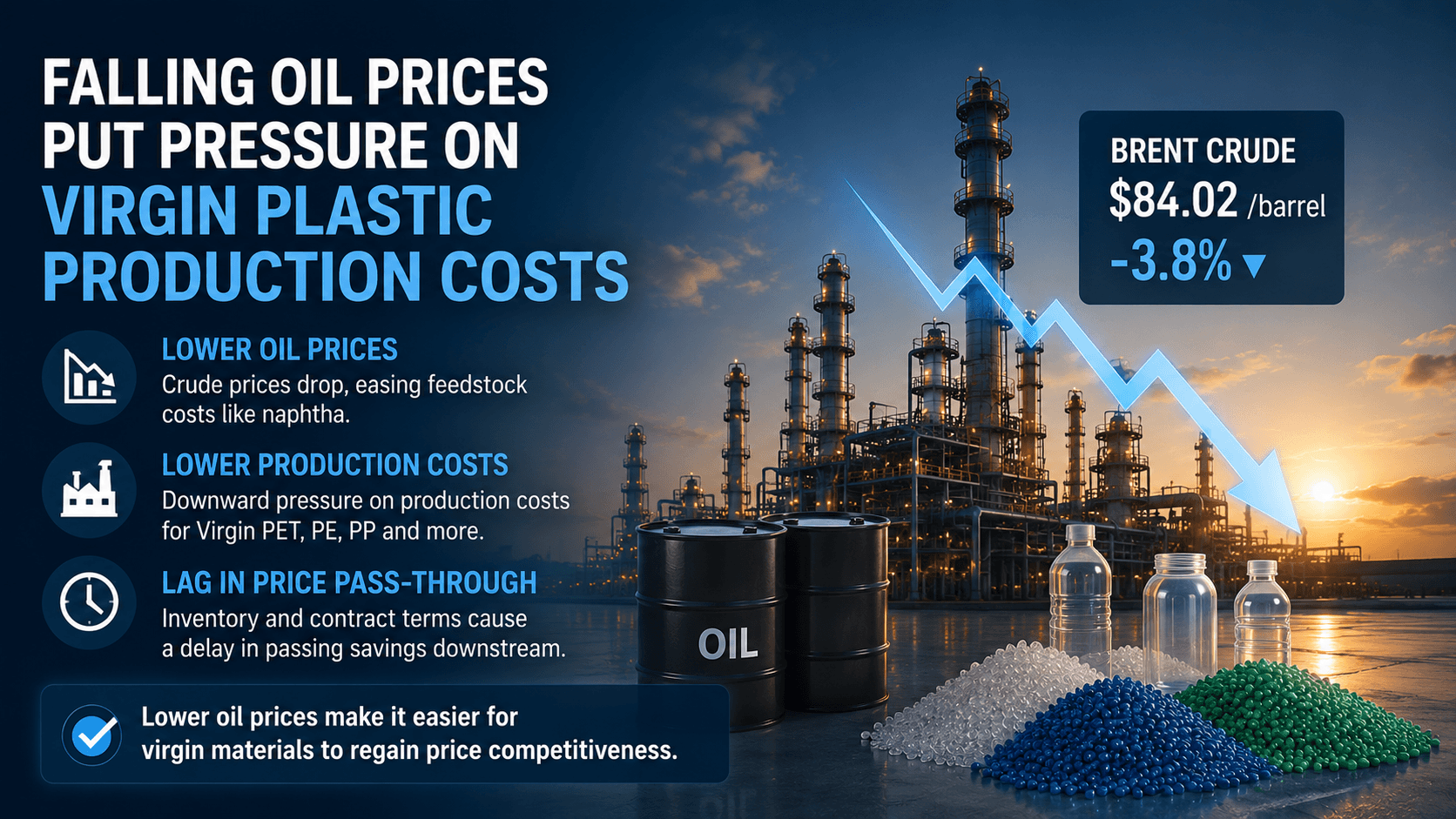
How Falling Oil Prices Put Pressure on Virgin Plastic Production Costs
Falling oil prices have a direct knock-on effect for the petrochemical industry. As crude drops, feedstock costs for naphtha and other base materials ease — creating downward pressure on production costs for Virgin PET, PE, PP, and other major plastic raw materials.
That said, this kind of shift rarely feeds through immediately. Inventory positions and contract terms typically introduce a lag. Still, the direction is clear: lower oil prices make it easier for virgin materials to regain price competitiveness.
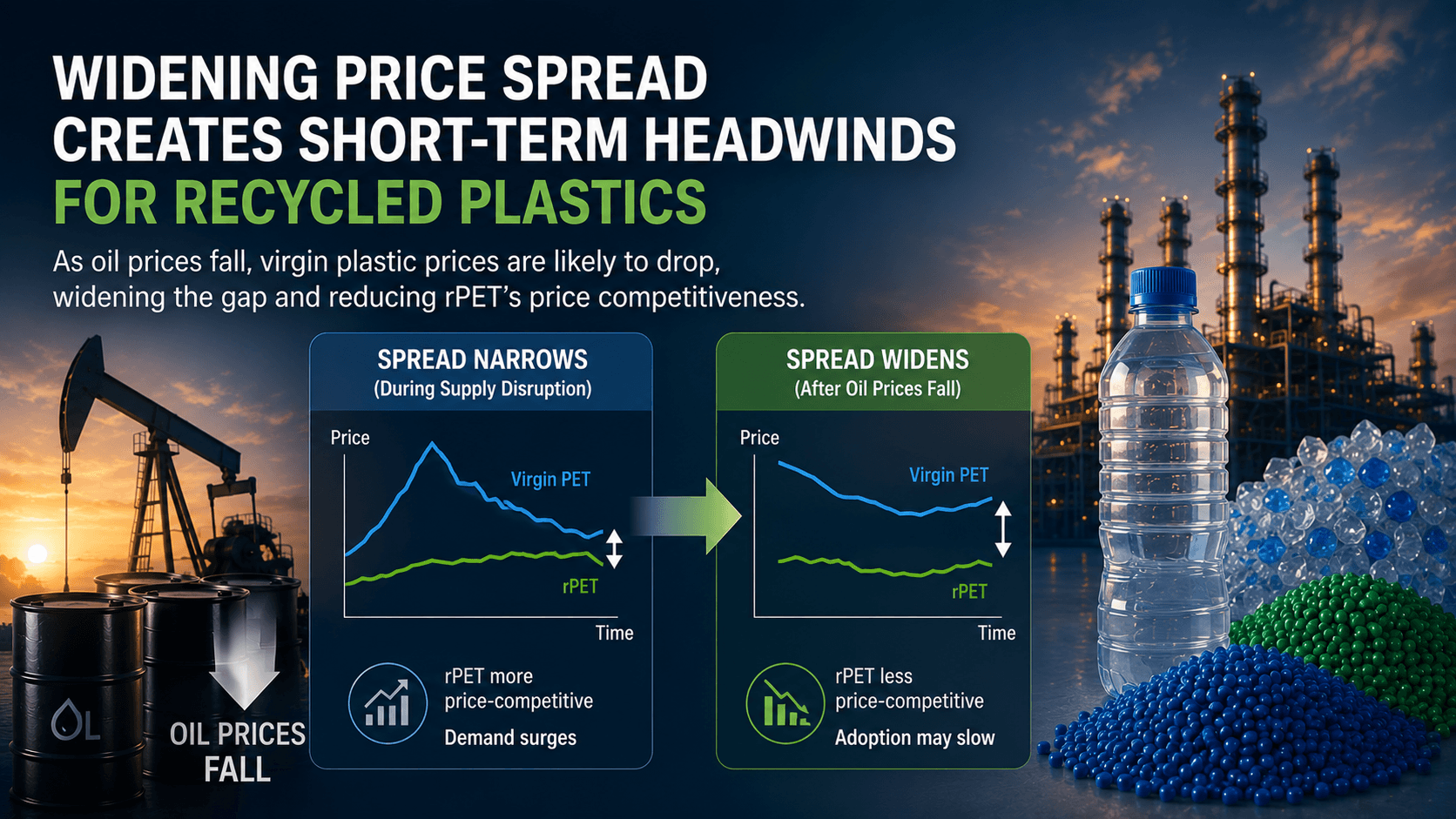
Why a Widening Price Spread Creates Short-Term Headwinds for Recycled Plastics
When the Strait of Hormuz was blocked, naphtha supply was severely restricted, causing Virgin PET production costs to surge. Virgin PET prices spiked sharply while rPET prices rose only modestly — significantly narrowing the price spread between the two materials compared to pre-war levels. A narrower spread made rPET a more price-competitive choice, driving a surge in recycled plastic demand during this period.
However, as the US-Iran MOU brings oil prices down, Virgin PET prices are likely to fall again, with the spread potentially returning to pre-war levels. As the gap widens once more, rPET becomes less price-competitive relative to virgin alternatives — and buyers who switched to PCR primarily on price grounds may slow their adoption decisions in the short term.
In this environment, what matters is a procurement foundation that does not move with every shift in virgin pricing. REGENPORT's verified supply network ensures consistent access to quality recycled materials — regardless of where oil prices go.
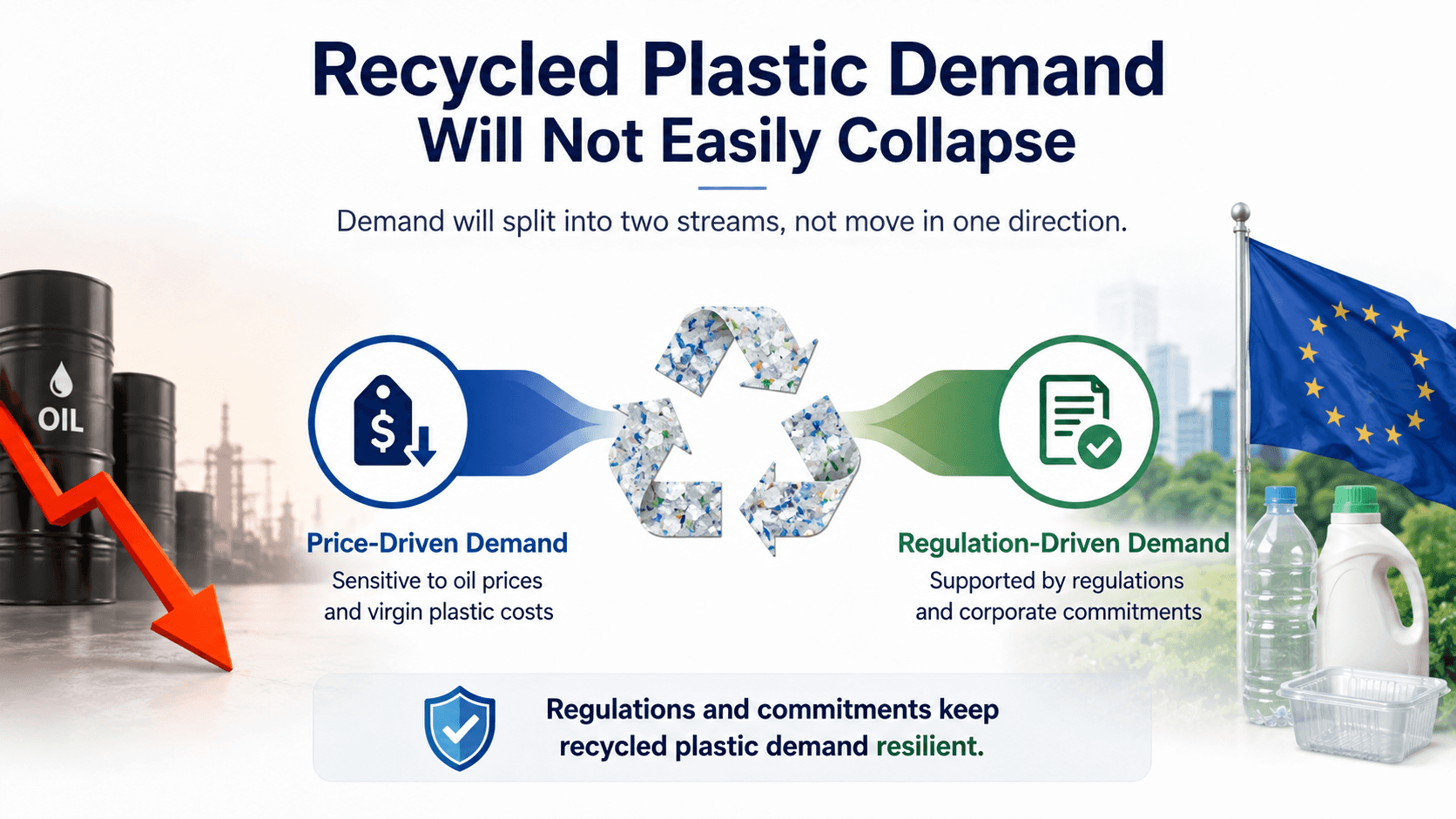
Recycled Plastic Demand Will Not Easily Collapse
That said, recycled plastic demand is not about to fall off a cliff. Price competitiveness may weaken, but regulations and corporate commitments remain firmly in place.
EU PPWR continues to mandate increasing use of recycled feedstocks. Global brands have long-term targets tied to recycled content that do not disappear with a shift in oil prices.
The market is therefore likely to split into two distinct streams: price-driven demand and regulation-driven demand — rather than moving uniformly in one direction.
Compliance readiness matters here. Materials listed on the REGENPORT platform are verified against a range of international certifications — including GRS, GR, ISO 14005, and UL — supporting buyers in sourcing materials that meet the requirements of EU PPWR and other global regulatory frameworks.
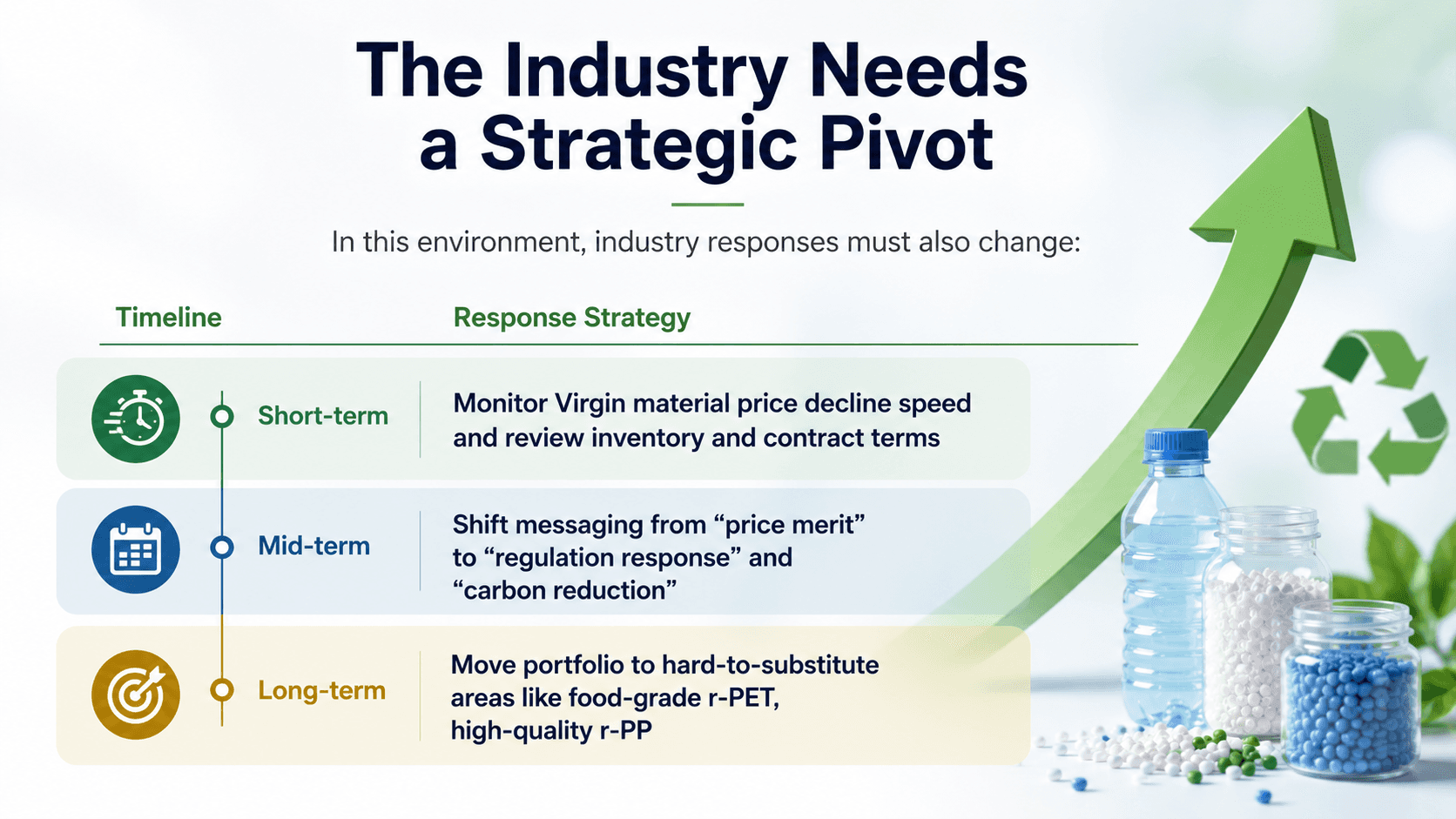
The Industry Needs a Strategic Pivot
In this environment, industry responses must also change:
Timeline | Response Strategy | |
|---|---|---|
Short-term | Monitor Virgin material price decline speed and review inventory and contract terms | |
Mid-term | Shift messaging from "price merit" to "regulation response" and "carbon reduction" | |
Long-term | Move portfolio to hard-to-substitute areas like food-grade r-PET, high-quality r-PP | |
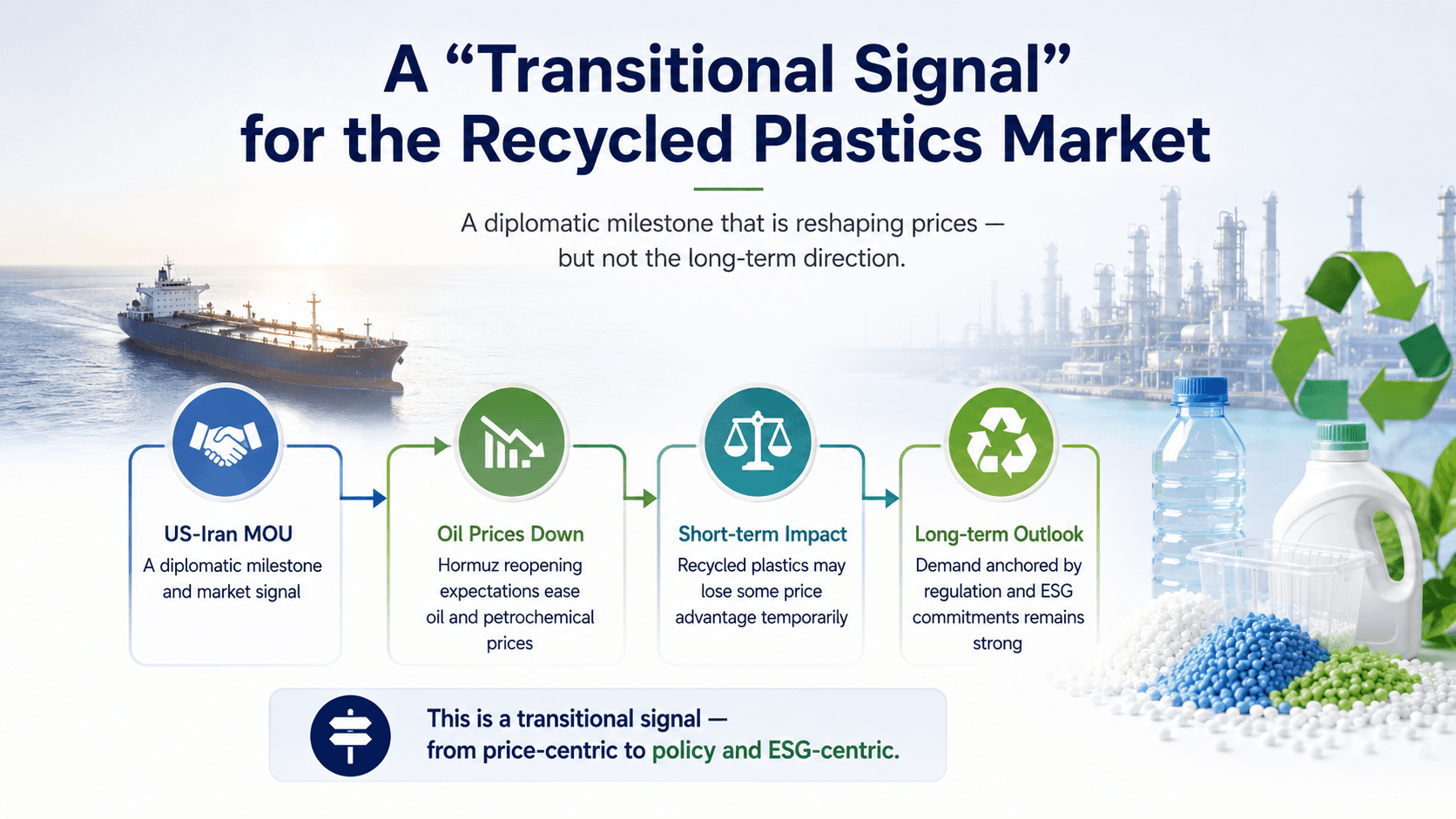
A "Transitional Signal" for the Recycled Plastics Market
The US-Iran MOU is both a diplomatic milestone and a signal shaking the price structures of oil, petrochemicals, and recycled plastics. The expectation of Hormuz reopening has pulled oil prices lower — and that ripple effect is already touching the competitive balance between virgin and recycled materials.
Recycled plastics may temporarily lose some of their short-term price advantage. But the medium-to-long-term demand anchored by regulation and ESG commitments has not collapsed. This moment is best read as a transitional signal — the recycled plastics market shifting once again from price-centric to policy and ESG-centric.
Image generated with ChatGPT
Source
Asia Business Outlook, "Iran War Disrupts Asia Plastics Market, Boosts Recycling Demand" → Read the SourceDaily Mirror, "Oil Prices Fall After US-Iran Peace Deal as Strait of Hormuz Set to Reopen" → Read the Source
The announcement of the US-Iran MOU and the expected reopening of the Strait of Hormuz sent immediate shockwaves through oil markets. Brent crude fell 3.8% to $84.02/barrel, and markets moved fast. But this is more than a diplomatic headline. It is a signal reshaping the competitive dynamics between virgin and recycled plastics.
Diplomatic News Reshaped Oil Supply Expectations
This is not just a political development — it is an event that reset oil market supply expectations. The Strait of Hormuz is the core route for global oil transportation, and markets react swiftly to any shift in its status.
Until now, geopolitical risk premiums from the Middle East were embedded in oil prices. This deal has partially unwound that premium, pulling prices lower.
How Falling Oil Prices Put Pressure on Virgin Plastic Production Costs
Falling oil prices have a direct knock-on effect for the petrochemical industry. As crude drops, feedstock costs for naphtha and other base materials ease — creating downward pressure on production costs for Virgin PET, PE, PP, and other major plastic raw materials.
That said, this kind of shift rarely feeds through immediately. Inventory positions and contract terms typically introduce a lag. Still, the direction is clear: lower oil prices make it easier for virgin materials to regain price competitiveness.
Why a Widening Price Spread Creates Short-Term Headwinds for Recycled Plastics
When the Strait of Hormuz was blocked, naphtha supply was severely restricted, causing Virgin PET production costs to surge. Virgin PET prices spiked sharply while rPET prices rose only modestly — significantly narrowing the price spread between the two materials compared to pre-war levels. A narrower spread made rPET a more price-competitive choice, driving a surge in recycled plastic demand during this period.
However, as the US-Iran MOU brings oil prices down, Virgin PET prices are likely to fall again, with the spread potentially returning to pre-war levels. As the gap widens once more, rPET becomes less price-competitive relative to virgin alternatives — and buyers who switched to PCR primarily on price grounds may slow their adoption decisions in the short term.
In this environment, what matters is a procurement foundation that does not move with every shift in virgin pricing. REGENPORT's verified supply network ensures consistent access to quality recycled materials — regardless of where oil prices go.
Recycled Plastic Demand Will Not Easily Collapse
That said, recycled plastic demand is not about to fall off a cliff. Price competitiveness may weaken, but regulations and corporate commitments remain firmly in place.
EU PPWR continues to mandate increasing use of recycled feedstocks. Global brands have long-term targets tied to recycled content that do not disappear with a shift in oil prices.
The market is therefore likely to split into two distinct streams: price-driven demand and regulation-driven demand — rather than moving uniformly in one direction.
Compliance readiness matters here. Materials listed on the REGENPORT platform are verified against a range of international certifications — including GRS, GR, ISO 14005, and UL — supporting buyers in sourcing materials that meet the requirements of EU PPWR and other global regulatory frameworks.
The Industry Needs a Strategic Pivot
In this environment, industry responses must also change:
Timeline | Response Strategy | |
|---|---|---|
Short-term | Monitor Virgin material price decline speed and review inventory and contract terms | |
Mid-term | Shift messaging from "price merit" to "regulation response" and "carbon reduction" | |
Long-term | Move portfolio to hard-to-substitute areas like food-grade r-PET, high-quality r-PP | |
A "Transitional Signal" for the Recycled Plastics Market
The US-Iran MOU is both a diplomatic milestone and a signal shaking the price structures of oil, petrochemicals, and recycled plastics. The expectation of Hormuz reopening has pulled oil prices lower — and that ripple effect is already touching the competitive balance between virgin and recycled materials.
Recycled plastics may temporarily lose some of their short-term price advantage. But the medium-to-long-term demand anchored by regulation and ESG commitments has not collapsed. This moment is best read as a transitional signal — the recycled plastics market shifting once again from price-centric to policy and ESG-centric.
Image generated with ChatGPT
Source
Asia Business Outlook, "Iran War Disrupts Asia Plastics Market, Boosts Recycling Demand" → Read the SourceDaily Mirror, "Oil Prices Fall After US-Iran Peace Deal as Strait of Hormuz Set to Reopen" → Read the Source
Sourcing rPP Amid Volatility
Grades • Specs • Availability
Browse rPP →
Sourcing rPP Amid Volatility
Sourcing rPP Amid Volatility
Check current rPP grades by feedstock, properties, stock and MOQ.
Check current rPP grades by feedstock, properties, stock and MOQ.
Browse rPP →
Browse rPP →
Looking for samples or ready to source? Submit your request for pricing, availability, and technical information.
Looking for samples or ready to source? Submit your request for pricing, availability, and technical information.
Request a Quote →
Request a Quote →
Posted by REGENPORT
REGENPORT is a global platform connecting buyers and suppliers in the recycled materials and sustainable packaging industries.