CATEGORY
CATEGORY
About Us
About Us
About Us
How Regenport's AI Works: From Raw Material Data to Predictive Modeling
How Regenport's AI Works: From Raw Material Data to Predictive Modeling
How Regenport's AI Works: From Raw Material Data to Predictive Modeling
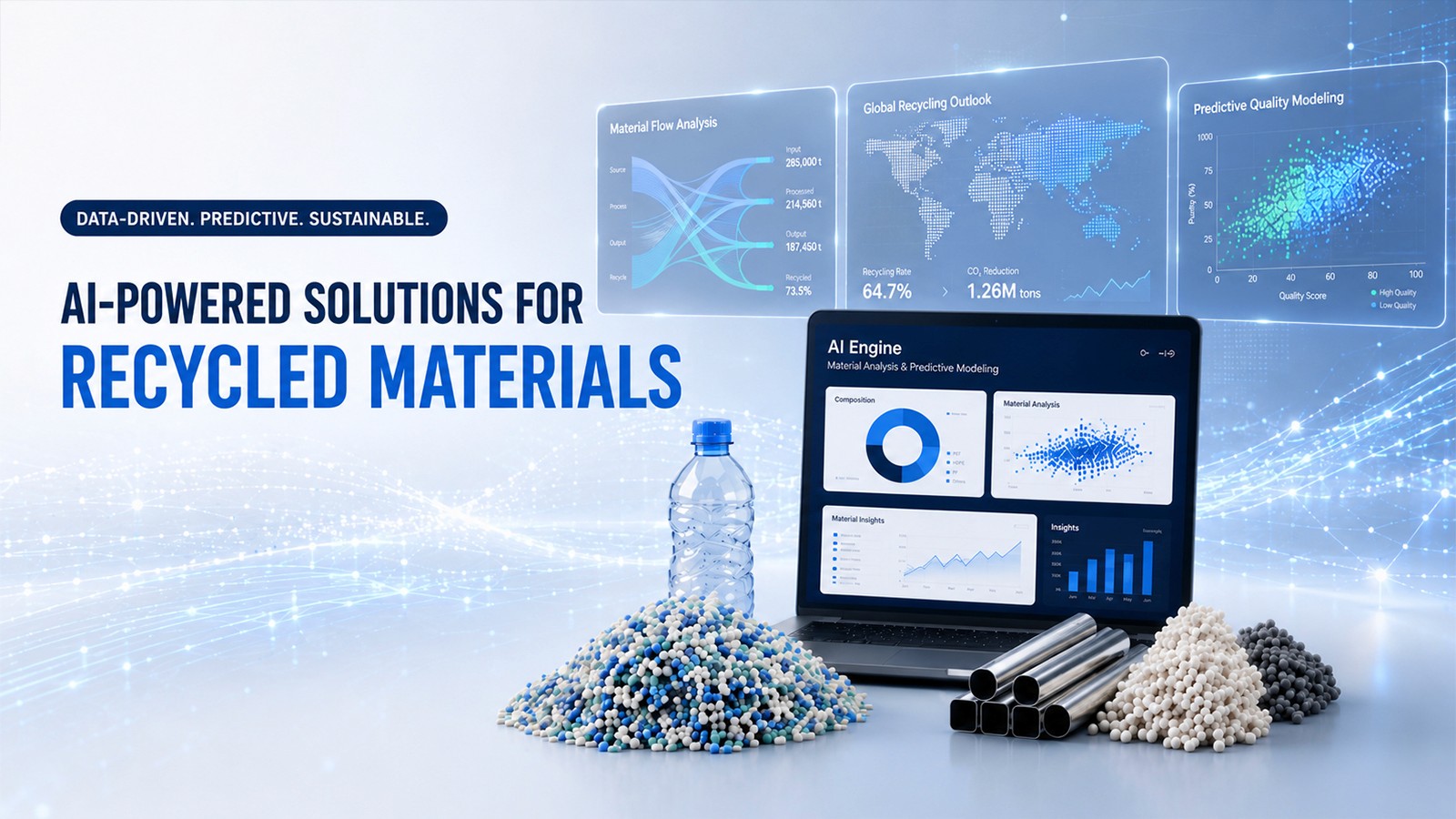
Regenport's AI platform runs on two core functions: data-driven material analysis across 50+ parameters, and predictive material modeling that estimates material fit before physical sampling — designed to make recycled resin sourcing more efficient.
How Regenport's AI Works: From Raw Material Data to Predictive Modeling
In a previous post, we described how AI is being applied to two distinct problems in the recycled resin industry: inconsistent production quality on the manufacturing floor, and the difficulty buyers face when sourcing the right material at scale.
In this post, we want to go one level deeper — specifically into how Regenport's platform processes material data and what that makes possible for buyers and suppliers.
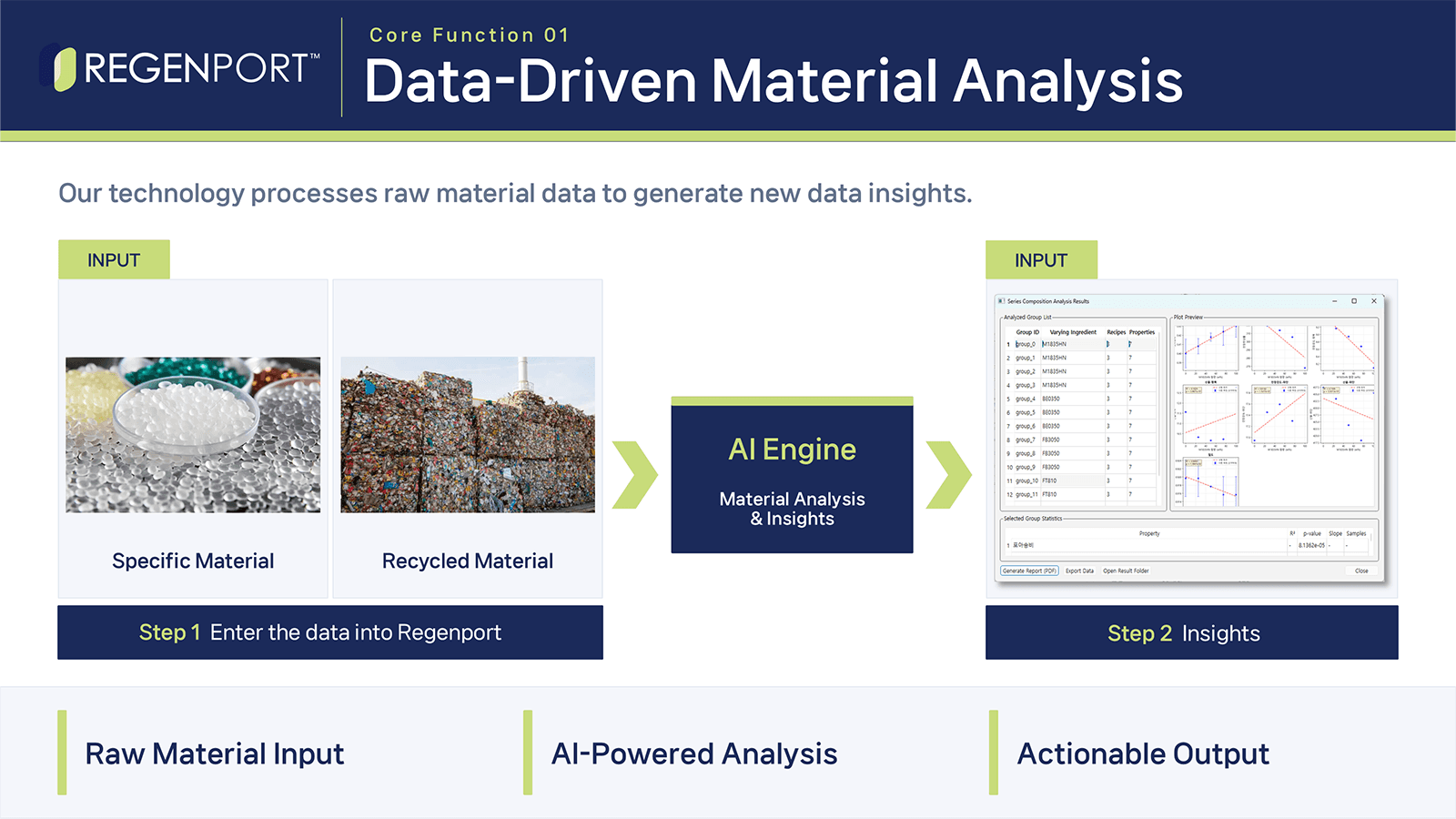
Core Function 01: Data-Driven Material Analysis
The first step in Regenport's matching process is data input.
When a buyer specifies what they need — resin type, MFI range, color tolerance, volume, and location — that information enters the platform as structured data. On the supplier side, material data from recycled resin producers is collected and standardized in the same way.
The platform then analyzes these inputs across more than 50 parameters per match. This includes not only the material specifications themselves, but also factors such as supply volume consistency, geographic proximity, and historical reliability.
The goal at this stage is straightforward: convert raw material data into a format that allows meaningful comparison across a wide supplier pool — one that would be difficult to replicate through manual outreach alone.
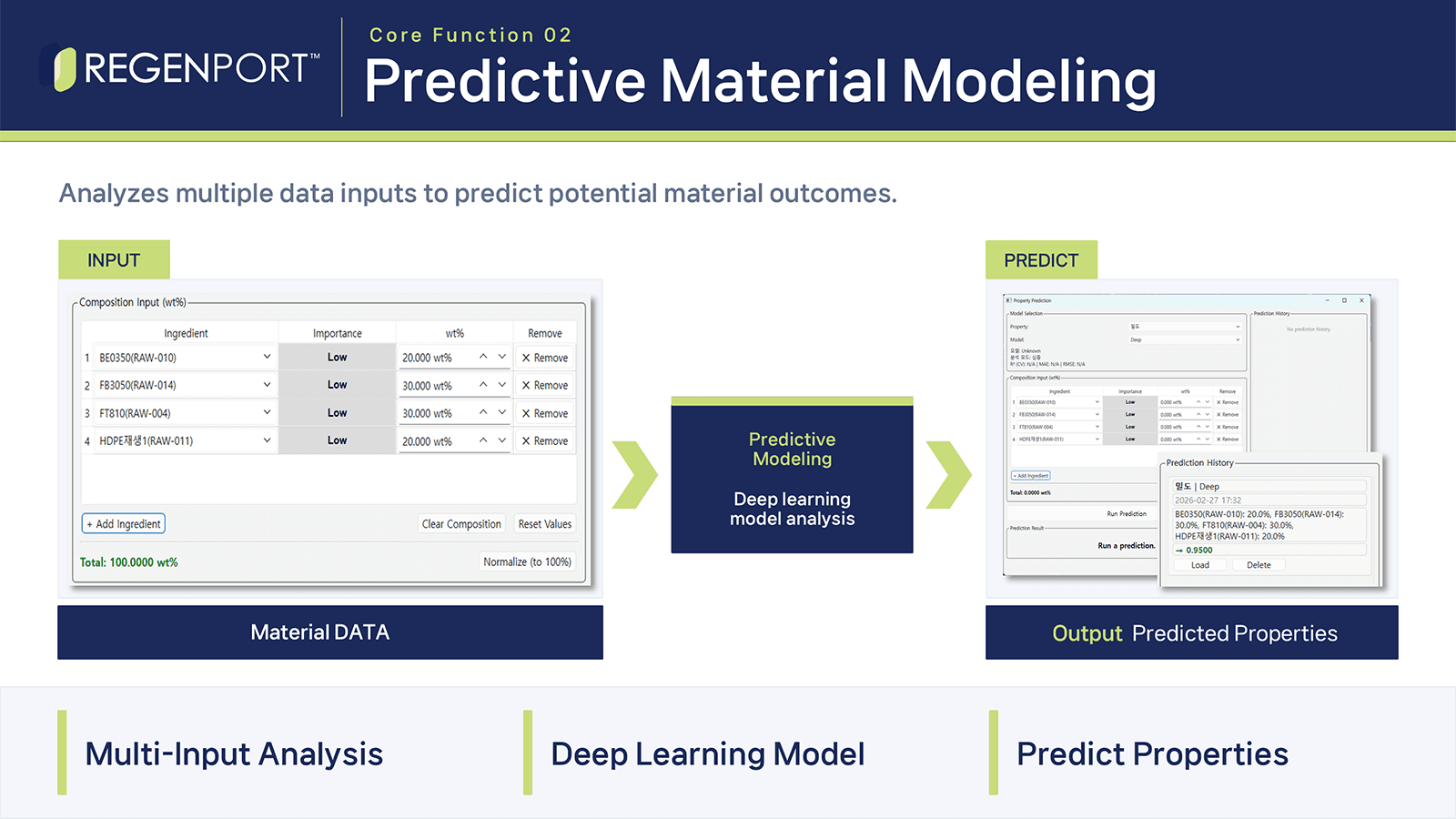
Core Function 02: Predictive Material Modeling
The second core function moves beyond matching on existing data.
Regenport's platform uses multiple data inputs to model and predict potential material outcomes. In practical terms, this means the system can estimate how a material is likely to perform based on its known properties — before a physical sample is evaluated.
For buyers, this is relevant in situations where a supplier's material hasn't been tested against a specific application. Rather than waiting for a sample cycle, the platform can provide an early-stage indication of fit based on the material's profile.
This does not replace physical testing or validation. It is intended to help buyers prioritize which suppliers and materials are worth evaluating further — reducing time spent on options that are unlikely to be a good match.
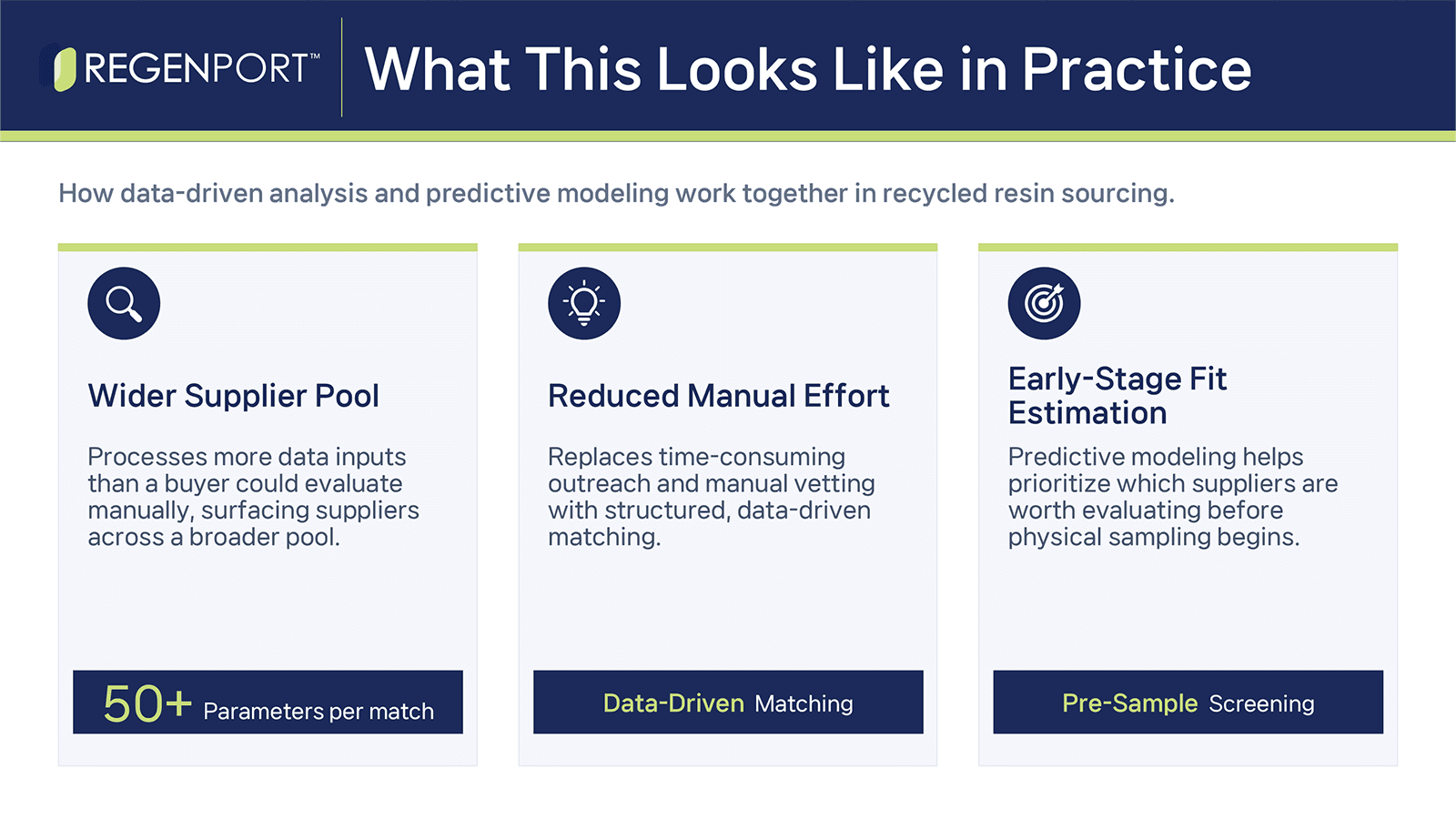
What This Looks Like in Practice
Together, these two functions — data-driven analysis and predictive modeling — are designed to reduce the friction in recycled resin sourcing.
Sourcing recycled resin involves a wider range of variables than sourcing virgin material. Supply availability, quality consistency, color, and output volume all shift depending on the waste stream. The manual process of identifying, contacting, and vetting suppliers works at small scale, but limits the range of options a buyer can realistically consider.
Regenport's platform is built to expand that range — by processing more data inputs than a buyer could evaluate manually, and by surfacing supplier matches that fit the specified requirements.
A Note on Where We Are
Regenport is an AI-powered platform for recycled resin supply-demand matching. We are currently working with buyers and suppliers to apply these matching capabilities to real sourcing requirements.
If you source recycled resin and want to explore how this approach might work in your context, feel free to reach out.
Image generated with ChatGPT and Claude
How Regenport's AI Works: From Raw Material Data to Predictive Modeling
In a previous post, we described how AI is being applied to two distinct problems in the recycled resin industry: inconsistent production quality on the manufacturing floor, and the difficulty buyers face when sourcing the right material at scale.
In this post, we want to go one level deeper — specifically into how Regenport's platform processes material data and what that makes possible for buyers and suppliers.
Core Function 01: Data-Driven Material Analysis
The first step in Regenport's matching process is data input.
When a buyer specifies what they need — resin type, MFI range, color tolerance, volume, and location — that information enters the platform as structured data. On the supplier side, material data from recycled resin producers is collected and standardized in the same way.
The platform then analyzes these inputs across more than 50 parameters per match. This includes not only the material specifications themselves, but also factors such as supply volume consistency, geographic proximity, and historical reliability.
The goal at this stage is straightforward: convert raw material data into a format that allows meaningful comparison across a wide supplier pool — one that would be difficult to replicate through manual outreach alone.
Core Function 02: Predictive Material Modeling
The second core function moves beyond matching on existing data.
Regenport's platform uses multiple data inputs to model and predict potential material outcomes. In practical terms, this means the system can estimate how a material is likely to perform based on its known properties — before a physical sample is evaluated.
For buyers, this is relevant in situations where a supplier's material hasn't been tested against a specific application. Rather than waiting for a sample cycle, the platform can provide an early-stage indication of fit based on the material's profile.
This does not replace physical testing or validation. It is intended to help buyers prioritize which suppliers and materials are worth evaluating further — reducing time spent on options that are unlikely to be a good match.
What This Looks Like in Practice
Together, these two functions — data-driven analysis and predictive modeling — are designed to reduce the friction in recycled resin sourcing.
Sourcing recycled resin involves a wider range of variables than sourcing virgin material. Supply availability, quality consistency, color, and output volume all shift depending on the waste stream. The manual process of identifying, contacting, and vetting suppliers works at small scale, but limits the range of options a buyer can realistically consider.
Regenport's platform is built to expand that range — by processing more data inputs than a buyer could evaluate manually, and by surfacing supplier matches that fit the specified requirements.
A Note on Where We Are
Regenport is an AI-powered platform for recycled resin supply-demand matching. We are currently working with buyers and suppliers to apply these matching capabilities to real sourcing requirements.
If you source recycled resin and want to explore how this approach might work in your context, feel free to reach out.
Image generated with ChatGPT and Claude
See the rPP Listings
Grades • Specs • Availability
Browse rPP →
See the rPP Listings
See the rPP Listings
Browse rPP grades by feedstock, properties, applications, stock and MOQ.
Browse rPP grades by feedstock, properties, applications, stock and MOQ.
Browse rPP →
Browse rPP →
Looking for samples or ready to source? Submit your request for pricing, availability, and technical information.
Looking for samples or ready to source? Submit your request for pricing, availability, and technical information.
Request a Quote →
Request a Quote →
Posted by REGENPORT
REGENPORT is a global platform connecting buyers and suppliers in the recycled materials and sustainable packaging industries.