CATEGORY
Our Materials
Marine-Sourced rPA6 Pellet — Recycled PA6 from Ship Mooring Ropes, South Korea
Marine-Sourced rPA6 Pellet — Recycled PA6 from Ship Mooring Ropes, South Korea
Marine-Sourced rPA6 Pellet — Recycled PA6 from Ship Mooring Ropes, South Korea
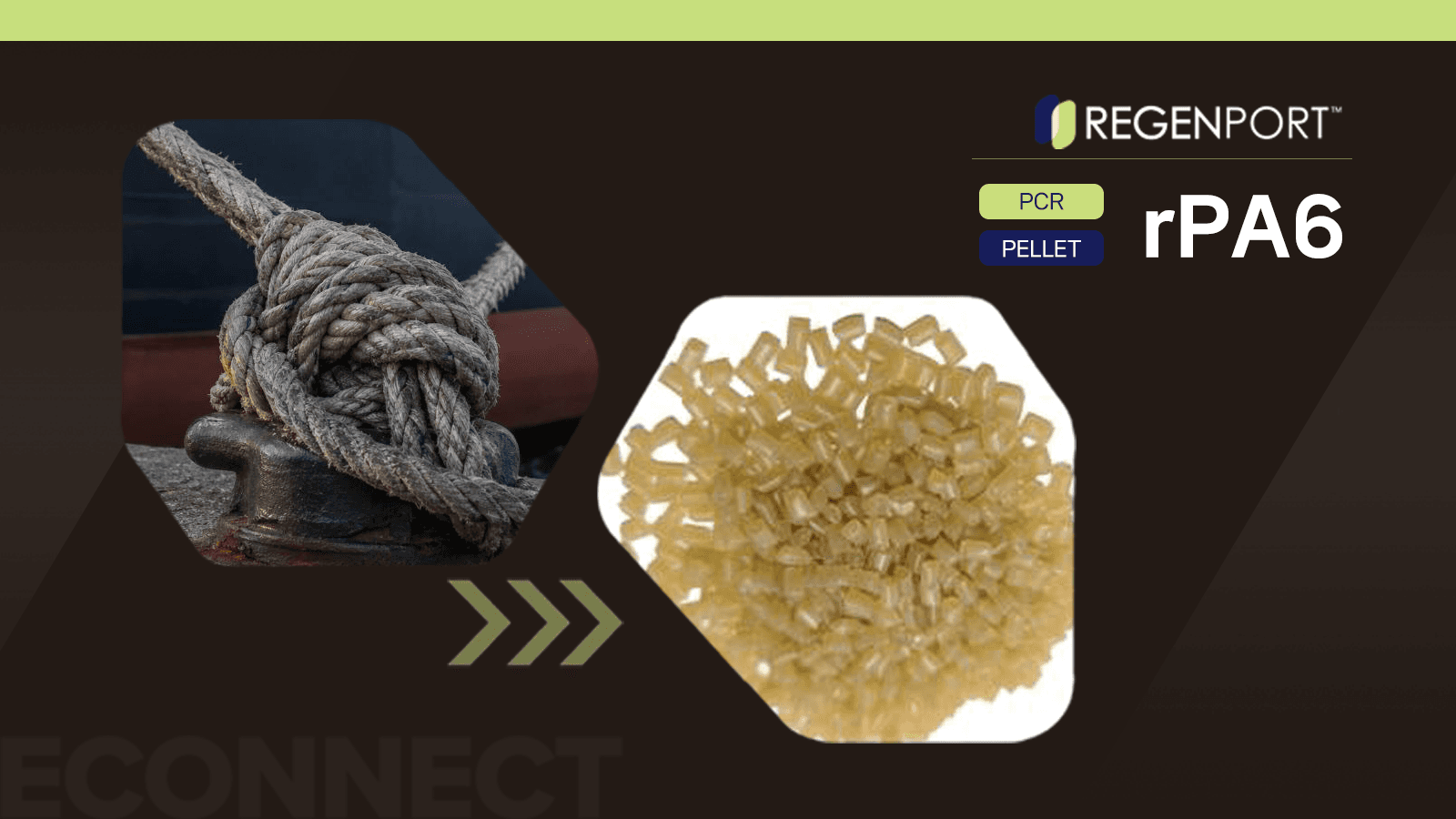
A post-consumer recycled PA6 pellet with MFI 16 g/10min and density of 1.12–1.15 g/cm³, sourced from large ship mooring ropes in South Korea. Brown pellet form, 50 MT available monthly. For automotive and electronics applications.
Looking to source recycled PA6 (Nylon 6) from a defined, industrial feedstock? This rPA6 PCR pellet — produced from large ship mooring ropes collected and processed in South Korea — is a traceable option for automotive and electronics manufacturers.
What Is This Material?
Large ship mooring ropes are one of the more consistent post-consumer nylon waste streams entering industrial recycling channels. Made primarily of PA6, these ropes tend to follow a relatively regular replacement cycle, making them a more stable feedstock for recycled resin production. Compared to mixed-origin nylon waste streams, the material characteristics of mooring rope-derived PA6 are more clearly defined — which can be an advantage when managing batch-to-batch consistency. As a result, rPA6 pellets from this feedstock are relatively straightforward to evaluate for compounding or injection molding suitability based on MFI and density.
This rPA6 pellet is produced from mooring rope waste collected and processed in South Korea, available in brown pellet form for engineering applications.
Material Data
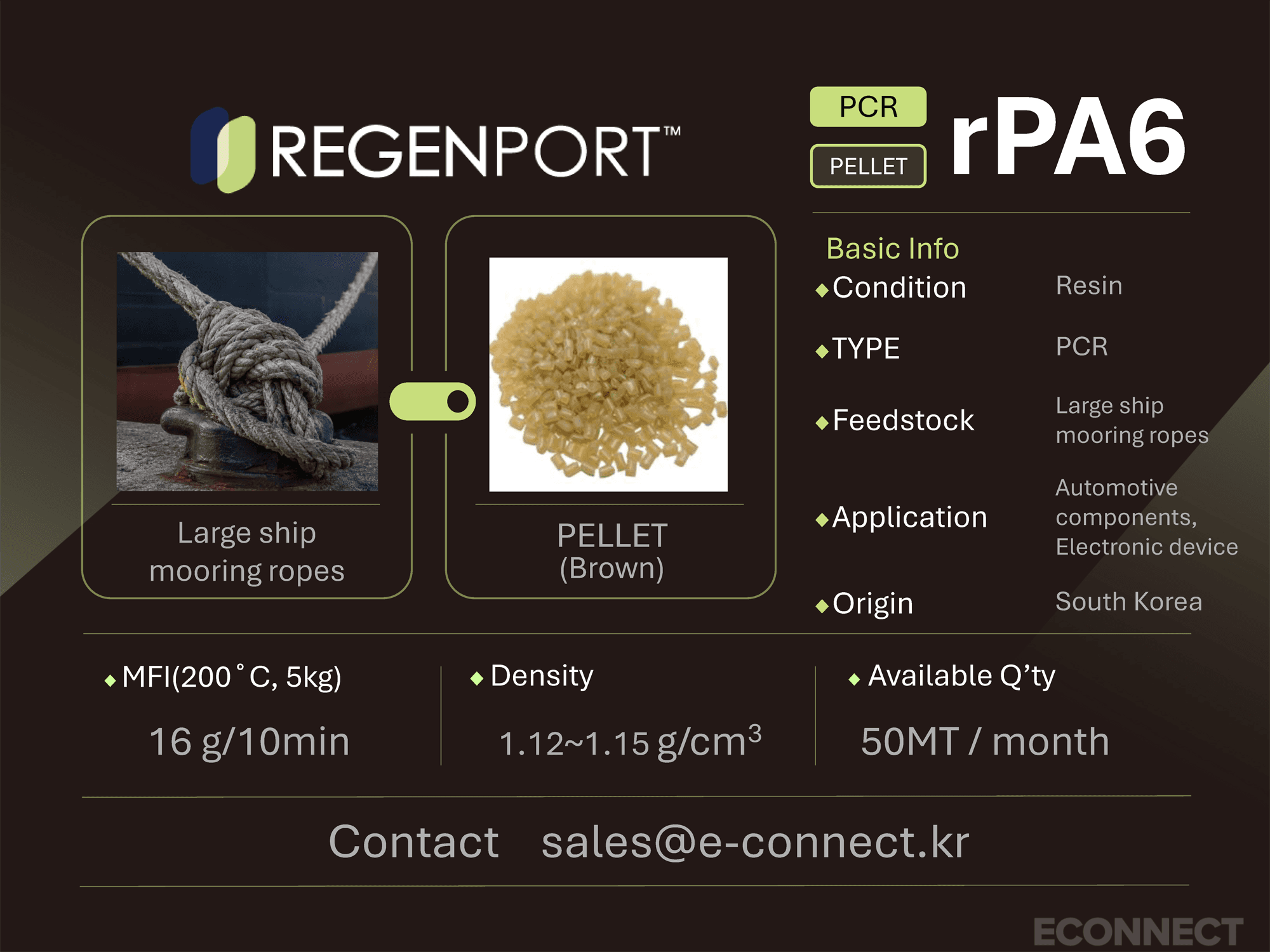
rPA6 | |
|---|---|
CONDITION : | TYPE : PCR |
FEEDSTOCK : Large ship mooring ropes | APPLICATION : Automotive components, Electronic devices |
MFI (200°C, 5kg) : 16 g/10min | DENSITY : 1.12 ~ 1.15 g/cm³ |
Why Feedstock Consistency Matters in Recycled PA6 Sourcing
One of the primary challenges in sourcing recycled nylon is batch-to-batch variability. Procurement teams typically evaluate:
Feedstock origin and traceability
Monthly supply volume and stability
MFI and density compatibility with existing equipment
Application suitability
Single-source feedstocks like mooring rope-derived PA6 can reduce variability compared to mixed-stream alternatives — making them a relevant consideration for manufacturers with tighter processing requirements.
Supply from South Korea — 50 MT/month
This rPA6 pellet is available from South Korea with a stable monthly volume of approximately 50 MT. For sourcing teams evaluating recycled PA6 for automotive components or electronic device housings, feedstock traceability and consistent supply volume are increasingly relevant criteria alongside pricing and processing compatibility.
Coming up next week: Korean marine waste recycler Foresys has signed a supply agreement with Italy's Aquafil to provide r-PA6 pellets, facilitated through ECONNECT, a recycled materials B2B distribution platform. We'll be covering the full story alongside the related news article next week — stay tuned.
Looking to source recycled PA6 (Nylon 6) from a defined, industrial feedstock? This rPA6 PCR pellet — produced from large ship mooring ropes collected and processed in South Korea — is a traceable option for automotive and electronics manufacturers.
What Is This Material?
Large ship mooring ropes are one of the more consistent post-consumer nylon waste streams entering industrial recycling channels. Made primarily of PA6, these ropes tend to follow a relatively regular replacement cycle, making them a more stable feedstock for recycled resin production. Compared to mixed-origin nylon waste streams, the material characteristics of mooring rope-derived PA6 are more clearly defined — which can be an advantage when managing batch-to-batch consistency. As a result, rPA6 pellets from this feedstock are relatively straightforward to evaluate for compounding or injection molding suitability based on MFI and density.
This rPA6 pellet is produced from mooring rope waste collected and processed in South Korea, available in brown pellet form for engineering applications.
Material Data
rPA6 | |
|---|---|
CONDITION : | TYPE : PCR |
FEEDSTOCK : Large ship mooring ropes | APPLICATION : Automotive components, Electronic devices |
MFI (200°C, 5kg) : 16 g/10min | DENSITY : 1.12 ~ 1.15 g/cm³ |
Why Feedstock Consistency Matters in Recycled PA6 Sourcing
One of the primary challenges in sourcing recycled nylon is batch-to-batch variability. Procurement teams typically evaluate:
Feedstock origin and traceability
Monthly supply volume and stability
MFI and density compatibility with existing equipment
Application suitability
Single-source feedstocks like mooring rope-derived PA6 can reduce variability compared to mixed-stream alternatives — making them a relevant consideration for manufacturers with tighter processing requirements.
Supply from South Korea — 50 MT/month
This rPA6 pellet is available from South Korea with a stable monthly volume of approximately 50 MT. For sourcing teams evaluating recycled PA6 for automotive components or electronic device housings, feedstock traceability and consistent supply volume are increasingly relevant criteria alongside pricing and processing compatibility.
Coming up next week: Korean marine waste recycler Foresys has signed a supply agreement with Italy's Aquafil to provide r-PA6 pellets, facilitated through ECONNECT, a recycled materials B2B distribution platform. We'll be covering the full story alongside the related news article next week — stay tuned.
RELATED
Post
California SB 54 and PCR Content Requirements: Packaging Compliance Guide for Brands
California SB 54 and PCR Content Requirements: Packaging Compliance Guide for Brands
Recycled Plastics Market Tightens as Virgin Polymer Prices Continue to Slide - Week 2, June 2026
Recycled Plastics Market Tightens as Virgin Polymer Prices Continue to Slide - Week 2, June 2026
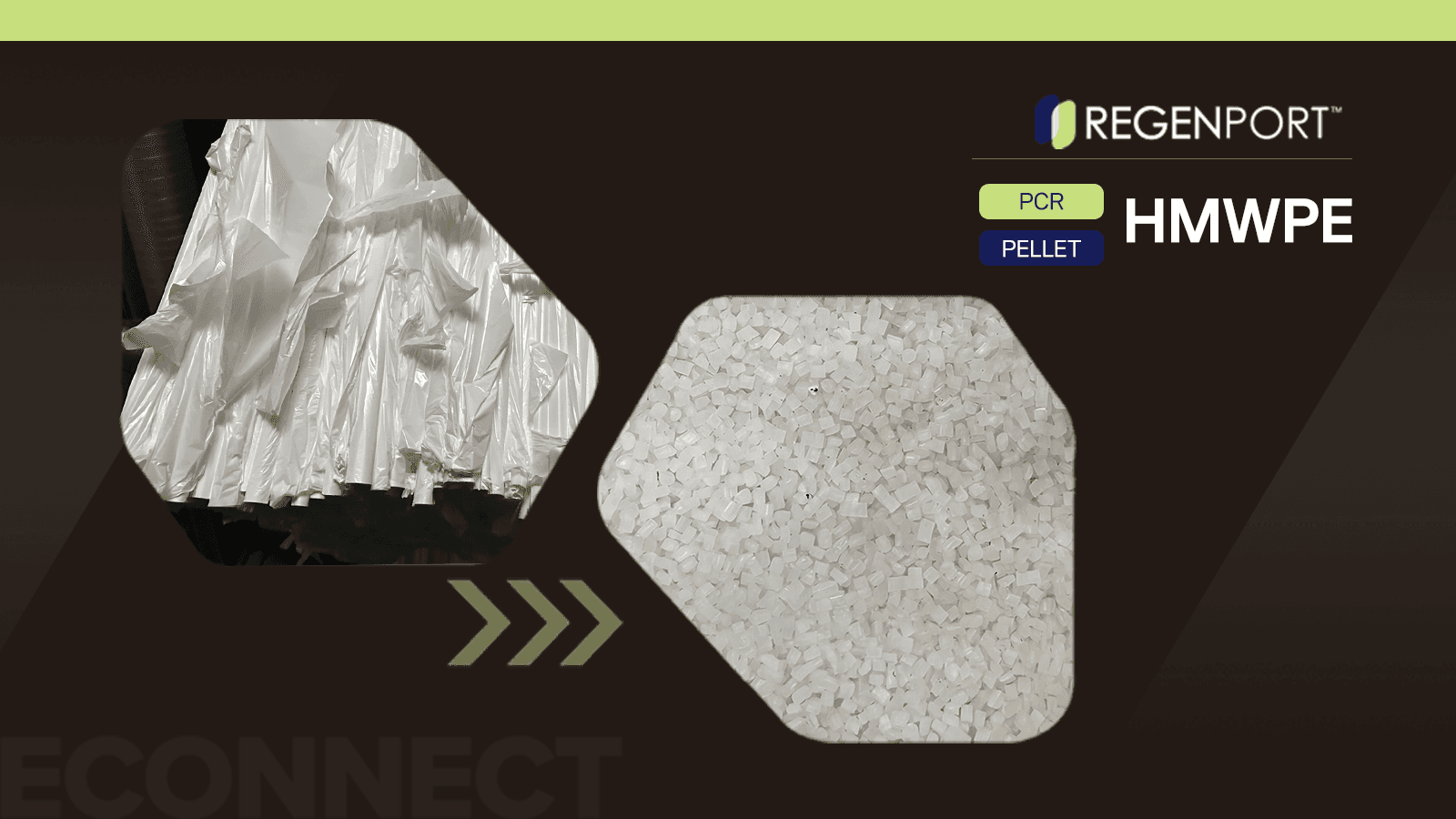
HMWPE PCR Pellets: Recycled High Molecular Weight Polyethylene from Lithium Battery Separator Film
HMWPE PCR Pellets: Recycled High Molecular Weight Polyethylene from Lithium Battery Separator Film
UK Plastic Film Recycling Delays and Their Impact on rPE Resin Markets
UK Plastic Film Recycling Delays and Their Impact on rPE Resin Markets
Recycled Plastics Market Shows Selective Strength Amid Weak Virgin Polymer Prices - Week 1, June 2026
Recycled Plastics Market Shows Selective Strength Amid Weak Virgin Polymer Prices - Week 1, June 2026
CONTACT US
+82 70-7594-2321
450, Gangnam-daero,
Gangnam-gu, Seoul 06123,
Republic of Korea
Privacy Policy
Terms of Service
© 2026 RegenPort Inc. All rights reserved.
CONTACT US
+82 70-7594-2321
450, Gangnam-daero,
Gangnam-gu, Seoul 06123,
Republic of Korea
Privacy Policy
Terms of Service
© 2026 RegenPort Inc. All rights reserved.
CONTACT US
+82 70-7594-2321
450, Gangnam-daero,
Gangnam-gu, Seoul 06123,
Republic of Korea
Privacy Policy
Terms of Service
© 2026 RegenPort Inc. All rights reserved.